Eating in Morocco
Morocco food masterclass
Moroccan cuisine is a centuries-old meeting of Amazigh, Arab, Andalusian, Jewish, sub-Saharan and French hands. Here is how a Moroccan meal unfolds, the dishes to know, where and when to eat, and every guide to go deeper.
Course by course
A Moroccan table, from above
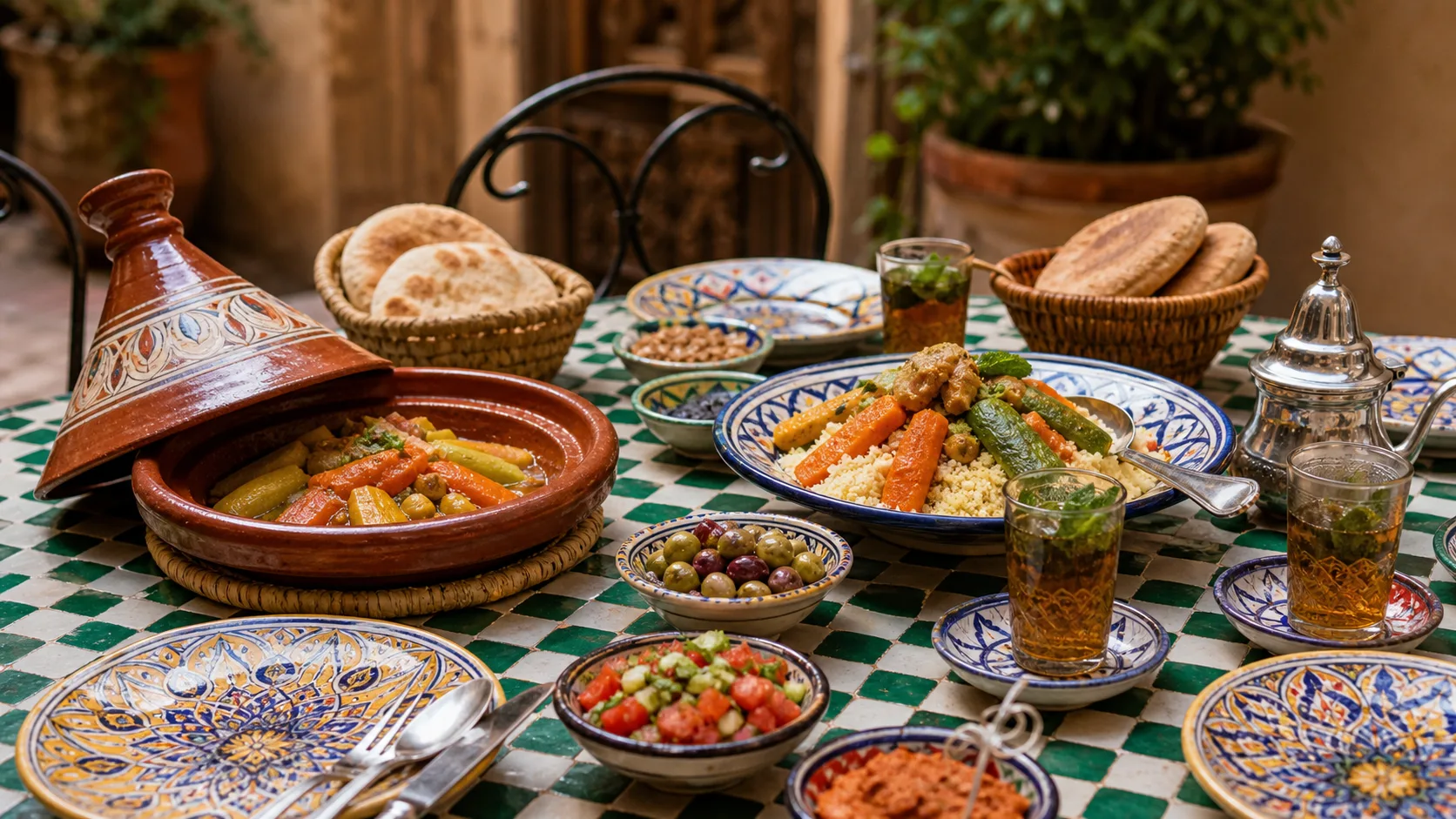
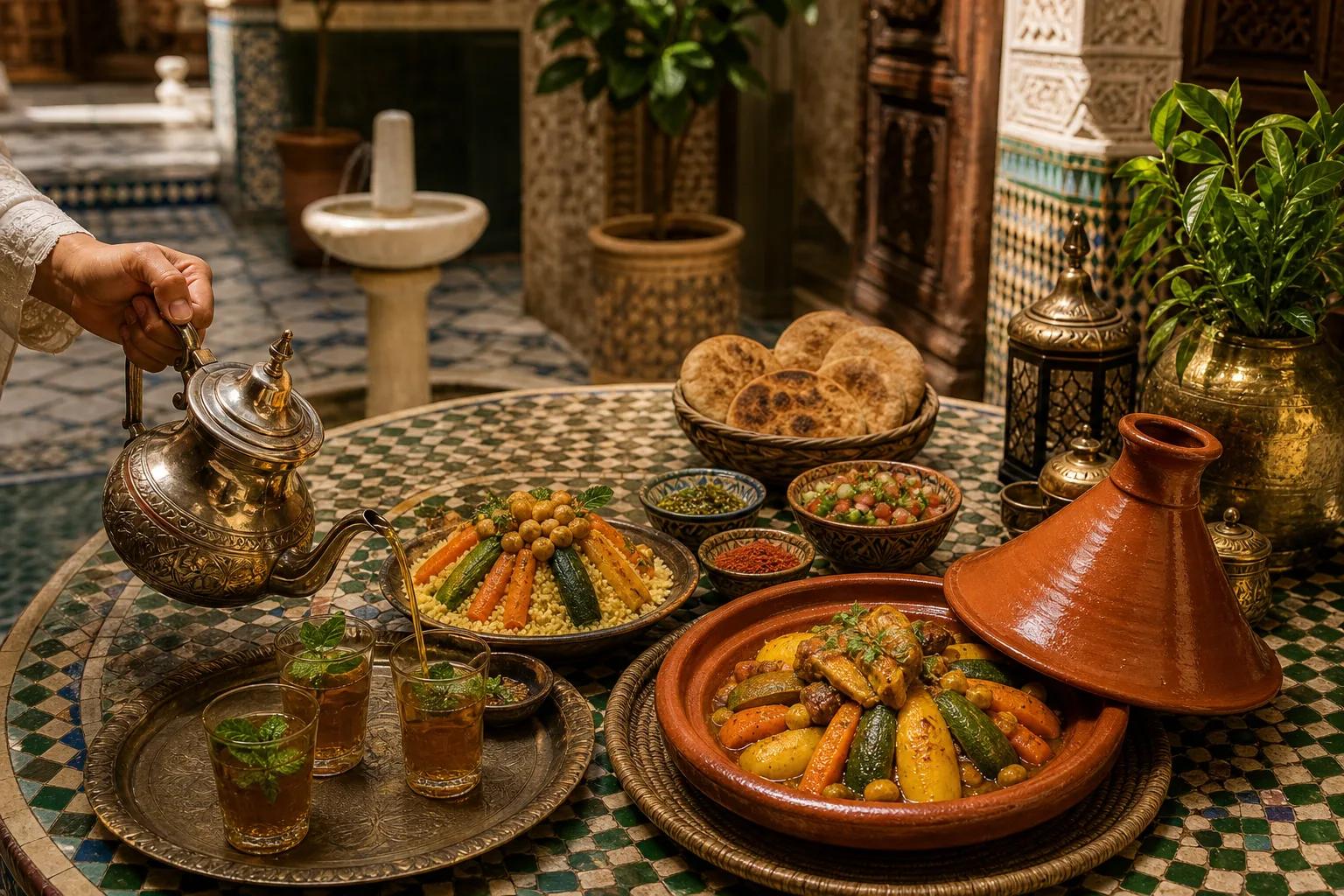
Meals are shared from the middle of a low round table, with bread for a spoon and tea to close. This is a feast; an everyday lunch is salads, bread and one tagine.
- Cooked saladsZaalouk, taktouka, carrots with cumin: small plates to open the meal.
- BreadKhobz, torn by hand: it is the spoon.
- PastillaAt a feast, the sweet-savoury pie in warqa pastry.
- TagineThe slow-cooked heart of the meal, shared from the pot.
- CouscousOn Fridays and at celebrations, the mound of steamed semolina.
- FruitOranges with cinnamon, or whatever the season brings.
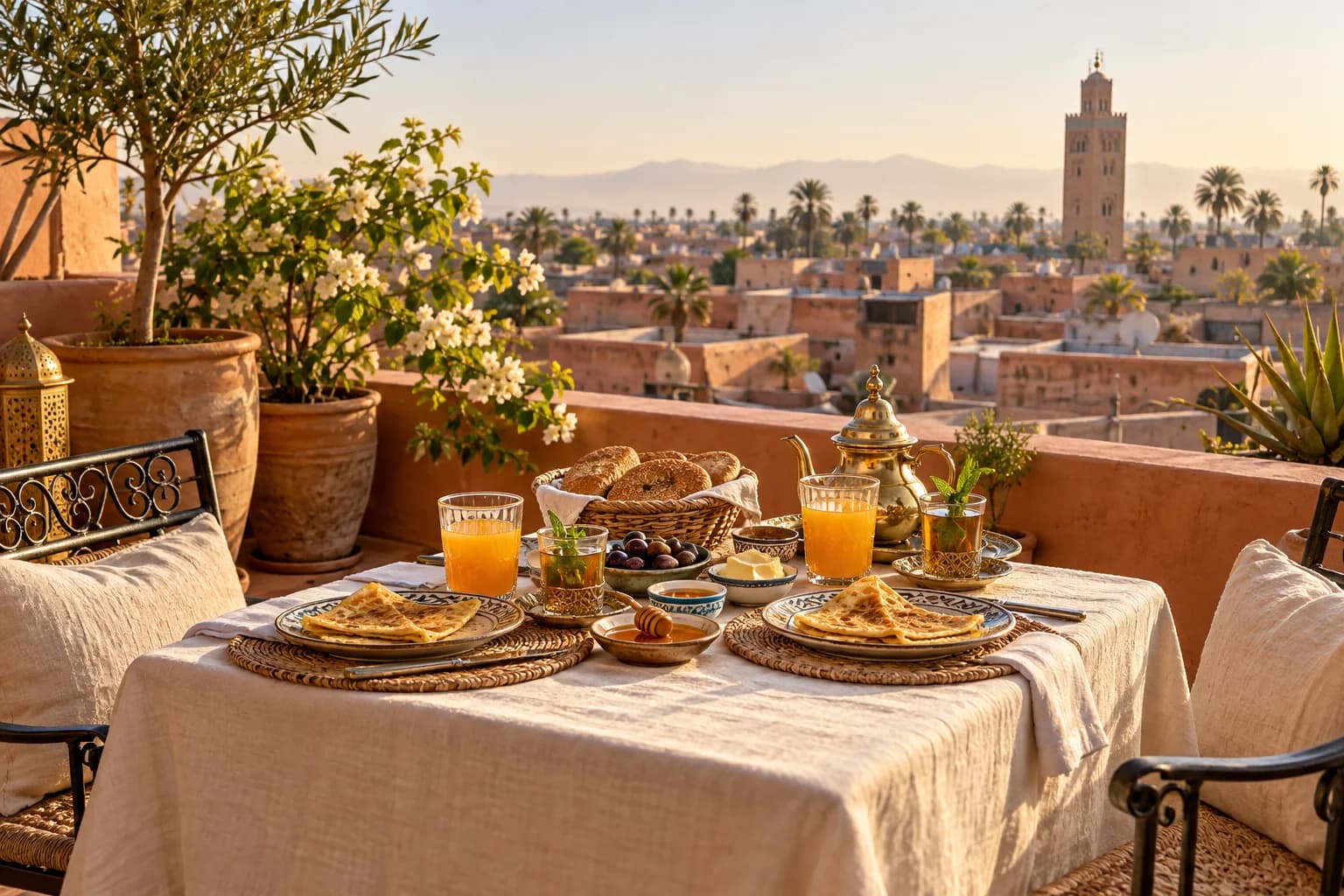
- Mint teaPoured from height to close the meal.
A festive table: an everyday meal is salads, bread and one tagine, with tea.
Know these
Twelve dishes

- Tagine
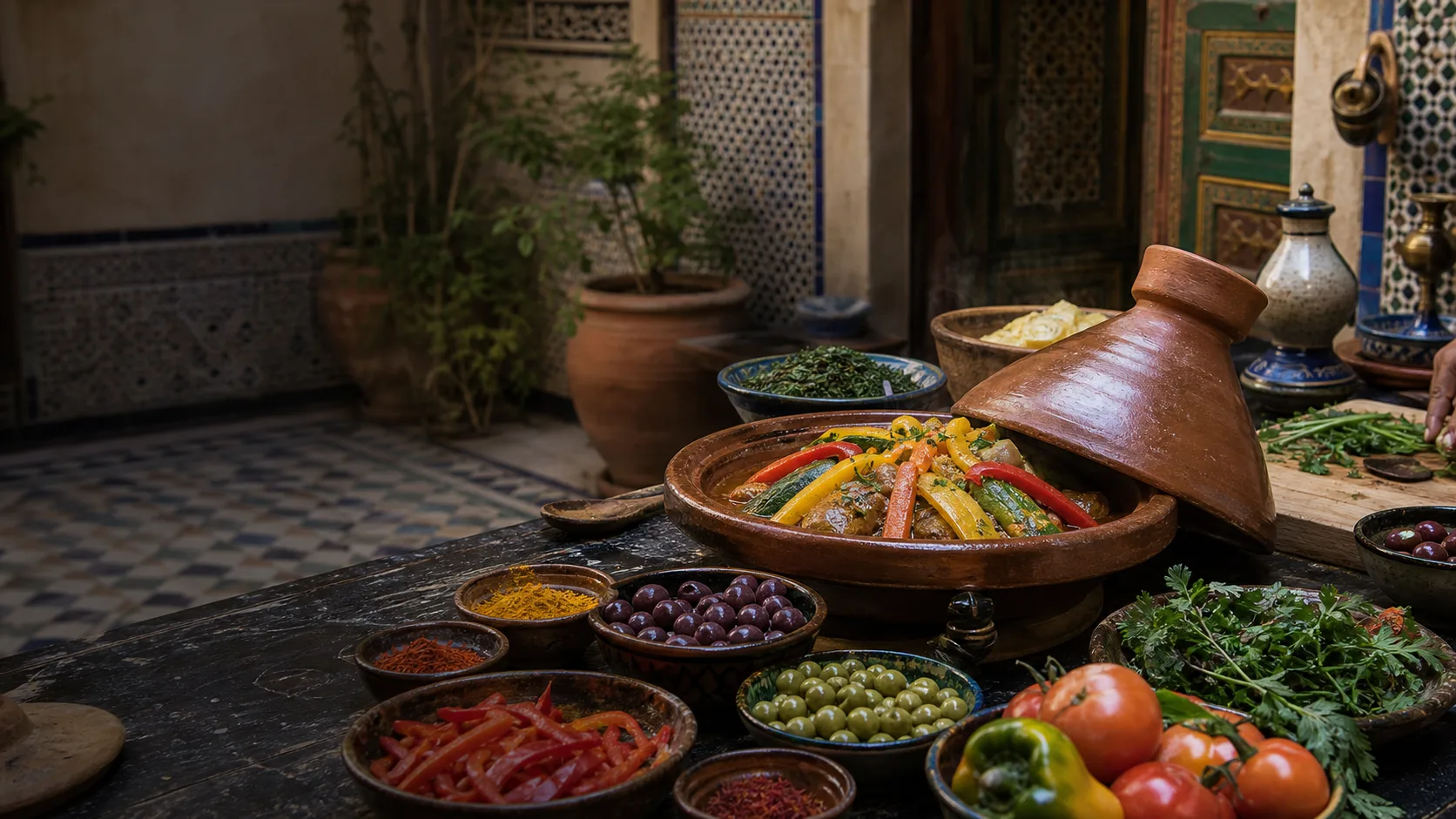
- Slow-cooked lamb, chicken or fish with vegetables, olives and preserved lemon, in the conical pot that gives it its name.
- Couscous
- The Friday meal: semolina steamed more than once over a broth of vegetables and meat.
- Pastilla
- Pigeon or chicken in paper-thin warqa, dusted with cinnamon and sugar: sweet and savoury at once, from Fes.
- Harira
- Tomato, lentil and chickpea soup with herbs and lemon; it breaks the fast in Ramadan and is eaten all year.
- Mechoui
- Whole lamb slow-roasted, traditionally in a pit oven, until it falls from the bone.
- Rfissa
- Chicken and lentils over torn msemen with fenugreek: a dish for celebrations and new mothers.
- Chermoula
- The herb marinade of coriander, parsley, cumin, paprika, garlic and lemon, above all for fish.
- Zaalouk
- Smoky aubergine and tomato cooked down with garlic, cumin and olive oil.
- Maakouda
- Spiced potato fritters, often in a sandwich with harissa: street food in Fes and Marrakech.
- Msemen
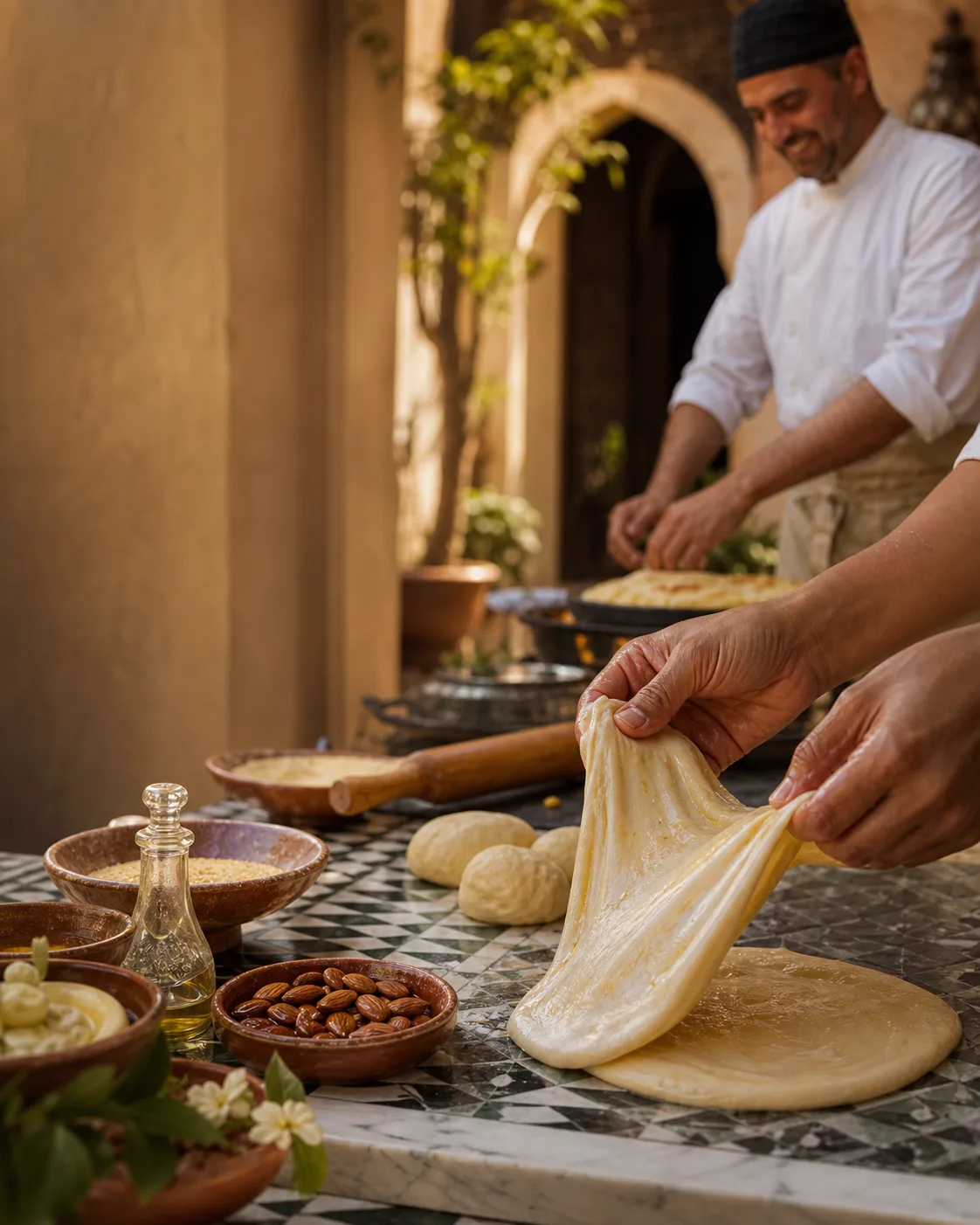
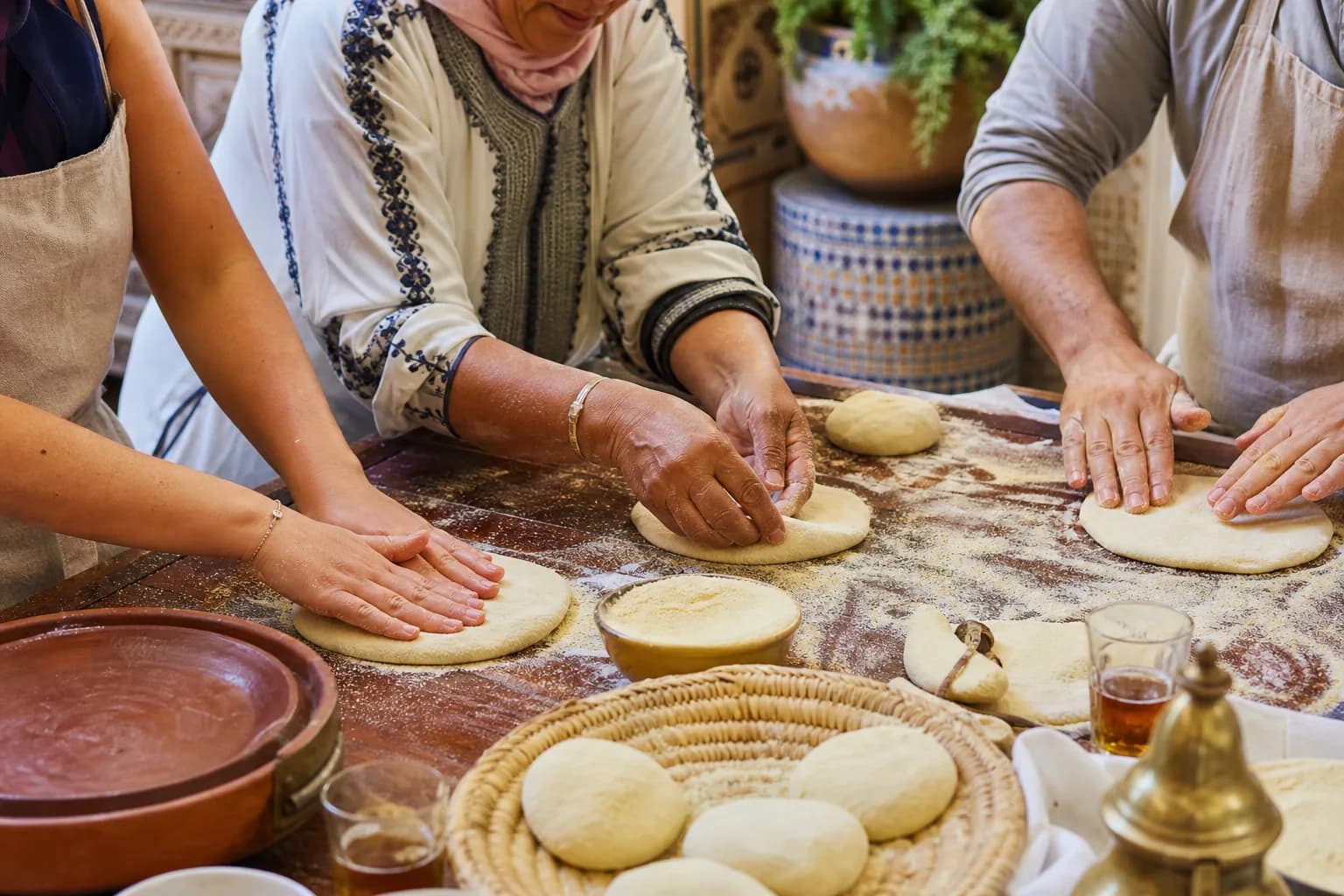
- Flaky, folded griddle bread, for breakfast with honey or stuffed as a snack.
- Mahlabiya
- A silky milk pudding scented with rose or orange blossom.
- Chebakia
- Sesame and honey pastry flowers, piled high in Ramadan.
Go deeper
Every food guides
- RegionsMorocco's culinary mapFive regional tables, north to south.
- CityEating in MarrakechJemaa el-Fna to riad dinners.
- CityEating in FesThe classical Fassi kitchen.
- CityEating in EssaouiraThe port grills and the Atlantic catch.
- CityEating in CasablancaSeafood, cafés and Moroccan-Jewish dishes.
- CityEating in TangierWhere three kitchens meet.
- DishThe tagineThe pot, the technique, the variations.
- DishThe Friday couscousThe weekly ritual.
- MealThe Moroccan breakfastMsemen, baghrir, amlou and tea.
- DrinkMint teaThe ceremony in full.
- Eat outStreet foodFifteen dishes and where to eat them.
- DietVegetarian MoroccoPlant-based eating in the medina.
When to eat
The eating day
- BreakfastAbout 7 to 9Msemen or baghrir, olive oil, argan oil and honey, fresh cheese and mint tea. Bakeries open early.
- Lunch (ghda)About 1 to 3The main meal: tagine, couscous and grills at their best. Friday lunch is couscous.
- Tea timeAbout 4 to 6Mint tea and pastries: gazelle horns, briouats.
- DinnerAbout 8 to 10Lighter: harira, grilled meat and salad. Tourist restaurants serve earlier; local places start late.
Where to eat
Six kinds of places to eat
- Riad restaurant
- Multi-course dinners in medina houses: the most formal and elaborate.
- Restaurant du midi
- Simple lunch places with a daily menu: usually the best value. Follow the locals.
- Café and snack bar
- Sandwiches, brochettes, eggs and salads, open all day on almost every street.
- Rotisserie
- Chicken and lamb on the spit; the ones with lunchtime queues are the good ones.
- Fondouq kitchen
- Some old caravanserais of the medina now house restaurants: worth seeking out.
- Street stall
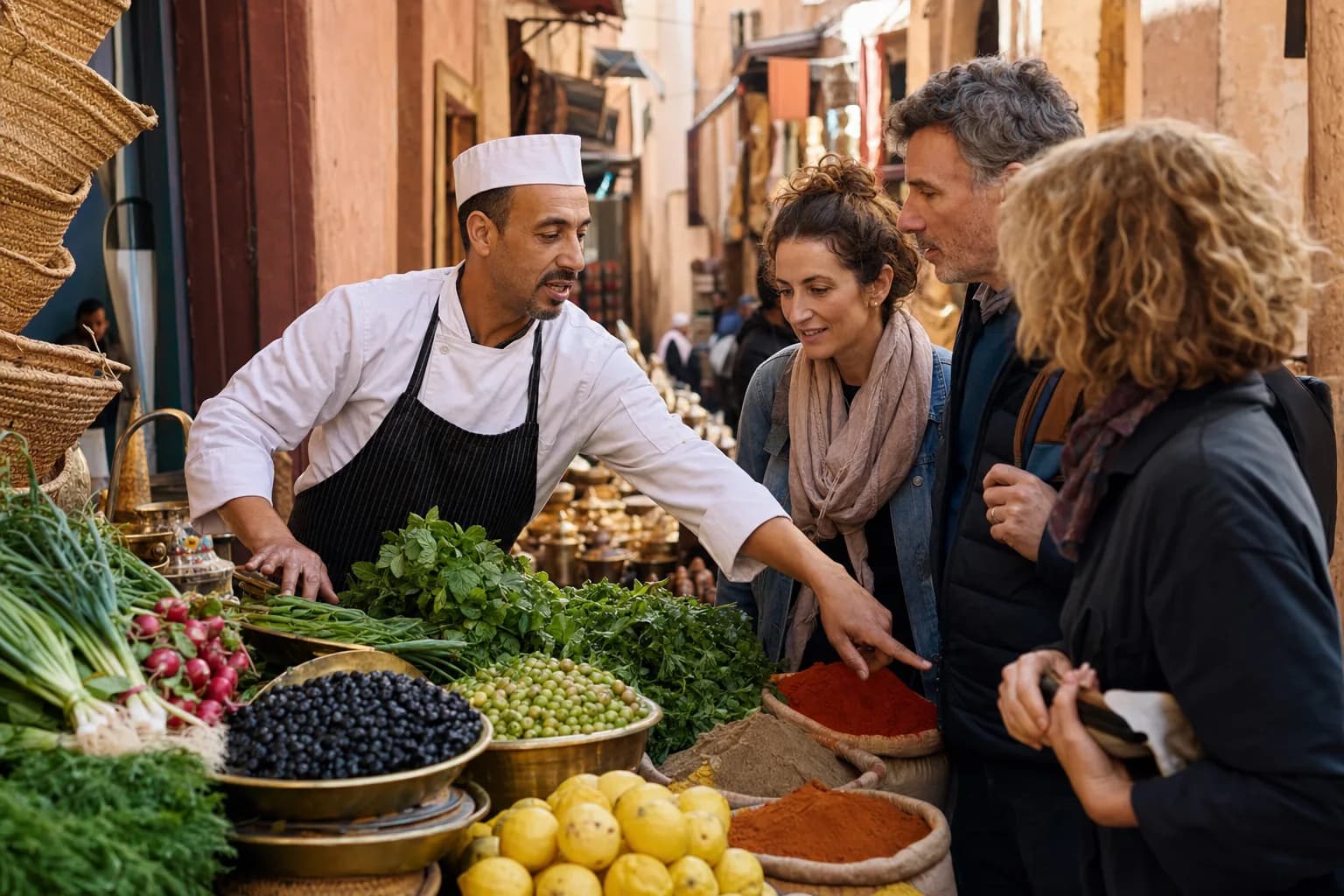
- Jemaa el-Fna fills with food stalls every evening: point, sit, eat.
And to drink
In the glass
- Mint tea
- Everywhere, sweet, poured from height. Accept at least one glass when it is offered.
- Orange juice
- Fresh-squeezed from carts and cafés in every city.
- Avocado juice
- Thick and cold, sweetened with sugar or honey: half smoothie, half milkshake.
- Coffee
- French-style: café cassé (espresso with a dash of milk) or café noir.
- Wine and beer
- In licensed restaurants, hotels and bars, not in traditional medina restaurants; Morocco makes its own wine, above all around Meknes.
Eight habits
Eat like a local
- Learn the meal rhythmLunch is the main meal, about 1 to 3; dinner is lighter and later.
- Start with breakfastMsemen or baghrir with olive oil, argan oil, honey, fresh cheese and mint tea; seek out neighbourhood bakeries.
- Eat at a restaurant du midiFor lunch, follow the locals to a simple place with a daily menu.
- Explore the spice souksAsk how ras el hanout is blended, and buy saffron, cumin and preserved lemons.
- Try street foodChoose busy stalls where food is cooked in front of you: brochettes, maakouda, fresh juice.
- Accept the teaTea is the social currency of Morocco; accept at least one glass.
- Eat Friday couscousThe traditional Friday lunch, after midday prayers.
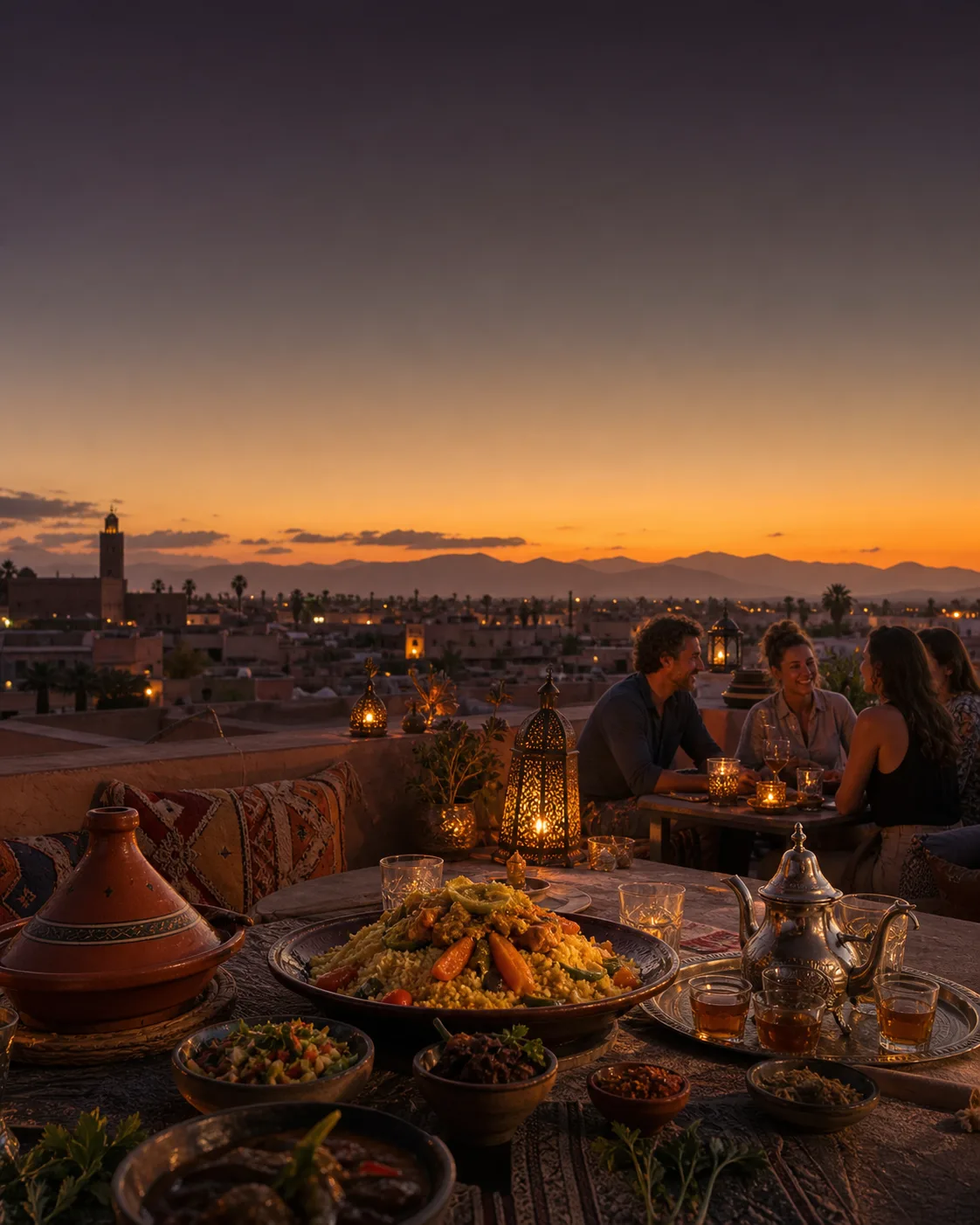
- End with a riad dinnerSalads, pastilla, tagine, fruit and tea: the whole cuisine in one evening.

- Ras el hanout, saffron and cumin
- Preserved lemons and olives
- Argan oil and amlou
Food in Morocco: your questions
What is the national dish of Morocco?
Tagine and couscous are both considered national dishes: tagine is eaten across the country every day; couscous is the traditional Friday meal.
Is street food safe to eat in Morocco?
Generally, if you choose busy stalls with high turnover and food cooked fresh in front of you. Use common sense, as anywhere.
When is the main meal of the day?
Lunch, about 1 to 3 pm. Dinner is lighter and later, about 8 to 10 pm. Friday lunch is couscous.
How much does a meal cost in Morocco?
It depends on where you eat: a street stall or a restaurant du midi lunch is the simplest, a café sits in the middle, and a multi-course riad dinner costs the most. City and setting move the price; check menus locally.
What should vegetarians know?
Morocco is welcoming: vegetable tagines, zaalouk, lentils, chickpeas, salads and bread. Ask whether a dish is cooked in meat broth, as some are.
Is alcohol available in Morocco?
In licensed restaurants, hotels and bars; not in traditional medina restaurants, and less during Ramadan. Morocco makes its own wine, above all around Meknes.
After you ask for a quote
What you get within 24 hours
- A day-by-day route, with the driving time between stops
- Stays matched to your style (riads, kasbahs, desert camps or hotels), named so you can look them up
- Which moments are private to you, and which are shared, such as a camp’s dining tent
- An itemised quote: what is included and what is not
- Who is planning your trip, and how to reach them on WhatsApp
- Free, with no obligation to book
Every trip is private and priced to your dates, so there is no fixed price list. Ask, and the proposal shows the full cost before anything is booked.
Markets, kitchens and the right tables.
المغربⵜⴰⴳⵍⴷⵉⵜ ⵏ ⵍⵎⵖⵔⵉⴱThe Kingdom of Morocco