Morocco trip costs
How much does a Morocco trip cost? Five things decide it.
It depends on five choices more than on the route: the month you travel, how many people share the vehicle and rooms, the level of riads and camps, the number of days, and private versus shared touring. Two people on the same route can pay very different amounts, so every private trip is quoted free within 24 hours.
Reviewed by Soufiane Idsidi, founder · Checked on · First published
What sets the price
Five things decide what your trip costs, and how each one moves it.
Two people on the same route can pay very different amounts. The difference is almost never hidden fees. It is these five choices, and you control most of them.
For a sense of scale, travellers report spending about 826 dirhams a day in Morocco on average, about 317 on a budget (Budget Your Trip; third-party figures, not the cost of a trip with us; check locally, prices change).

Driver one · the season
When you travel
Hotels, riads and camps price their rooms by demand, and demand in Morocco moves by place and by month. The same room can cost noticeably more in the busiest weeks than in a quieter one.
Keeps it down
- Months when your region is quieter (August in Marrakech and Fes, high summer in the desert)
- Ramadan, when rooms often trade softer
- Booking early for the popular weeks
Lifts it
- Christmas to New Year, and Easter
- Spring and autumn in Marrakech and Fes
- July and August on the coast and in the north

Driver two · your group
How many of you share
A private vehicle and driver are paid by the day for the whole car, whether one person rides in it or six. Rooms work the same way: two sharing a room pay less each than one person alone.
Keeps it down
- Filling the seats: a family of four or friends travelling together
- Sharing rooms, or a family room
- One van for the group rather than two cars
Lifts it
- Travelling solo, with the car and the room to yourself
- A larger group that needs a bigger vehicle or a second one
- A 4x4 for off-road legs

Driver three · the level of your stays
Where you sleep
The same route can be slept in guesthouse riads, boutique riads and kasbah hotels, or palace hotels and luxury camps. This is usually where two quotes for the same itinerary part ways.
Keeps it down
- Simple, well-run guesthouse riads
- A standard tent at a desert camp
- Breakfast-only nights in the cities, where dinner out is part of the fun
Lifts it
- Luxury riads and palace hotels
- A luxury desert tent with its own bathroom
- Suites, and extra nights in the most sought-after houses
Driver four · route length
How far, and for how long
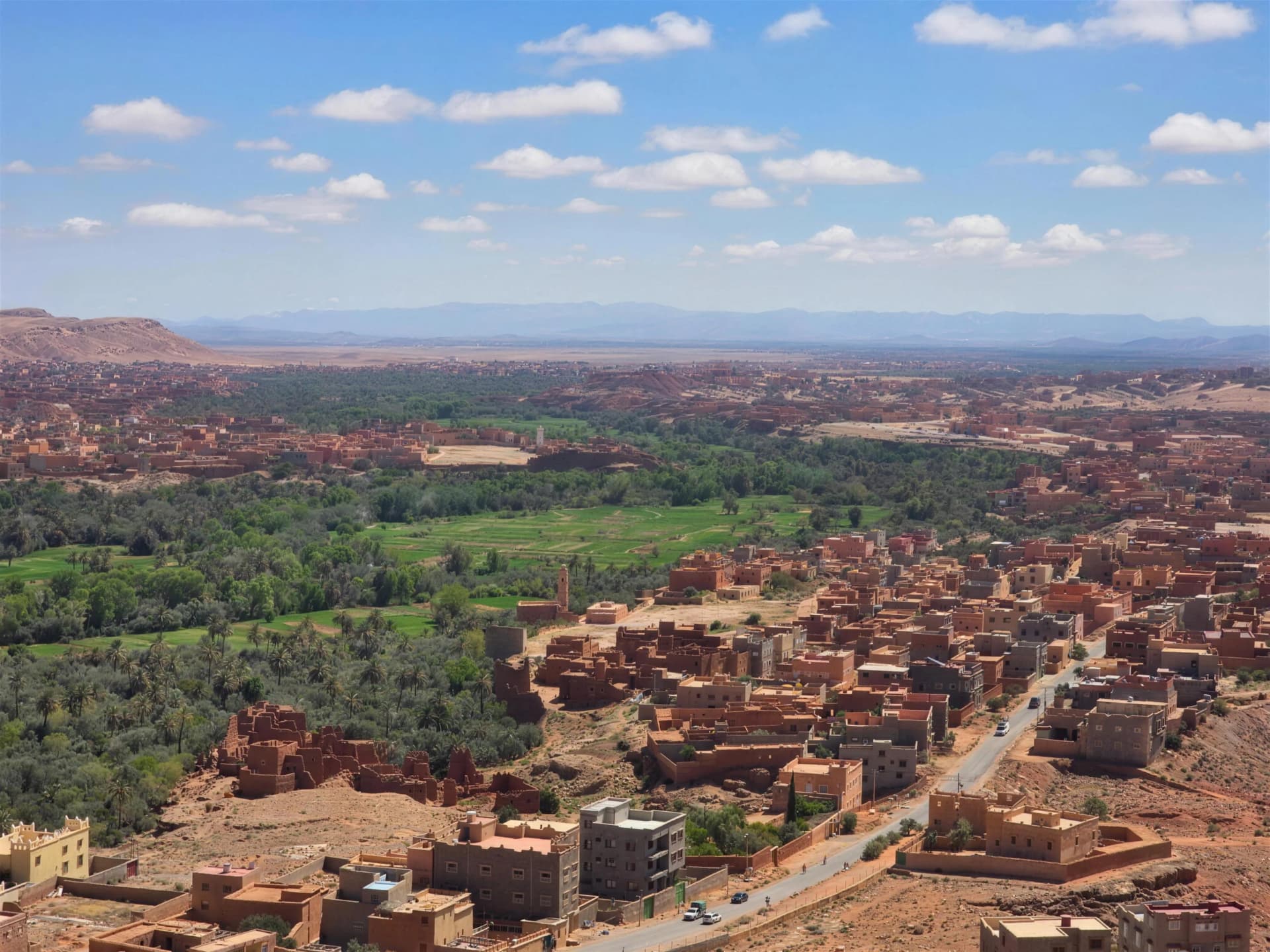
Every day adds a day of vehicle and driver, a night’s stay and its meals. Our listed desert trips from Marrakech are 5 days (4 nights), and each city or valley you add needs days of its own.
Keeps it down
- Fewer stops, with two nights in each
- Staying close to one base, with day trips out
- A shorter route done well rather than everything at once
Lifts it
- More days and more stops
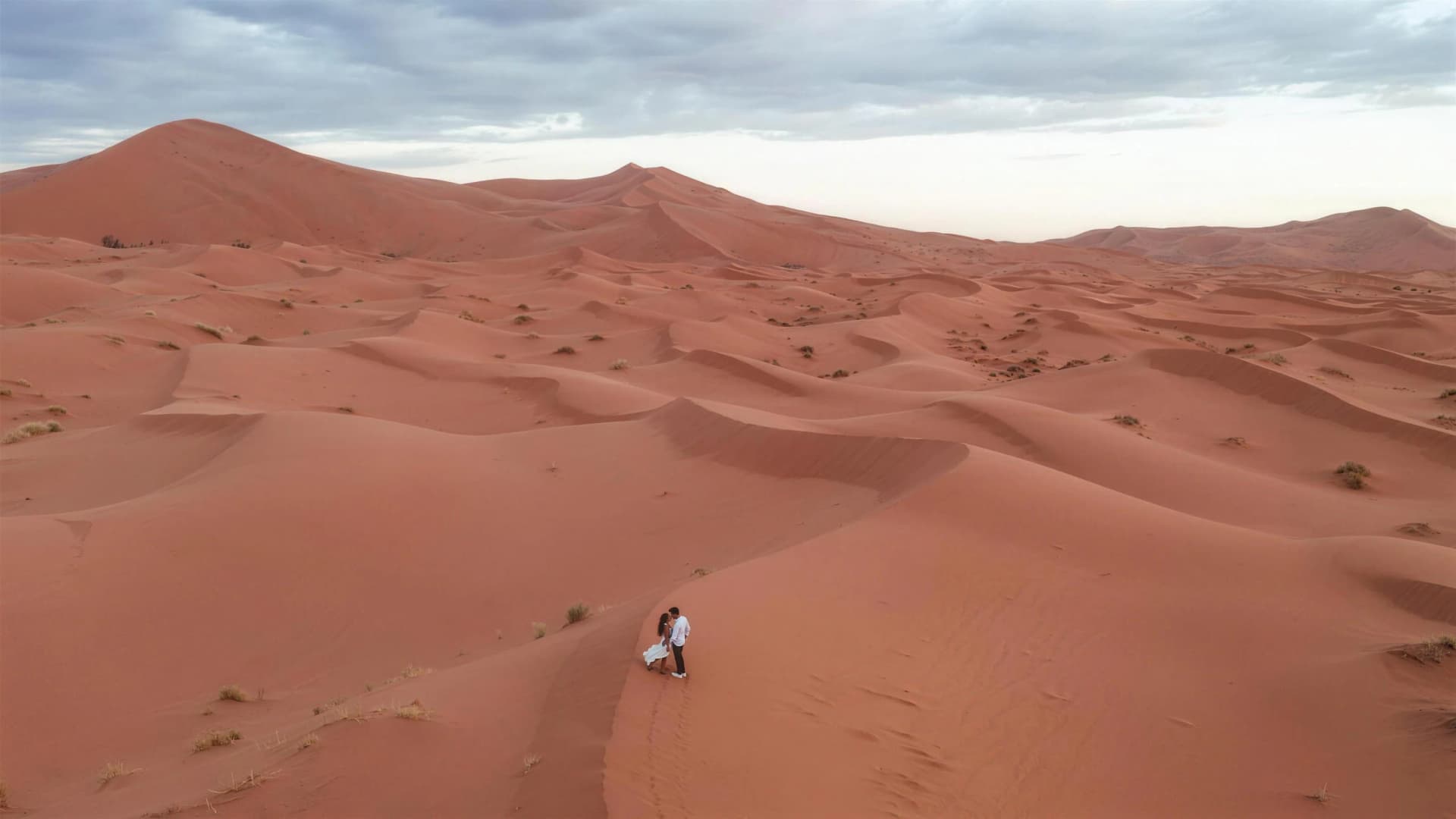
- Remote legs such as the dunes of Erg Chigaga, reached by 4x4
- Driver nights spent away from base on long routes
Driver five · how you travel
Private or shared
Shared group tours split the vehicle, the guide and the camp among strangers, so each seat costs less, on a fixed schedule. A private trip, which is all we run, puts the car, the driver and the guides on your timing.
Keeps it down
- A shared group tour on fixed dates
- Joining a shared camel ride or camp dinner
- Keeping guided time to the medinas that need it
Lifts it
- A fully private trip on your own dates
- A local guide with you every day
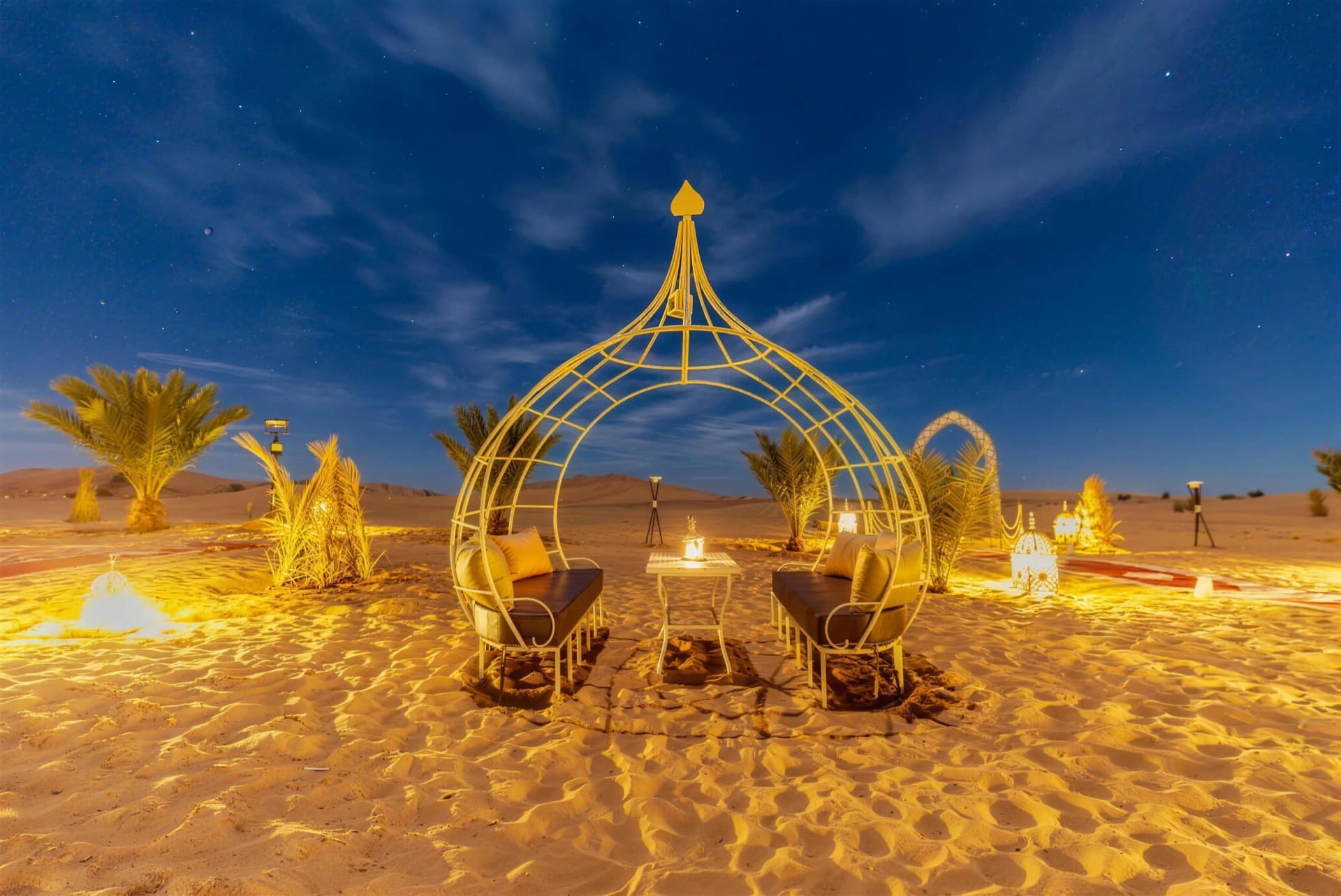
- Private extras: a private dinner in the dunes, a private cooking class
Season, place by place
Morocco has no single high season. It moves around the country.
Stays cost most where and when demand peaks. Marrakech and Fes fill in spring and autumn and go quiet in high summer; the coast and the north fill in July and August; the desert is near empty in July and August and full at New Year. This is the calendar our planners price against.
- Quiet: softer rates, more choice
- Shoulder
- Busy
- Peak: book early, rates at their highest

| Where | J | F | M | A | M | J | J | A | S | O | N | D |
|---|---|---|---|---|---|---|---|---|---|---|---|---|
| Marrakech & Fes | January: shoulder | February: busy | March: busy | April: peak | May: busy | June: shoulder | July: quiet | August: quiet | September: busy | October: peak | November: peak | December: shoulder |
| The Sahara | January: shoulder | February: shoulder | March: peak | April: peak | May: busy | June: shoulder | July: quiet | August: quiet | September: shoulder | October: peak | November: busy | December: shoulder |
| High Atlas valleys | January: quiet | February: shoulder | March: busy | April: peak | May: peak | June: peak | July: busy | August: busy | September: peak | October: peak | November: shoulder | December: quiet |
| Atlantic coast | January: quiet | February: quiet | March: shoulder | April: busy | May: shoulder | June: busy | July: peak | August: peak | September: busy | October: busy | November: quiet | December: quiet |
| Tangier & the north | January: quiet | February: quiet | March: shoulder | April: busy | May: busy | June: shoulder | July: peak | August: peak | September: busy | October: busy | November: quiet | December: quiet |
Two dates that always cost more: Christmas Eve and New Year's Eve, when many four- and five-star hotels and riads sell the night with a compulsory gala dinner. One that often costs less: Ramadan, when hotel rooms tend to trade softer. Its dates move about eleven days earlier each year.
One route, two budgets
The same seven days in Morocco, different choices.
Take one route, Marrakech over the Atlas to the Sahara and back. These are the choices that pull its cost one way or the other. Tell us which side you lean to and the quote follows.

Dates
Down: A quieter month for your route, outside the holidays
Up: Christmas to New Year, Easter, or a region’s peak month
Group
Down: Four to seven people sharing one van and doubled-up rooms
Up: One traveller with the car and a room alone
Stays
Down: Guesthouse riads and a standard desert camp
Up: Palace hotels, luxury riads and a luxury tent with its own bathroom
Pace
Down: Two nights in each place, fewer stops
Up: A new stop every night, plus remote 4x4 legs
Guides
Down: A local guide in Marrakech and Fes, where the medinas need one
Up: A guide with you every day of the trip
Extras
Down: Left optional, decided on the day
Up: A balloon flight, a private cooking class and a spa, all built in
Read a quote properly
What a trip price usually covers, and what sits outside it.
When you compare quotes, compare the lines, not the totals. Ours is itemised, so you can see exactly which of these are in and which are left for you to decide on the day.
6
Usually in the price
- Your private vehicle and driver for the whole route
- Every night’s stay, named so you can look it up
- Breakfast every day, and dinner and breakfast at the desert camp
- The camel ride to and from a Merzouga or Erg Chigaga camp
- Local guides in the cities your route needs them
- Airport pickup and drop-off
6
Your choice, in or out
- International flights: we quote the trip on the ground
- Optional activities, either built in or left payable on the spot
- Entrance fees to monuments, included if you prefer
- Tips for guides, drivers and camp staff, included if you prefer
- Lunches and city dinners, unless you want a meal plan
- Christmas and New Year gala dinners, where a hotel requires one
Currency, cash and cards
Money in Morocco, on the ground.

100 centimes to the dirham. A closed currency: change or withdraw it once you land, and keep 10, 20 and 50 notes for taxis, tips and stalls.
| Where | Pay with |
|---|---|
| Hotels, riads, larger restaurants and shops | Card usually accepted (Visa, Mastercard); some add a fee |
| Train tickets (ONCF) | Card at the station and online, or cash |
| Souks, street food, small cafés | Cash |
| Petit and grand taxis | Cash, in small notes |
| Tips for guides, drivers, camp and riad staff | Cash, in dirhams |
- Use bank ATMs
- Bank ATMs are the easiest source of cash and are widely found in cities (BMCE, Attijariwafa Bank, Banque Populaire). Most take Visa, Mastercard and Maestro. Choose to be charged in dirhams to avoid a poor conversion.
- Exchange with care
- Exchange bureaus in tourist areas vary, so compare two or three. Hotels and riads give the poorest rates; use them only for small sums. Change just enough at the airport for the first day.
- Carry cash
- Cards work in hotels, upscale restaurants and larger shops, Amex less often. Medinas, souks, street food, local cafés and the countryside run on cash, and some places add a fee for cards.
- Keep small notes
- Sellers and taxi drivers often cannot break a 200 note. Carry 10, 20 and 50 dirham notes and coins for tips, taxis and markets.
- Tipping is customary
- Tips are customary and matter to people’s income: guides, drivers, desert camp staff, riad staff, at checkout, porters, hammam attendants, restaurant servers. Tip in dirhams, in cash. Tips can be left to you or included in a quote, and a planner can suggest what is usual for your trip.
Travelling on your own
Ten habits to keep costs down.
If you are planning part of the trip yourself, these are the habits that save the most, in the order we would follow them.

Travel outside the peak weeks
Avoid Christmas, New Year and Easter if you can, and check when your region is busiest. The weather in the quieter months is often still very good.
Eat where locals eat
A few lanes away from the main squares, the same dishes cost far less than in the restaurants built for visitors.
Take the train between big cities
ONCF trains link Marrakech, Casablanca, Rabat, Fes and Tangier. They are comfortable and reliable, and second class is fine for most people.
Bargain in the souks
The first price in a souk is an opening offer. Haggling is expected and part of the culture; stay friendly and walk away if it does not feel right.
Ask riads for their direct rate
Many riads offer a better rate when you book with them directly. Email and ask.
Take cash from bank ATMs
Bank ATMs give a fairer rate than hotel desks. Avoid changing large sums at the airport.
Share grand taxis
Grand taxis between towns are shared and charge by the seat. Waiting for the car to fill means you do not pay for every seat.
Give Fes and Meknes more nights
Both imperial cities give you the medina experience with riads that are often gentler on the budget than Marrakech.
Combine stops into one trip
A multi-day route from Marrakech to the desert usually works out better than booking day trips and separate nights along the same road.
Carry small notes
Having 10, 20 and 50 dirham notes saves you from overpaying when nobody has change.
Day to day: what a meal costs, what a hammam costs and free things to do in Marrakech.
Who plans your trip


After you ask for a quote
What you get within 24 hours
Your proposal contains
- A day-by-day route, with the driving time between stops
- Stays matched to your style (riads, kasbahs, desert camps or hotels), named so you can look them up
- Which moments are private to you, and which are shared, such as a camp’s dining tent
- An itemised quote: what is included and what is not
- Who is planning your trip, and how to reach them on WhatsApp
- Free, with no obligation to book
Before you pay a deposit, we confirm
- Opening days for the places on your route, including Friday and holiday closures
- Meal stops along the way, and any dietary needs
- Prayer or Shabbat timing, if it matters to you
- Step-free access, wherever you need it
- The vehicle class for your group and your luggage
Every trip is private and priced to your dates, so there is no fixed price list. Ask, and the proposal shows the full cost before anything is booked.
Morocco trip costs: your questions
How much does a trip to Morocco cost?
There is no single price. Five things set it: when you travel, how many of you share the vehicle and rooms, the level of your stays, how many days and how far the route runs, and whether the trip is private or shared. Send us those and a planner replies within 24 hours with a free, itemised quote.
Why don’t you publish prices for your tours?
Every trip we run is private and built around your dates, your group and the stays you want, so a fixed price would be wrong for most people. A quote built for you is free and itemised, and there is no obligation to book.
Is Morocco cheaper per person for a group than for a solo traveller?
Yes, per person. A private vehicle and driver are paid by the day for the whole car, so the cost is shared as seats fill. Rooms work the same way: two sharing pay less each than one person alone. A solo trip carries the whole car and room.
When is Morocco most expensive?
Christmas to New Year and Easter cost the most, and many four- and five-star hotels sell Christmas Eve and New Year’s Eve with a compulsory gala dinner. Otherwise it depends on the region: Marrakech and Fes peak in spring and autumn, the coast and the north in July and August, and the desert at New Year.
Are international flights included in a quote?
No, not by default. We quote the trip on the ground: vehicle and driver, stays, guides and the meals and activities you choose. We can suggest which airport to fly into for your route.
Do I need cash in Morocco?
Yes. Cards work in hotels, upscale restaurants and larger shops, Amex less often. Medinas, souks, street food, local cafés and the countryside run on cash, and some places add a fee for cards. Take dirhams from a bank ATM after you land, carry small notes, and change or spend what is left before you fly home.
Who should I tip in Morocco?
Tips are customary and matter to people’s income: guides, drivers, desert camp staff, riad staff, at checkout, porters, hammam attendants, restaurant servers. Tip in dirhams, in cash. Tips can be left to you or included in a quote, and a planner can suggest what is usual for your trip.
Tell us the five things. We cost the trip.
المغربⵜⴰⴳⵍⴷⵉⵜ ⵏ ⵍⵎⵖⵔⵉⴱThe Kingdom of Morocco