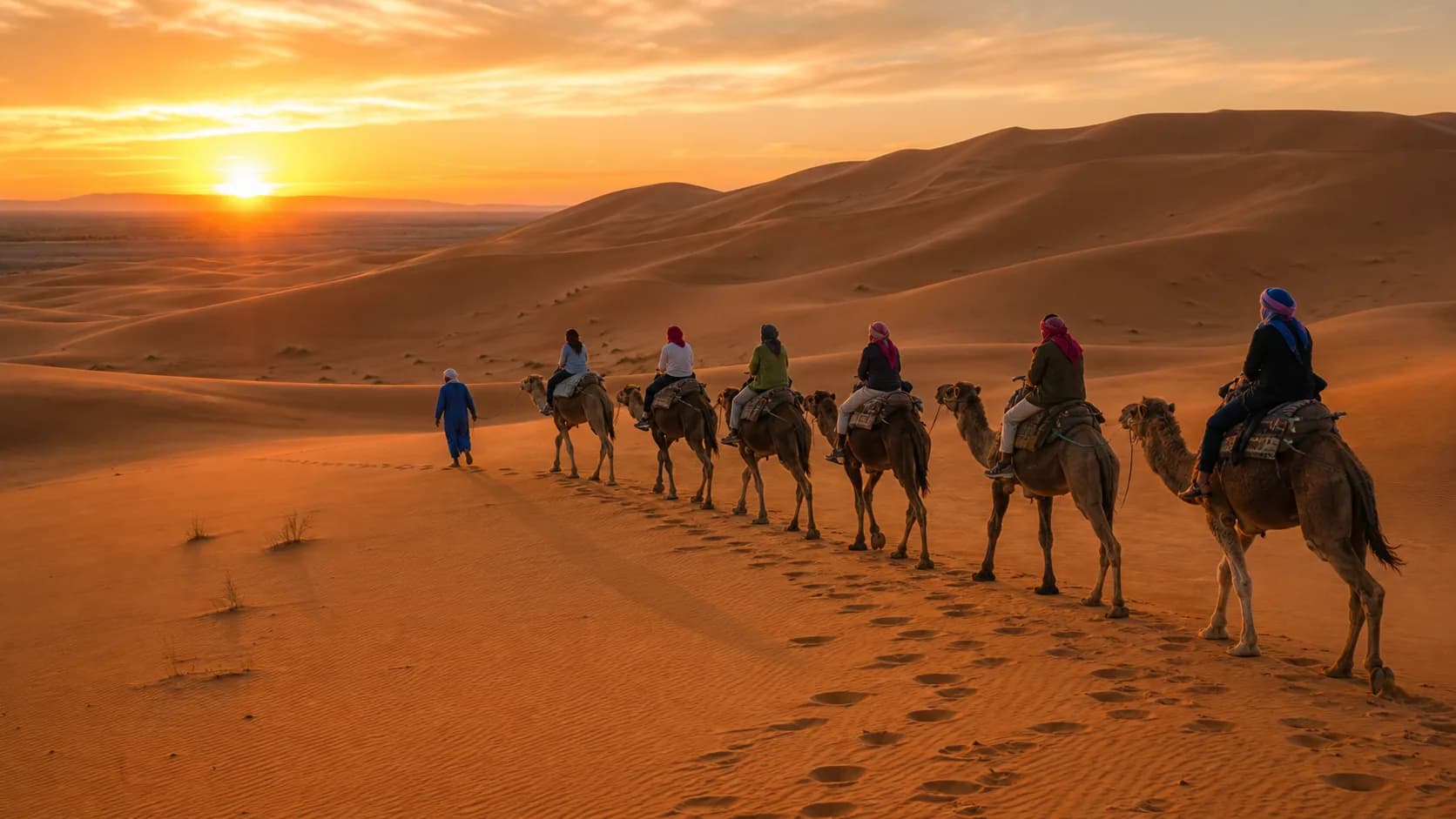
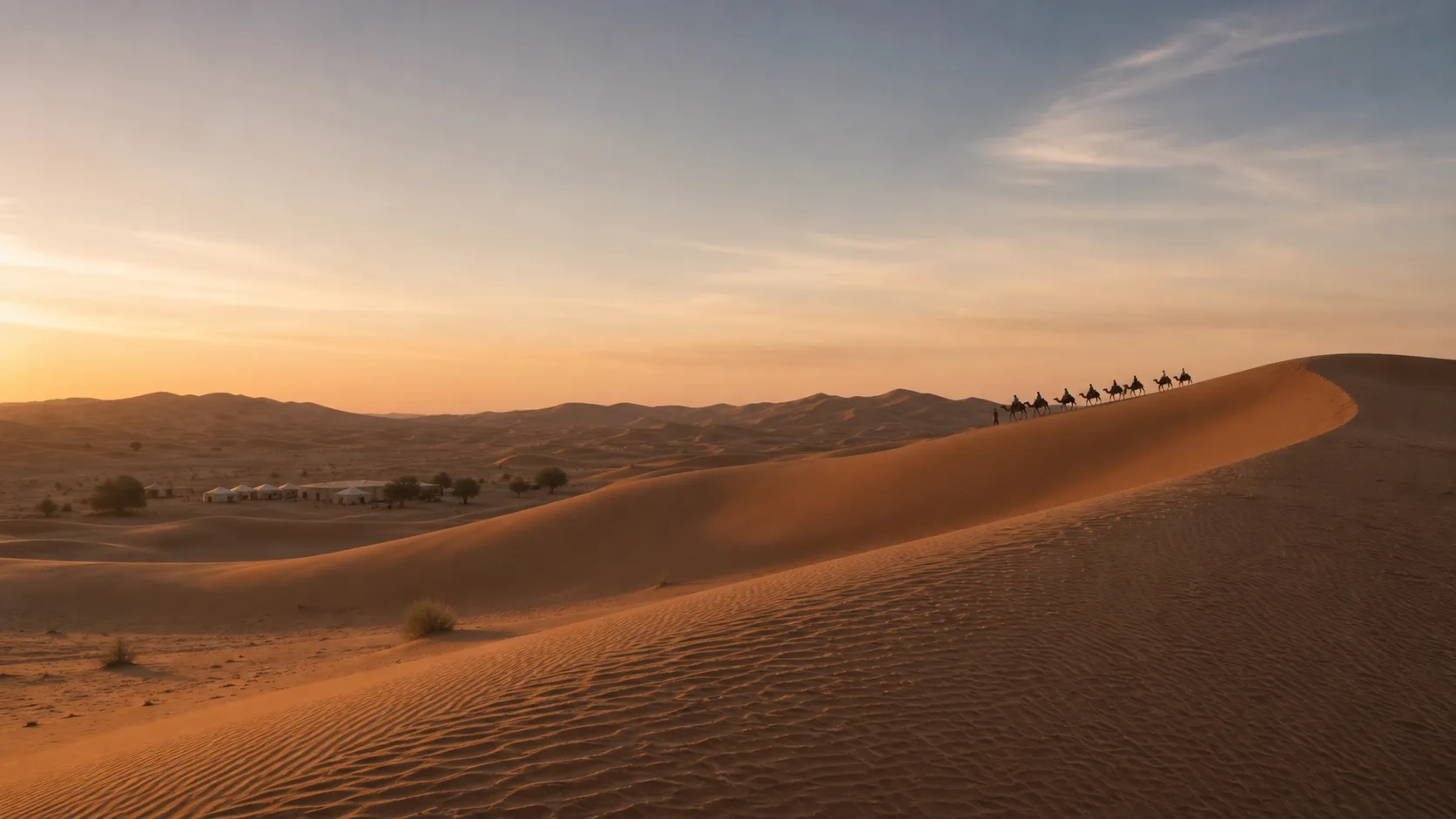
Almost every trip from Marrakech to Aït Benhaddou, Ouarzazate, the Dades valley or the Sahara uses one road: the N9 over the Tizi n'Tichka pass. For nine months of the year it is simply a scenic mountain drive. Between December and February it is the one part of a Morocco itinerary that the weather can interrupt. This guide explains what to expect and how we plan for it.
How high is it, and why does it matter?
The Tizi n'Tichka is the highest major road pass in Morocco. Most travel guides, including the French Routard guide, give its height as 2,260 m, the figure on the sign at the summit. A GPS measurement in 2022 put it at 2,205 m (Wikipedia). Either way it is more than 1,700 m above Marrakech, which is why the weather at the top can be completely different from the weather in the city.
Marrakech in December has average afternoon highs of about 20 °C (1991 to 2020 normals). On the same day the pass can be near freezing, in cloud, with snow on the verges. Rain in Marrakech in winter often means snow on the Tichka.
What happens when it snows
When snow settles on the road, the authorities close the pass at barriers on both sides and send ploughs up. Traffic waits or turns back. When the road is clear, it reopens. This is routine, and it is handled the same way every winter.
Dated examples from last winter:
- 16 December 2025. The pass was closed to traffic after heavy snowfall, reported by TelQuel.
- Late December 2025. A cold front brought more snow across the High Atlas, reported by Africanews, with traffic between Marrakech and Ouarzazate disrupted again (H24info).
Is the road safe?
The N9 has been widened and rebuilt over the last several years and is a much easier drive than it used to be. It is still a mountain road with many bends, trucks and steep sections. In winter the specific risks are:
- Ice in shaded bends early in the morning and after dark, even when the rest of the road is dry.
- Fog or low cloud near the top.
- Rockfall and mud after heavy rain.
- Queues when the road reopens after a closure.
How to plan around a closure
These are the rules we apply to winter itineraries.
1. Cross in the morning. Leave Marrakech around 8:00. If there was snow overnight, the ploughs have usually been through by mid-morning, and you still have daylight on the far side.
2. Do not cross on the day you fly. If your trip ends in Marrakech, come back over the pass the day before your flight, not the same morning. This is the single most useful rule.
3. Keep a spare half day. A winter desert trip with no slack breaks when one thing moves. A free afternoon in Marrakech or Ouarzazate costs little and absorbs a delay.
4. Have a plan B. If the pass is closed for longer, there are two ways round. Both are long:
- West and south through Agadir and Taroudant, then east via Taliouine and Tazenakht to Ouarzazate. Expect a very long day.
- For Merzouga only: approach from the north through Midelt and Errachidia, which works well if your trip also includes Fes. That road has its own winter snow near Ifrane and the Col du Zad.
5. Fly one way if you are short of time. Ouarzazate and Errachidia both have airports with a small number of Royal Air Maroc flights from Casablanca (Royal Air Maroc domestic flights). Schedules change by season, so check current timetables before building a plan on them.

Stops that make the crossing worthwhile
In good weather the drive is one of the best in the country. With stops it fills most of a day:
- Viewpoints on the climb, with terraced villages and walnut trees below the road.
- The summit, with stalls selling minerals and fossils. Buy if you like them and ignore the hard sell.
- Telouet, a short detour east of the pass, where the ruined Glaoui kasbah still has rooms of carved plaster and tile. The side road is narrow and is the first to be affected by weather.
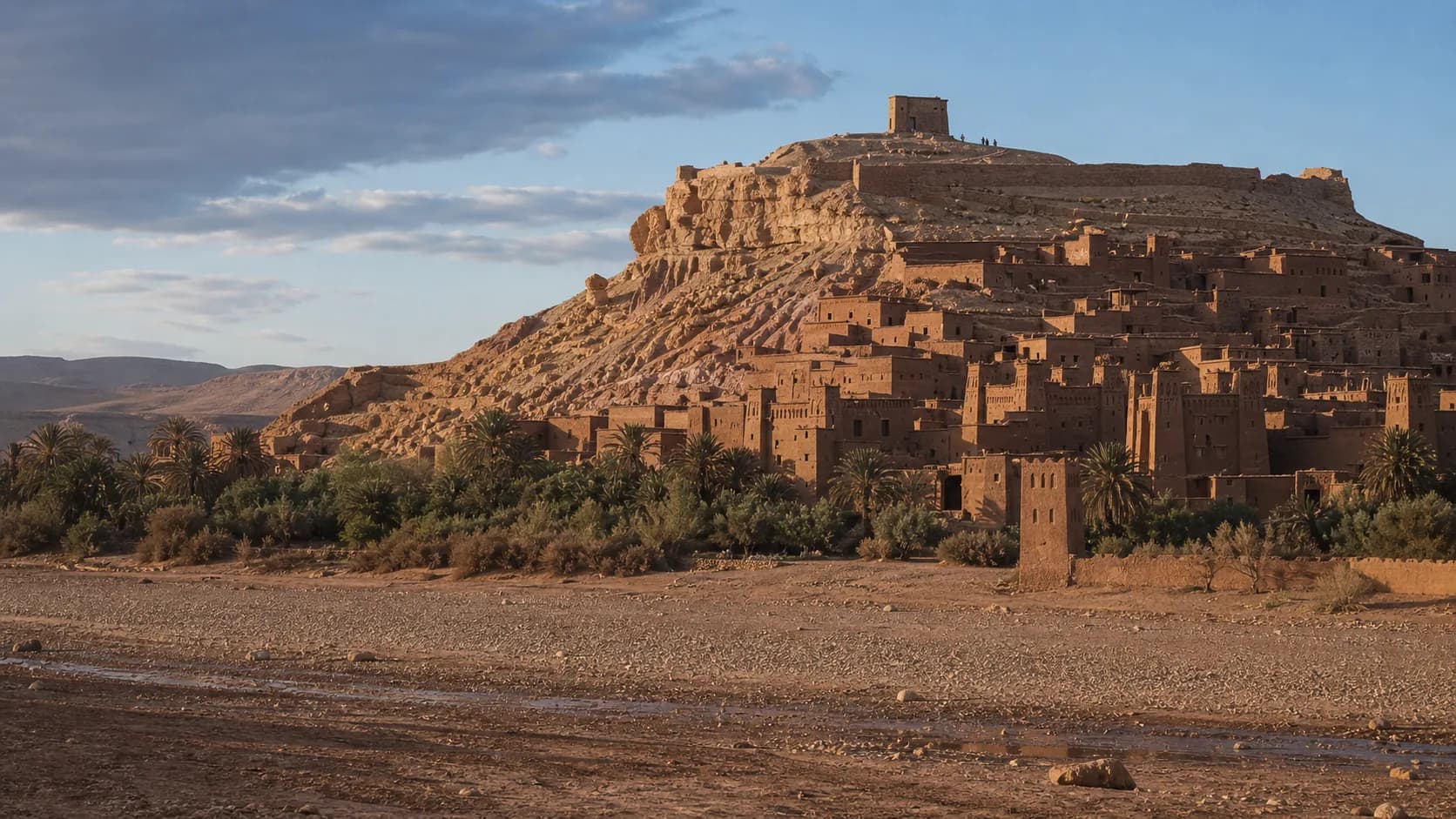
- Aït Benhaddou, the fortified village used in many films, about 30 km before Ouarzazate. In winter it is quiet and the low light suits it. See our Aït Benhaddou tours.
Winter driving times from Marrakech
These are driving times in normal conditions without stops. Add time for photos, lunch and winter caution.
| Leg | Distance | Driving time |
|---|---|---|
| Marrakech to Aït Benhaddou | about 180 km | about 3.5 to 4 hours |
| Marrakech to Ouarzazate | about 190 km | about 4 hours |
| Ouarzazate to Dades Gorge | about 115 km | about 2 hours |
| Ouarzazate to Merzouga | about 365 km | about 5.5 to 6 hours |
| Marrakech to Merzouga | about 560 km | 9 to 10 hours, best split over two days |
Late December has about ten hours of daylight (Solarwatch). A day that looks fine on paper in May can end in the dark in December, so winter itineraries need shorter driving days.
What about a day trip?
A day trip from Marrakech to Aït Benhaddou and back means crossing the pass twice, about seven to eight hours of driving in total. It is possible in winter but it leaves little margin, and you return over the pass towards dusk when ice starts to form. If you can spare a night in Ouarzazate or Aït Benhaddou, the trip is safer and far more relaxed. Other day trips from Marrakech, such as the Ourika valley or Imlil, stay on the north side of the mountains and are easier in bad weather.

What to have in the car
- A warm jacket within reach, not in the boot. If you stop at the top you will want it.
- Water and something to eat in case of a queue.
- Motion sickness tablets if anyone in the group needs them. There are a lot of bends.
- A charged phone. Signal is patchy near the top.
- Cash in dirhams for cafés and stalls along the road.
FAQ
Is the Tizi n'Tichka open in December? On most days, yes. It closes for short periods after snowfall and reopens when it has been ploughed. Check on the morning you travel. Your driver will do this for you.
How long do closures last? Usually a few hours, sometimes most of a day. Longer closures happen after exceptional snowfall but are not common.
Do I need a 4x4? No. The N9 is a paved main road and ordinary cars and minibuses use it all winter. A 4x4 does not help when the barriers are down.
Can I self-drive the pass in winter? You can, and rental cars do it every day. We suggest it only if you are comfortable on mountain roads with possible ice, and never at night.
What if the pass closes on the day of my flight? This is why we plan the return crossing for the day before. If it happens anyway, the transfer has to move and the airline decides what happens to the ticket. Travel insurance that covers missed departures is worth having in winter.
Is there another road to the desert? Yes, through Agadir and Taroudant, or from Fes through Midelt. Both are much longer, and waiting for the pass to reopen is usually quicker.
Plan a winter crossing
If you are travelling between December and February and want the desert in your trip, tell us your flight times and we will build the route with the right margin. Every trip is quoted individually. Send an enquiry, or read about the Sahara in winter and our Sahara desert tours.
Share this article
Written by
Serenity Morocco editorial team
Serenity Morocco Tours
Our in-house editors and Morocco travel designers research, write, and fact-check every guide — drawing on first-hand local knowledge across the country's cities, desert, mountains, and coast.
Get Morocco Travel Insights