All Comparisons

Marrakech vs Fes: The Ultimate Comparison

Choosing between Marrakech and Fes

Marrakech and Fes are Morocco's two most visited imperial cities, each offering a distinctly different experience. Marrakech is busier and more modern, and closer to the desert and mountains. Fes is older and more traditional, with working artisan quarters and a huge medieval medina. This comparison helps you decide which city suits your travel style—or why you should visit both.

Marrakech

Marrakech

The Red City - Morocco's most famous destination combining ancient medina, modern luxury, mountain views, and lively nightlife.

Fes

Fes

The Cultural Capital - Home to the world's oldest continuously operating university and best-preserved medieval medina, offering the most authentic Moroccan experience.

Side-by-Side Comparison

Feature
Marrakech
Fes
Medina Size
Large (600+ hectares)
Massive (300+ hectares, denser)
Tourism Level
Very High
Moderate-High
Main Square
Jemaa el-Fnaa (lively, touristic)
Place Seffarine (quieter, authentic)
Architecture
Red pisé (earthen walls)
Green-tiled roofs, intricate zellige
Accessibility
Easier to navigate
More maze-like
Luxury Hotels
100+ riads & resorts
50+ riads (smaller scale)
Day Trips
Atlas Mountains, Essaouira, desert
Meknes, Volubilis, Middle Atlas
Food Scene
International & traditional
Traditional Fassi cuisine
Nightlife
Rooftop bars, clubs
Limited (more conservative)
Shopping
Souks + concept stores
Traditional souks (better quality)
Climate
Hot summers, mild winters
Hot summers, cold winters
Airport Access
International hub (RAK)
Smaller airport (FEZ)
UNESCO Sites
1 (Jemaa el-Fnaa)
1 (Fes el-Bali medina)
Best For
First-time visitors
Culture seekers
Average Stay
3-4 days
2-3 days

Detailed Analysis

Comprehensive breakdown of advantages and limitations for each option

Marrakech

Advantages

  • More diverse accommodation from budget to ultra-luxury

    comfort
  • Better nightlife and rooftop dining scene

    experience
  • Easier to navigate with clearer landmarks

    comfort
  • More international restaurants and cuisines

    experience
  • Better proximity to Atlas Mountains and Sahara Desert

    flexibility
  • More organized and easier for first-time visitors

    comfort
  • Warmer climate year-round

    experience
  • International airport with more flight options

    flexibility
  • Evenings in Jemaa el-Fnaa square

    culture
  • More English spoken

    comfort

Limitations

  • Very touristy, especially in peak season

    experience
  • Aggressive vendors and persistent touts

    experience
  • Higher prices for similar quality goods

    value
  • Less authentic cultural experience

    culture
  • Can feel commercialized in tourist areas

    experience
  • Extremely hot in summer (40°C+)

    comfort
  • Traffic and noise in new city

    comfort
  • Souk quality more variable

    value

Fes

Advantages

  • Most authentic medieval medina experience

    culture
  • Superior artisan quality (leather, ceramics, textiles)

    value
  • Better traditional Moroccan cuisine

    experience
  • Fewer tourists, less crowded

    experience
  • Living medieval city with working trades

    culture
  • Home to world's oldest continuously operating university (Al Quaraouiyine)

    culture
  • Better value for authentic crafts

    value
  • More conservative, cultural immersion

    culture
  • Tanneries and artisan workshops

    experience
  • Less commercialized atmosphere

    culture

Limitations

  • Very difficult to navigate without guide

    comfort
  • Fewer luxury accommodation options

    comfort
  • Limited nightlife and entertainment

    experience
  • Less English spoken

    comfort
  • Tanneries can smell unpleasant

    experience
  • Cold winters (can snow)

    comfort
  • Fewer international restaurants

    experience
  • Smaller airport with fewer connections

    flexibility

Price Comparison

Understanding costs across different budget levels

Price Comparison

Category
BudgetPer Person
Mid-RangePer Person
LuxuryPer Person
Accommodation (per night)

$30-$60

Basic riad or hostel

$80-$150

Comfortable riad with breakfast

$200-$500

Premium riad or boutique hotel

Food (per day)

$15-$30

Street food and local restaurants

$40-$70

Mix of local and tourist restaurants

$100-$200

Fine dining and rooftop restaurants

Shopping (souvenirs)

$50-$100

Spices, small crafts

$150-$300

Quality textiles, ceramics

$500-$2000

Antiques, custom leather, carpets

Prices are estimates in USD and vary by season, availability, and specific providers. Always confirm current rates before booking.

When to Choose Each Option

Find the perfect match for your travel style and priorities

Choose Marrakech if you want:

A more accessible introduction to Morocco

Perfect For:

  • First-time visitors to Morocco
  • Nightlife and rooftop dining experiences
  • Easy access to mountains and desert
  • Wide range of accommodation options
  • International cuisine alongside traditional
  • Warm weather year-round
  • Instagram-worthy moments
  • Shopping in modern concept stores too

Choose Fes if you want:

The most authentic medieval Moroccan experience

Perfect For:

  • Deep cultural and historical immersion
  • Best artisan crafts and quality shopping
  • Authentic traditional Moroccan cuisine
  • Fewer tourists and crowds
  • Working medieval trades and workshops
  • Islamic architecture and scholarship
  • Photography of authentic Morocco
  • A more challenging, rewarding adventure

Visit Both if you want:

The complete Moroccan imperial cities experience

Perfect For:

  • Week-long or longer Morocco trips
  • Comparing Morocco's different facets
  • Most comprehensive cultural experience
  • Different architectural styles
  • Variety in atmosphere and energy
  • Best shopping in both cities
  • Complete food culture exploration
  • Rich travel stories and memories

In-Depth Analysis

1Atmosphere and Vibe

The atmosphere difference between Marrakech and Fes is striking. Marrakech pulses with cosmopolitan energy—a fusion of ancient tradition and modern luxury. The Jemaa el-Fnaa square transforms from day to night, filled with snake charmers, musicians, storytellers, and food stalls. Rooftop terraces offer sunset cocktails overlooking the medina. The city feels international, with French influence evident in cafes and restaurants.

Fes el-Bali keeps its medieval street plan. Donkeys carry goods through narrow lanes where cars cannot enter. The call to prayer echoes from ancient minarets. Artisans work in workshops their families have occupied for centuries. The atmosphere is more conservative, quieter, and deeply traditional. You're more likely to be the only foreigner on a street corner.

Marrakech Energy

Marrakech thrives on contrast. The medina's ancient walls contain contemporary art galleries. Traditional hammams sit beside luxury spas. Snake charmers perform near tourists sipping lattes. This fusion creates lively energy but can feel less authentic. The city knows it's a tourist destination and embraces it fully.

Fes Authenticity

Fes prioritizes preservation over tourism. Locals still live and work in the medina, continuing centuries-old traditions. The city feels less performative—artisans work whether tourists watch or not. This authenticity requires patience and cultural respect but rewards with genuine connection.

2Navigating the Medinas

Both cities present navigation challenges, but Fes takes it to another level. Marrakech's medina, while sprawling, has recognizable landmarks. The Koutoubia Mosque tower provides orientation. Main souks follow somewhat logical paths. Street signs exist in tourist areas. GPS works in many sections. First-time visitors can explore independently with reasonable success.

Fes el-Bali is genuinely maze-like. Streets dead-end unexpectedly. Passages narrow to shoulder-width. Landmarks repeat. GPS fails frequently due to tall buildings and overhead structures. Even locals sometimes get lost. Hiring a guide is highly recommended for first visits.

Marrakech Navigation Tips

Learn key landmarks: Jemaa el-Fnaa (central square), Koutoubia Mosque, Bahia Palace, Ben Youssef Madrasa. Download offline maps. Mark your riad location. The medina has logic once you understand the major souk divisions. Allow 2-3 days to build mental map.

Fes Navigation Strategy

Hire a guide for the first day or two. The medina has 9,400+ streets. Learn gate names (Bab Boujloud, Bab Rcif) as orientation points. Accept getting lost as part of the experience. Always allow extra time. Photography helps retrace steps. Many riads offer escort services to landmarks.

3Shopping and Craftsmanship

Both cities offer extensive shopping, but quality and prices differ significantly. Marrakech souks cater to tourists with increasing commercialization. You'll find beautiful items, but also mass-produced goods marketed as handmade. Prices start higher and require aggressive bargaining. Modern concept stores in Gueliz offer fixed-price alternatives.

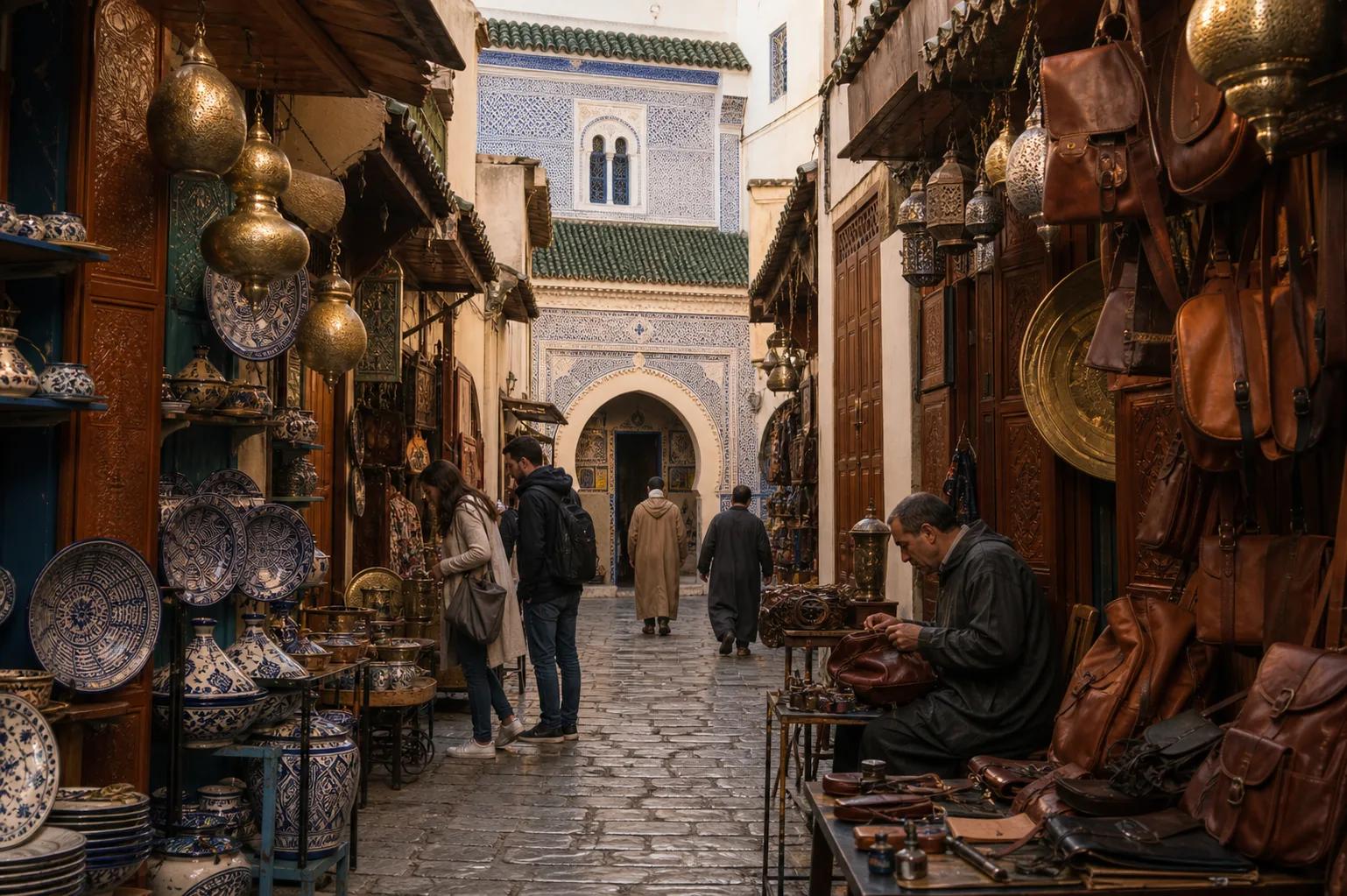
Fes remains Morocco's artisan capital. The city is known for its leather goods, ceramics, and metalwork. Workshops employ traditional techniques unchanged for centuries. While tourist goods exist, serious shoppers find superior quality at better prices. The famous tanneries still process leather using medieval methods.

What to Buy in Marrakech

Berber rugs (good selection), argan oil products, babouche slippers, lanterns, ceramics from Safi, leather bags (variable quality), spices from Rahba Kedima, modern Moroccan design from concept stores, cosmetics and textiles.

What to Buy in Fes

Premium leather jackets and bags from the tanneries, finest zellige tiles and ceramics, hand-embroidered textiles, cedar woodwork, copper and brass items, traditional babouches, handwoven carpets, blue pottery from Fes specific designs.

Bargaining Culture

In both cities, counter at about a third to a half of the seller's first figure; ending around half of it counts as doing very well. Every seller and every item differs. Marrakech vendors start higher and are more persistent. Fes bargaining feels less aggressive but requires patience. Quality items command fair prices in both locations. Never buy without comparing multiple shops.

4Food and Culinary Experiences

Food represents one of the clearest distinctions. Marrakech offers culinary diversity—traditional Moroccan alongside international cuisine. Rooftop restaurants serve fusion dishes. French-Moroccan bistros dot the new city. The Jemaa el-Fnaa food stalls provide authentic street food theater. Cooking classes cater to tourists with polished experiences.

Fes takes food seriously as cultural heritage. Traditional Fassi cuisine is considered Morocco's finest. Dishes like pastilla (sweet-savory pigeon pie), mchermel (lemony tagine), and rfissa (chicken with lentils) reach their peak here. Family restaurants serve recipes passed through generations. Tourist restaurants exist but authentic places dominate.

Marrakech Food Highlights

Jemaa el-Fnaa evening food stalls, rooftop restaurants with medina views, modern Moroccan fusion cuisine, international options (Italian, French, Asian), upscale riads with chef-prepared dinners, popular cooking classes at La Maison Arabe and others.

Fes Culinary Treasures

Traditional Fassi cuisine at family restaurants, famous pastilla preparation, street food near Bab Boujloud, local cafes serving harira and msemen, authentic home-style cooking in smaller riads, markets for fresh produce and local delicacies.

Vegetarian and Dietary Options

Marrakech handles dietary restrictions better with international restaurants and tourist-friendly menus. Fes requires more explanation but traditional cuisine includes excellent vegetarian options (vegetable tagines, couscous, salads). Both cities accommodate with advance notice.

5Historical and Cultural Sites

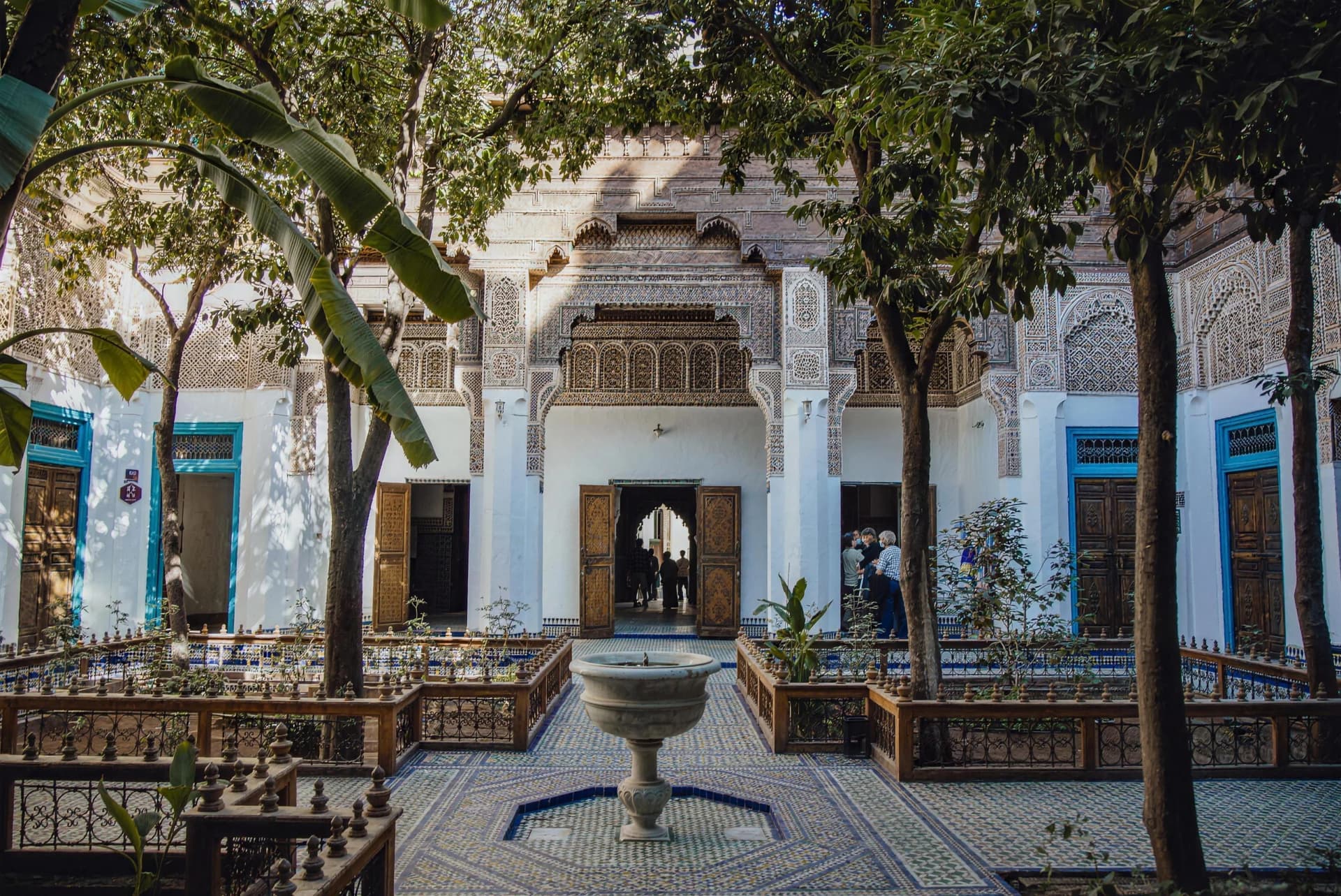
Both imperial cities overflow with historical significance. Marrakech showcases Saadian and Almoravid heritage through its palaces and gardens. The Bahia Palace demonstrates 19th-century luxury. Saadian Tombs reveal elaborate mausoleums. Ben Youssef Madrasa (currently closed for renovation) was once Morocco's largest Islamic college. Jardin Majorelle combines botanical beauty with Yves Saint Laurent history.

Fes claims deeper historical roots. The Al Quaraouiyine University, founded in 859 AD, is the world's oldest continuously operating university. The medina layout hasn't changed in 1,200 years. The Bou Inania Madrasa exemplifies Marinid architecture. Tanneries operate using methods from the Middle Ages. Every corner reveals layers of Islamic civilization.

Key Marrakech Sites

Jemaa el-Fnaa square (UNESCO intangible heritage), Bahia Palace, Saadian Tombs, Koutoubia Mosque exterior, Jardin Majorelle and YSL Museum, El Badi Palace ruins, Menara Gardens, Museum of Marrakech, traditional hammams.

Essential Fes Monuments

Fes el-Bali medina (UNESCO site), Al Quaraouiyine Mosque and University complex, Bou Inania Madrasa (a madrasa with its own minaret), Chouara Tanneries, Nejjarine Museum of Wooden Arts, Royal Palace gates, Andalusian Quarter, Merenid Tombs overlook.

Guided Tour Recommendations

Both cities benefit from expert guides. Marrakech allows some self-exploration; Fes strongly recommends guides for the medina. A half-day walk covers the main sights; a full day adds workshops, a long lunch and the quieter quarters. Specialized tours (food, photography, artisan workshops) take longer and add significant value. Our private guided days are quoted free to your plan.

6Day Trips and Excursions

Geographic location gives each city different excursion advantages. Marrakech serves as the gateway to Morocco's most famous day trips. The Atlas Mountains lie just 60km away, offering Berber village visits and mountain hikes. Essaouira's Atlantic coast is 2.5 hours drive. Ouarzazate and the desert are accessible for overnight trips. Ouzoud Waterfalls make an excellent day trip.

Fes provides access to lesser-known treasures. Meknes, another imperial city, sits just 60km away. Volubilis Roman ruins showcase Morocco's ancient history. The Middle Atlas mountains and cedar forests with wild monkeys lie nearby. Chefchaouen, the famous blue city, requires a long day trip but is doable.

Top Day Trips from Marrakech

Atlas Mountains and Berber villages (Imlil, Asni, Ourika Valley), Essaouira coastal town, Ouzoud Waterfalls, Ouarzazate and Ait Benhaddou (long day or overnight), Agafay Desert for sunset camel rides, Ouzoud waterfalls (among the highest in North Africa).

Best Excursions from Fes

Meknes imperial city and Volubilis Roman ruins (combine in one day), Chefchaouen blue city (long day, 3-4 hours each way), Middle Atlas mountains and Ifrane (Swiss-style town), Sefrou and waterfalls, Moulay Idriss holy town.

7Best Time to Visit

Climate considerations affect timing differently for each city. Marrakech enjoys warm weather year-round but summers (June-August) become extremely hot (40°C+). Spring (March-May) and fall (September-November) offer ideal conditions—warm days, cool evenings, blooming gardens. Winter (December-February) is pleasant during the day but evenings can be cool.

Fes experiences more temperature variation. Summers are hot but slightly cooler than Marrakech. Winters can be genuinely cold (occasionally below freezing at night), with rare snow. Spring and fall are also ideal. Ramadan affects both cities but more noticeably in conservative Fes where many restaurants close during fasting hours.

Seasonal Considerations

Peak season (March-May, September-November) brings best weather but higher prices and crowds. Summer offers lower prices but extreme heat. Winter sees fewer tourists and pleasant daytime temperatures but cold nights. Religious holidays and festivals affect availability and atmosphere.

Festival Calendar

Marrakech hosts the International Film Festival (November-December) and Marrakech Popular Arts Festival (June-July). Fes features the World Sacred Music Festival (May-June) and Fes Festival of Sufi Culture. Both celebrate Islamic holidays with special events.

8Accommodation Options

Accommodation variety differs significantly. Marrakech offers everything from $10 hostels to $1,000+ per night resorts. The city has over 100 luxury riads, international hotel chains, and boutique properties. La Mamounia, Royal Mansour, and Mandarin Oriental represent ultra-luxury. Mid-range riads provide excellent value. Budget travelers find plentiful hostels.

Fes has fewer accommodation options but maintains quality. The medina contains beautiful traditional riads at all price points. Luxury options are more limited but authentic. Many riads are family-run, offering intimate experiences. The new city (Ville Nouvelle) has standard hotels. Overall, expect 20-30% lower prices than Marrakech for comparable quality.

Marrakech Accommodation Strategy

Stay in the medina for atmosphere but expect some noise. Hivernage and Palmeraie offer luxury resorts with pools. Gueliz provides modern hotels near restaurants. Book well ahead during peak season. Riads typically include breakfast and airport transfers. Look for rooftop terraces for city views.

Fes Lodging Tips

Medina riads provide authentic experience but can be hard to find initially. Request escort from Bab gate. Newer riads offer modern amenities in traditional settings. Ville Nouvelle has easier access but less atmosphere. Smaller riads often provide more personal service than larger properties.

9Getting There and Around

Transportation access favors Marrakech. Marrakech Menara Airport (RAK) receives international flights from major European cities, the Middle East, and via Casablanca. The airport is modern and well-connected to the city (6km away). Train connections run to Casablanca and Tangier. The city has reliable taxis and ride-sharing.

Fes Saïss Airport (FEZ) is smaller with fewer international flights, primarily from France and the Middle East. Most visitors arrive via Casablanca Mohammed V Airport (4-hour train ride) or from Marrakech/Tangier. The train station (Fes Ville) is in the new city, requiring a taxi to the medina. Within Fes, taxis are abundant but agree on prices beforehand.

Airport Transfers

Marrakech: 20-30 minutes to medina, roughly 100-150 MAD by airport taxi (the taxi's fare; agree it before you set off). Fes: 25-40 minutes to medina, roughly 120-180 MAD by airport taxi. A private meet-and-greet transfer is quoted free with your trip, and most riads can also arrange a pickup.

Getting Around

Both medinas are walkable only—no cars. Marrakech medina is more accessible with bike taxis available. Fes medina requires walking, often uphill. Between medina and new city, use petit taxis (metered in theory). Agree on prices beforehand to avoid disputes. Ride-sharing exists in Marrakech but not Fes.

10Safety and Tourist Experience

Both cities are generally safe but present different challenges. Marrakech sees more tourist scams—fake guides, inflated prices, and persistent vendors. The heavy tourism creates an industry around extracting money from visitors. However, tourist infrastructure makes logistics easier. English is widely spoken. Tourist police are visible.

Fes has fewer tourists and thus fewer tourist-targeted issues. Scams exist but are less sophisticated. The main challenges are navigation and communication barriers. Some travelers find Fes more welcoming because locals are less tourism-fatigued. Women may experience more attention in Fes' conservative atmosphere.

Common Issues in Marrakech

Fake guides offering "free" tours then demanding payment, inflated prices in tourist areas, aggressive vendor tactics, rental scams, pickpockets in crowded areas. Stay firm, know fair prices, use registered guides only.

Navigating Fes Safely

Getting lost (not dangerous but time-consuming), difficulty finding specific locations, language barriers, conservative dress expected especially for women, medina can feel chaotic. Hire official guides, allow extra time, dress modestly, keep valuables secure.

Frequently Asked Questions

Common questions about this comparison

1Is Marrakech or Fes better for first-time visitors to Morocco?

Marrakech is generally better for first-time visitors. It offers easier navigation, more English-speaking locals, diverse accommodation options, and tourist-friendly infrastructure. The medina is less maze-like, making independent exploration possible. However, if you prefer authentic cultural immersion over convenience, Fes provides a more genuine medieval Moroccan experience.

2How many days should I spend in each city?

Allocate 3-4 days for Marrakech to explore the medina, visit palaces and gardens, experience the Jemaa el-Fnaa, and take a day trip to the Atlas Mountains or Essaouira. Fes requires 2-3 days to navigate the medina with a guide, visit tanneries and madrasas, shop in souks, and possibly take a day trip to Meknes and Volubilis. If you can only visit one, choose based on your travel style rather than time constraints.

3Which city is better for shopping?

Fes offers superior quality for traditional crafts—especially leather goods, ceramics, and metalwork. Prices are generally 20-30% lower than Marrakech for comparable items, and artisan quality is higher. Marrakech provides more variety including modern Moroccan design and fixed-price concept stores, but expect more tourist-grade goods mixed in. For serious shoppers seeking authentic crafts, Fes wins. For browsing and modern items, Marrakech offers more options.

4Is it worth visiting both cities on one trip?

Yes, if you have 7+ days in Morocco. The cities offer different experiences: Marrakech provides lively energy, luxury, and mountain/desert access; Fes delivers authentic medieval culture and superior craftsmanship. Together, they provide a comprehensive view of Morocco's imperial heritage. Many Morocco tours combine both cities. If time is limited, choose based on whether you prioritize accessibility and variety (Marrakech) or authenticity and tradition (Fes).

5Which city has better food?

Fes is widely regarded as Morocco's culinary capital, especially for traditional Fassi cuisine like pastilla, mchermel, and rfissa. Family restaurants serve recipes unchanged for generations. Marrakech offers more international options and tourist-friendly restaurants, with excellent rooftop dining and fusion cuisine. For authentic Moroccan cuisine, Fes wins. For dining variety and atmosphere, Marrakech excels. Both cities offer excellent cooking classes and food experiences.

6Which city is more expensive?

Marrakech is 20-40% more expensive across accommodation, dining, and shopping. Tourist demand drives higher prices. A mid-range riad in Marrakech costs $100-150/night versus $60-100/night in Fes for similar quality. Restaurant meals, guided tours, and souvenirs all cost more in Marrakech. However, Marrakech offers more budget options due to higher competition. Overall, Fes provides better value for money, especially for quality crafts and traditional experiences.

7Which city is easier to navigate?

Marrakech is significantly easier to navigate. The medina has recognizable landmarks (Jemaa el-Fnaa, Koutoubia Mosque), clearer souk divisions, and some GPS functionality. First-time visitors can explore independently with basic preparation. Fes el-Bali is genuinely maze-like with 9,400+ streets, minimal landmarks, and confusing layouts. Even locals get lost occasionally. Hiring a guide for Fes is highly recommended, especially for first visits. Both medinas are car-free and require walking.

8What about the weather differences?

Marrakech is warmer year-round with extremely hot summers (40°C+) and mild winters (18°C days). Fes experiences more temperature variation—hot summers (35°C) and cold winters (occasionally below freezing at night, rare snow). Both cities have ideal weather in spring (March-May) and fall (September-November). Marrakech winters are more comfortable for visitors sensitive to cold. Fes offers relief during summer heat waves. Consider Marrakech for winter visits, either city for spring/fall.

9Which city is better for day trips?

Marrakech wins for day trip variety and famous destinations. The Atlas Mountains (60km), Essaouira coast (2.5h), Ouzoud Waterfalls, and Ouarzazate/Ait Benhaddou are all accessible. Desert overnight trips are easy to arrange. Fes offers excellent but less famous excursions: Meknes/Volubilis, Middle Atlas mountains, and Chefchaouen (long day). Marrakech is the base for more day trips, making it better for travelers wanting diverse excursions.

10Are both cities safe for solo female travelers?

Both cities are generally safe but require awareness. Marrakech has more tourist infrastructure and visible tourist police, making logistics easier. However, heavy tourism creates attention and harassment. Fes is more conservative with stricter cultural norms; modest dress is more important. Both cities require standard precautions: book reputable riads, use registered guides, ignore touts, dress modestly, and be firm but polite. Many solo female travelers successfully visit both cities. Consider guided tours initially for comfort and cultural insight.
Final Verdict

Choosing between Marrakech and Fes depends entirely on your travel style and priorities. Marrakech offers lively energy, accessibility, luxury options, and serves as the perfect introduction to Morocco. Its blend of ancient tradition and modern comfort appeals to first-time visitors and those seeking variety. Fes provides the most authentic medieval Moroccan experience, superior craftsmanship, traditional cuisine, and deep cultural immersion—but requires patience, cultural sensitivity, and adventurous spirit.

Ideally, visit both cities to experience Morocco's full spectrum. Marrakech energizes and entertains; Fes educates and authenticates. Together, they reveal different facets of Morocco's imperial heritage. If time permits only one, ask yourself: do you prioritize convenience and variety, or authenticity and tradition? Your answer reveals which city suits you better.

Whichever you choose, both cities will leave lasting impressions. Marrakech's sunset over the Koutoubia Mosque and Fes' call to prayer echoing through the medina represent equally powerful Morocco moments. The "better" city is simply the one that matches your personal travel philosophy.

Related Comparisons

Continue exploring to make the best decision