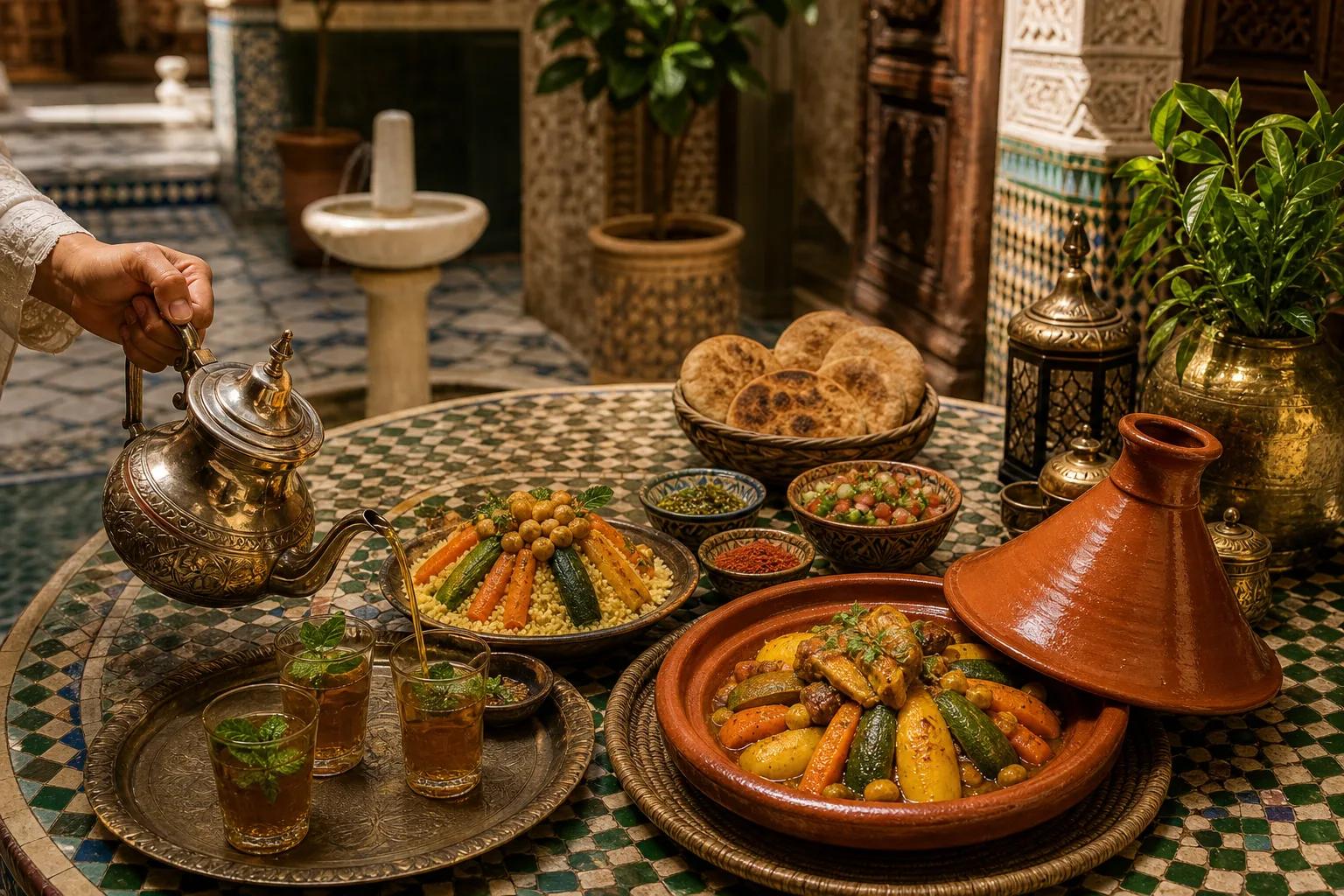
Moroccan mint tea, known locally as "atay" or "whiskey berbère," is far more than just a beverage—it's a sacred ritual, a symbol of hospitality, and an integral part of Moroccan social life. The prepa...
# Moroccan Tea Culture: The Art of Atay Prices on this page are typical local prices paid to third parties (hotels, guides, transport, activities), not our prices. They are rounded estimates: check locally, as prices change. Our own private trips are quoted free within 24 hours. ## Introduction Moroccan mint tea, known locally as "atay" or "whiskey berbère," is far more than just a beverage—it's a sacred ritual, a symbol of hospitality, and an integral part of Moroccan social life. The preparation and serving of tea is an art form passed down through generations, with specific techniques, etiquette, and cultural significance that define Moroccan identity. ## History of Tea in Morocco ### Origins Tea was introduced to Morocco in the mid-19th century by British merchants who sought new markets for their tea exports. What started as a novelty quickly became deeply embedded in Moroccan culture, evolving into a unique tradition quite different from other tea-drinking cultures. Timeline: - 1854: British merchants introduce Chinese gunpowder green tea to Morocco - 1860s: Tea becomes popular among upper classes - 1880s: Spreads to all social classes - 1900s: Becomes essential part of Moroccan identity - Present: Consumed more than water in many households ### Why It Became Essential Several factors contributed to tea's rapid adoption: - Climate: Hot climate made refreshing mint tea appealing - Social value: Provided focal point for gathering - Medicinal properties: Mint aided digestion, tea provided energy - Available ingredients: Mint grew abundantly in Morocco - Cultural fit: Aligned with Moroccan hospitality traditions ## The Sacred Recipe ### Essential Ingredients #### 1. Tea (Atay bil Shiba) Type: Chinese gunpowder green tea (exclusively) Brand favorites: - Sultan (most popular in Morocco) - Marrakech Tea - 555 brand - Ming Feng Why gunpowder tea? - Strong flavor stands up to sugar and mint - Rolled leaves unfurl during brewing - Slightly smoky flavor - Holds up to multiple infusions Quality grades: - Extra Special: Highest quality, uniform pellets - Special: Good quality, slight variations - Standard: Acceptable for daily use Price: 30-80 MAD per 250g depending on quality #### 2. Fresh Mint (Nana) Type: Spearmint (Mentha spicata), not peppermint Local names: - Nana (نعناع) - Likama Characteristics: - Bright green leaves - Sweet, mild flavor (not sharp like peppermint) - Strong aroma - Smooth, not hairy leaves Seasonality: - Best: Spring and summer (fresh, tender) - Winter: Still available, stronger flavor - Year-round availability in Morocco Amount: Large handful per pot (generous) Quality signs: - Bright green color - No yellowing or brown leaves - Strong, fresh aroma - Perky, not wilted Price: 2-5 MAD per large bunch #### 3. Sugar Type: White granulated sugar or sugar cubes Amount: VERY generous (shocking to foreigners) Traditional ratio: 1:3 tea to sugar by volume Why so much sugar? - Balances bitter green tea - Energy source historically - Shows generosity - Cultural preference - Preservative in hot climate Sugar variations: - Can request less (ask for "shwiya sukkar" - little sugar) - Without sugar ("bla sukkar") - rare request - Very sweet ("helou bzef") - extra sugar #### 4. Water - Preferably spring or filtered water - Must be boiling for first rinse - Lower temperature for brewing (80-85°C ideal) ### Optional Additions Different regions and occasions may include: - Wormwood (Chiba): Bitter herb, southern Morocco - Lemon verbena (Louiza): Fragrant addition, often in winter - Orange blossom water: Special occasions - Sage: Some regions - Marjoram: Occasional addition - Geranium leaves: Fes specialty - Pine nuts: Floated on top, Moroccan Sahara - Cinnamon: Winter variation - Anise seeds: Some regional varieties ## The Tea Ceremony: Traditional Preparation ### Equipment Needed #### 1. Teapot (Berrad) Material: Silver-plated brass or stainless steel Traditional style: Ornate, decorated, slightly bulbous Size: Small to medium (serves 4-6 small glasses) Features: - Long curved spout for proper pouring - Secure lid - Heat-resistant handle Care: Rinse well, don't use soap inside (builds patina) #### 2. Tea Glasses (Kisan atay) Style: Small, decorated glasses with gold or colored designs Size: 2-3 oz capacity (shot glass sized) Material: Heat-resistant glass Decoration: Colorful patterns, often gold-rimmed Why small? Meant to be refilled multiple times #### 3. Serving Tray (Tabla) Material: Brass, copper, or silver-plated Style: Ornate, often hand-engraved Size: Large enough for teapot and glasses #### 4. Tea Set Accessories - Sugar bowl - Mint basket/bowl - Tongs for sugar - Tea caddy ### Step-by-Step Traditional Preparation This is the art that takes years to master: #### Step 1: Rinse the Tea 1. Put 1-2 tablespoons gunpowder tea in pot 2. Add small amount boiling water 3. Swirl to rinse leaves 4. Pour out this water immediately Purpose: Removes bitterness and dust, opens leaves #### Step 2: Add Sugar 1. Add generous amount of sugar to pot (3-5 tablespoons minimum) 2. Some add even more (traditional ratio) #### Step 3: First Infusion 1. Add fresh boiling water (fill pot 1/3) 2. Let steep 2-3 minutes 3. Pour small amount in glass to test strength 4. Return to pot if not ready 5. This "tests" the tea #### Step 4: Add Mint 1. Take large bunch of fresh mint 2. Bruise stems slightly (releases oils) 3. Stuff generously into pot (should fill it) 4. Add more boiling water to fill pot #### Step 5: Second Steeping 1. Let steep 3-5 minutes 2. Mint infuses into tea 3. Sugar dissolves completely #### Step 6: The Pour This is the most critical step - an art form Technique: 1. Hold pot high above glasses (12-24 inches) 2. Pour steadily in one continuous stream 3. Move pot to create thin stream 4. Each glass gets equal amount 5. Pour creates foam (essential!) Why pour from height? - Aerates tea - Creates foam layer (sign of good tea) - Cools tea slightly - Shows skill - Theatrical and welcoming The foam: Called "turban" or "crown," must have thick foam layer #### Step 7: Return and Repeat 1. Pour all glasses 2. Return tea from glasses to pot (mixing) 3. Pour again from height 4. Repeat 2-3 times Purpose: Ensures even strength and perfect foam #### Step 8: Serve 1. Serve on tray 2. Offer to guest first (oldest/most honored) 3. Right hand only 4. May include pastries ### Modern Shortcuts Many modern Moroccans simplify: - Tea bags (less common) - Less ceremony - Electric kettle - Less mint - Less sugar (health conscious) But traditional method still preferred for guests and special occasions. ## Tea Service and Etiquette ### Serving Protocol #### Who Prepares? - Traditionally: Male head of household - Modern: Anyone can prepare - Special occasions: Still often male head - Cafés: Specialized tea makers #### Serving Order 1. Most honored guest first 2. Eldest guests 3. Other guests 4. Family members 5. Children last 6. Server serves themselves last #### Number of Servings "The first glass is as gentle as life, the second is as strong as love, the third is as bitter as death" Traditional: Minimum three glasses - First pour: Weakest - Second pour: Perfect balance - Third pour: Stronger, slightly bitter Polite to accept: At least two or three glasses Refusing: Can be seen as rude unless good reason ### Guest Etiquette #### As a Guest Receiving Tea Do: - Accept tea graciously - Wait for host to drink first - Drink at least 2-3 glasses if possible - Compliment the tea - Use right hand only - Sip, don't gulp - Hold glass from top rim (it's hot!) - Place glass on tray between sips Don't: - Refuse outright without reason - Drink with left hand - Blow on tea to cool it - Finish too quickly (implies you want to leave) - Overstay after tea is finished #### Declining Politely If you must decline: - "Shukran, drunk already" (Thank you, I've already drunk) - Health reasons are accepted - Never refuse first offer without explanation #### When to Leave - After third glass is acceptable - Wait for social cues - Don't leave immediately after drinking - Some conversation is expected ### Host Responsibilities #### Preparing for Guests - Always have tea ingredients ready - Fresh mint essential - Clean glasses and pot - Proper tray setup - Accompanying sweets #### During Service - Prepare tea with care (shows respect) - Pour from height (shows skill) - Ensure foam on each glass - Keep conversation flowing - Offer multiple rounds - Provide pastries/dates ## Regional Variations ### Marrakech Style - Standard preparation - Very sweet - Generous mint - Often with wormwood in summer ### Fes Style (Atay bil Louiza) - Sometimes adds lemon verbena - Slightly less sweet than Marrakech - Refined preparation - May add geranium leaves ### Saharan/Desert Style (Atay Sahrawi) - Sometimes with pine nuts floating on top - Less mint (scarce in desert) - May include wild desert herbs - Very strong tea - Extremely hot despite climate Cultural note: Refusing Sahrawi tea is serious offense ### Berber Style (Atlas Mountains) - May include wormwood (chiba) - Sometimes sage - Local wild herbs - Less sweet than urban areas - Stronger tea ### Northern Morocco (Tangier/Tetouan) - Spanish influence slight - Similar to standard but regional herbs - May be slightly less sweet ### Essaouira/Coastal - Standard preparation - Sometimes lemon verbena - Fresh mint always available ## Best Tea Houses and Cafés ### Marrakech #### Café des Épices - Location: Rahba Kedima, Medina - Setting: Rooftop overlooking spice square - Price: 15-20 MAD - View: Spice market, medina rooftops - Atmosphere: Bustling, authentic #### Nomad - Location: Medina - Setting: Modern rooftop - Price: 25 MAD - View: Medina panorama - Style: Contemporary #### La Famille - Location: Hidden medina garden - Setting: Lush garden - Price: 20 MAD - Atmosphere: Peaceful, artistic - Specialty: Organic teas #### Kosybar - Location: Medina - Setting: Rooftop terrace - Price: 30 MAD - View: Koutoubia mosque - Atmosphere: Lounge-style ### Fes #### Café Clock - Location: Medina - Setting: Rooftop terrace - Price: 20 MAD - Atmosphere: Cultural café - Special: Cultural events, music #### Riad Rooftop Cafés - Various riads in medina - Authentic settings - 15-25 MAD - Medina views ### Casablanca #### Rick's Café - Location: Old Medina - Setting: Movie-themed elegance - Price: 40 MAD - Atmosphere: Nostalgic, upscale #### La Sqala - Location: Old Medina, fortress - Setting: Garden, historic - Price: 25 MAD - Atmosphere: Relaxed, historic ### Essaouira #### Taros Café - Location: Medina - Setting: Rooftop terrace - Price: 20 MAD - View: Medina and ocean - Atmosphere: Bohemian #### Various Ramparts Cafés - Along the sea walls - Ocean views - 15-20 MAD - Breezy, relaxed ### Tangier #### Café Hafa - Location: Cliff edge - Setting: Terraced overlooking Strait of Gibraltar - Price: 10 MAD (very affordable) - View: Spain across strait, ocean - History: Famous café since 1921, frequented by Beat Generation writers - Atmosphere: Legendary, timeless #### Café Baba - Location: Medina - Price: 10 MAD - History: Another Beat Generation haunt - Atmosphere: Authentic, local ### Chefchaouen #### Café La Belle Vue - Location: Plaza Uta el-Hammam - Setting: Main square - Price: 15 MAD - View: Blue medina - Atmosphere: Central, lively ### Desert Camps #### Sahara Camps - Traditional preparation - Under stars - Often with ceremony - Around fire - Most authentic experience ## Health Benefits ### Green Tea Benefits - Antioxidants - Boosts metabolism - Mental alertness (caffeine) - May aid weight loss - Heart health ### Mint Benefits - Aids digestion - Relieves stomach discomfort - Fresh breath - Cooling effect - Aromatherapy ### Combined Benefits - Digestive aid after heavy meals - Refreshing in hot climate - Social/mental health (gathering ritual) - Hydration ### Health Concerns - Very high sugar content - diabetes concern - Caffeine - may affect sleep - Teeth staining - from tea - Blood sugar spikes - from sugar Healthy modifications: - Request less sugar - Limit to 1-2 glasses - Drink water alongside - Don't drink late in evening (caffeine) ## Tea in Moroccan Daily Life ### Morning - First tea of day - With breakfast (msemen, baghrir) - Before work ### Midday - After lunch - Break in work day - Social gathering time ### Afternoon (Most Important) - 3-5 PM peak tea time - With pastries - Social visits - Business meetings ### Evening - After dinner - Family time - Before bed (despite caffeine!) ### Special Occasions - Weddings - Religious holidays - Family gatherings - Business negotiations - Sealing deals ## Business and Social Significance ### Business Negotiations - Never rush into business - Tea first, business later - Multiple rounds of tea = serious negotiation - Agreement sealed over tea ### Hospitality - Refusing tea = refusing hospitality - Most important gesture of welcome - Sign of respect - Creating bonds ### Social Bonding - Slows pace of life - Forces people to sit together - Conversation facilitator - Community building ## Buying Tea and Equipment ### Where to Buy Tea #### Grocery Stores - Sultan brand widely available - Standard quality - 30-50 MAD per 250g #### Souks - Bulk tea available - Better prices - Various quality levels - Can sample #### Specialty Tea Shops - Higher quality - Expert advice - Premium brands - 50-100+ MAD per 250g ### Tea Equipment Shopping #### Souks and Medina Shops - Traditional designs - Haggle for price - Wide variety - Can be cheaper #### Modern Stores - Fixed prices - Consistent quality - Less ornate - Easier for tourists ### What to Buy as Souvenirs - Tea pot set: 200-800 MAD - Glasses (set of 6): 50-150 MAD - Serving tray: 150-500 MAD - Tea: 50-100 MAD for quality - Complete set: 500-2000 MAD Shipping considerations: Glass is fragile, pack well ## Making Tea at Home (Outside Morocco) ### Finding Ingredients #### Tea - Online: Amazon, specialty tea shops - Asian markets may carry gunpowder tea - Middle Eastern stores - Order Moroccan brands online #### Mint - Fresh spearmint (not peppermint!) - Grow your own (easy) - Farmers markets - Grocery stores (fresh herbs section) #### Equipment - Online Moroccan imports - Middle Eastern stores - Can substitute with small teapot - Regular small glasses work ### Home Preparation Tips - Follow traditional method - Don't skimp on mint - Adjust sugar to your preference (start with less) - Practice the pour - Serve to guests as ceremony ## Learning More ### Cooking Classes Many riads and cooking schools include tea ceremony: - La Maison Arabe (Marrakech) - Café Clock (Fes) - Various riads - 200-400 MAD per class ### Cultural Experiences - Stay in family riad (tea ceremony included) - Accept local invitations - Visit tea houses - Watch preparations ### Books - "Moroccan Tea Culture" by various authors - General Moroccan cookbooks include tea sections ## Common Phrases ### Ordering Tea - "Atay, afak" - Tea, please - "Atay bil nana" - Tea with mint (standard) - "Shwiya sukkar" - Little sugar - "Bla sukkar" - Without sugar (rare) - "Atay b'louiza" - Tea with lemon verbena ### Compliments - "Atay bnin!" - Good tea! - "Shukran bzef" - Thank you very much - "Atay dyalk mezyan" - Your tea is good ### Accepting/Declining - "Naam, afak" - Yes, please - "La, shukran" - No, thank you (use sparingly) - "Shrabt baraka" - I've drunk enough ## The Poetic Side of Tea Moroccan tea has inspired poetry, sayings, and wisdom: - "Atay bla nana bhal haya bla hana" - Tea without mint is like life without joy - "The first glass is as gentle as life, the second is as strong as love, the third is as bitter as death" - "A guest is a gift from God" ## Conclusion Moroccan tea is not merely a beverage—it's a philosophy, an art form, and a way of life. It represents the Moroccan values of hospitality, family, community, and taking time for life's pleasures. Whether in a luxurious riad, a humble home, or a desert tent, the tea ceremony remains constant, a thread connecting all Moroccans and welcoming visitors into their world. To truly understand Morocco, one must sit down, accept a glass of tea, and allow the ritual to unfold. In that sweet, minty sip poured from high above, you'll taste not just tea, but centuries of tradition, genuine hospitality, and the warmth of Moroccan culture. --- Last updated: February 2026
Ready to Taste Morocco?
Join our food tours and cooking experiences to discover authentic Moroccan cuisine firsthand.
Explore Food Tours