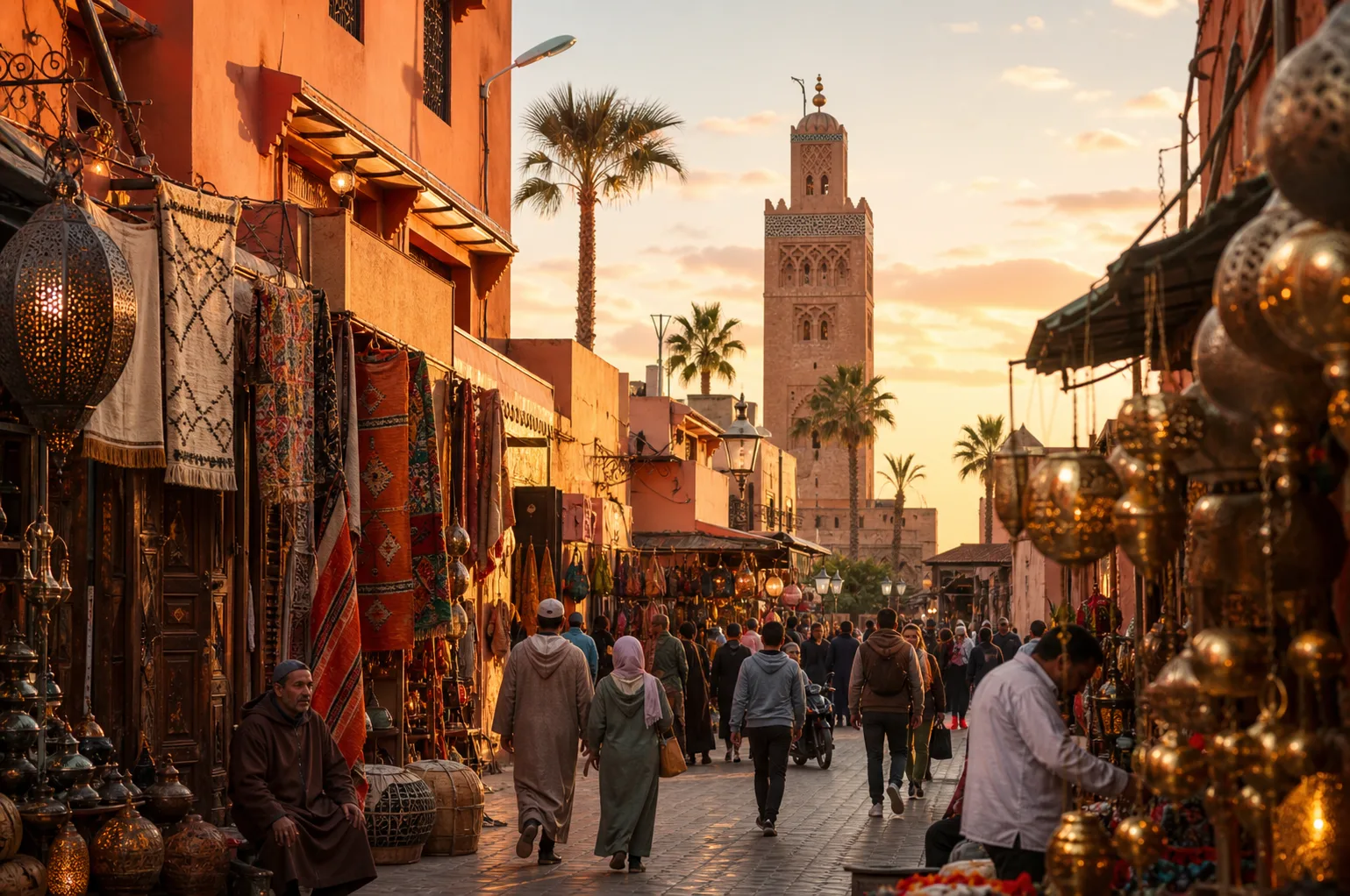
Fifteen reasons
Why Visit Morocco?
Medinas people still live in, the Sahara and the Atlas a few days apart, the food and the welcome, about three hours from much of Europe.
In short
Few countries pack so much into one trip: living medieval medinas, the Sahara, the High Atlas and the Atlantic, a celebrated kitchen and a famous welcome.
It is not always easy: the souks are busy, the drives are long and summer inland is hot. Most travellers find that part of the point. The fifteen reasons below come in three chapters, and the honest notes are at the end.
- About 19.8 million
- arrivals in 2025, a record (provisional); the official count includes Moroccans living abroad
- Source: Ministry of Tourism statement, 5 January 2026 (confirmed by the DEPF, Ministry of Finance)
- 9
- UNESCO World Heritage sites, from the medinas of Fes and Marrakech to Aït Benhaddou
- ~3 h
- Flying time from much of western Europe
- ~7 h
- Non-stop from New York to Casablanca
One road
Ocean to Sahara
Start at sea level on the Atlantic, climb over the High Atlas and drop to the dunes: few countries change this much in one road.
- EssaouiraAtlantic port · sea level
- MarrakechMedina and souks · about 470 m
- Tizi n’TichkaHigh Atlas pass · about 2,260 m
- OuarzazateKasbahs, the desert’s edge · about 1,150 m
- MerzougaErg Chebbi dunes · about 700 m
About 750 km by road, usually driven over three or four days. Heights and distances are approximate; the profile is simplified.
Reasons 1–5
The places
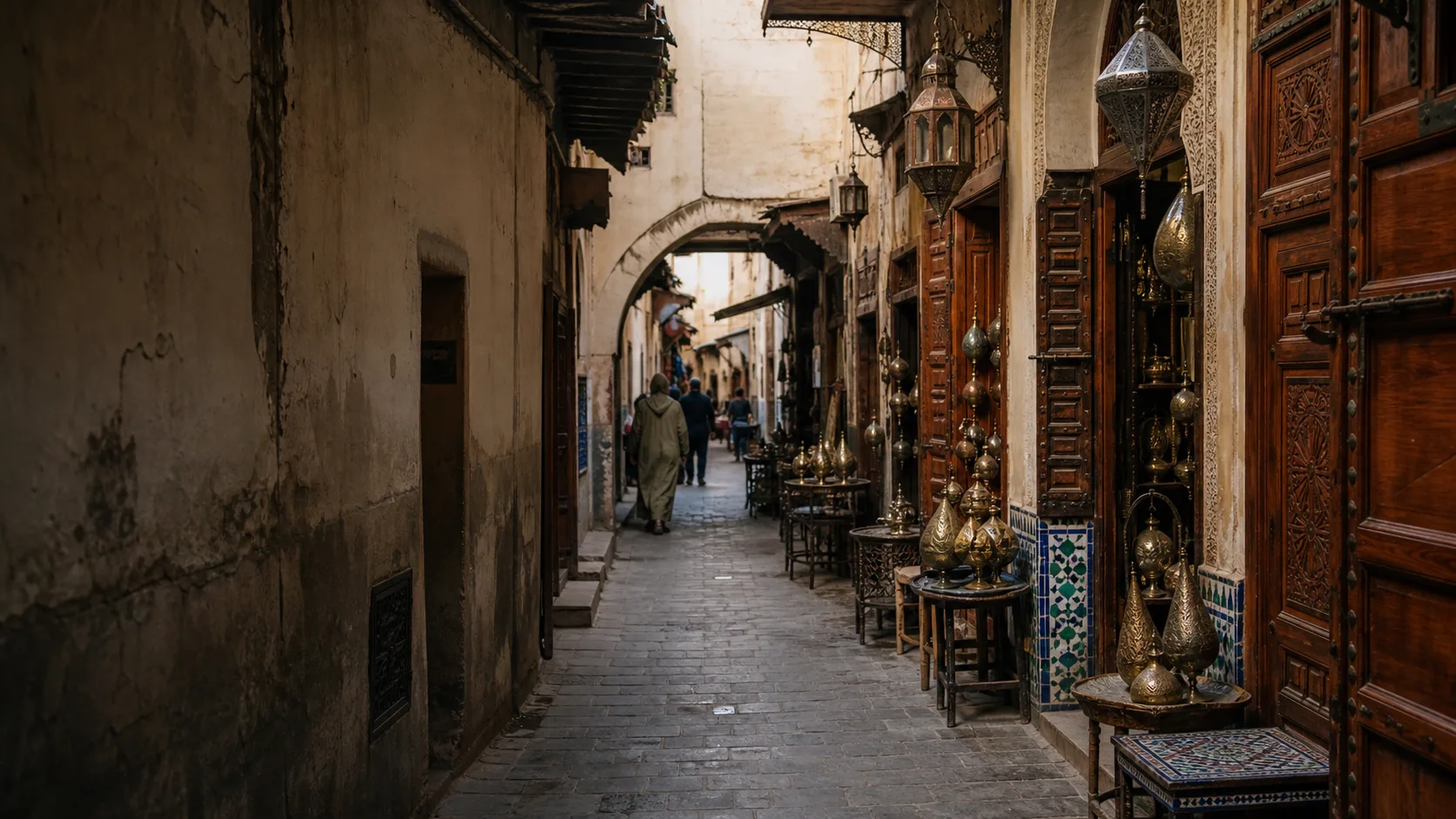
Medinas you can still live in
Fes and Marrakech are UNESCO-listed walled cities where people still live, work and shop: lanes of workshops, mosques, fountains and riads behind plain doors.
City guides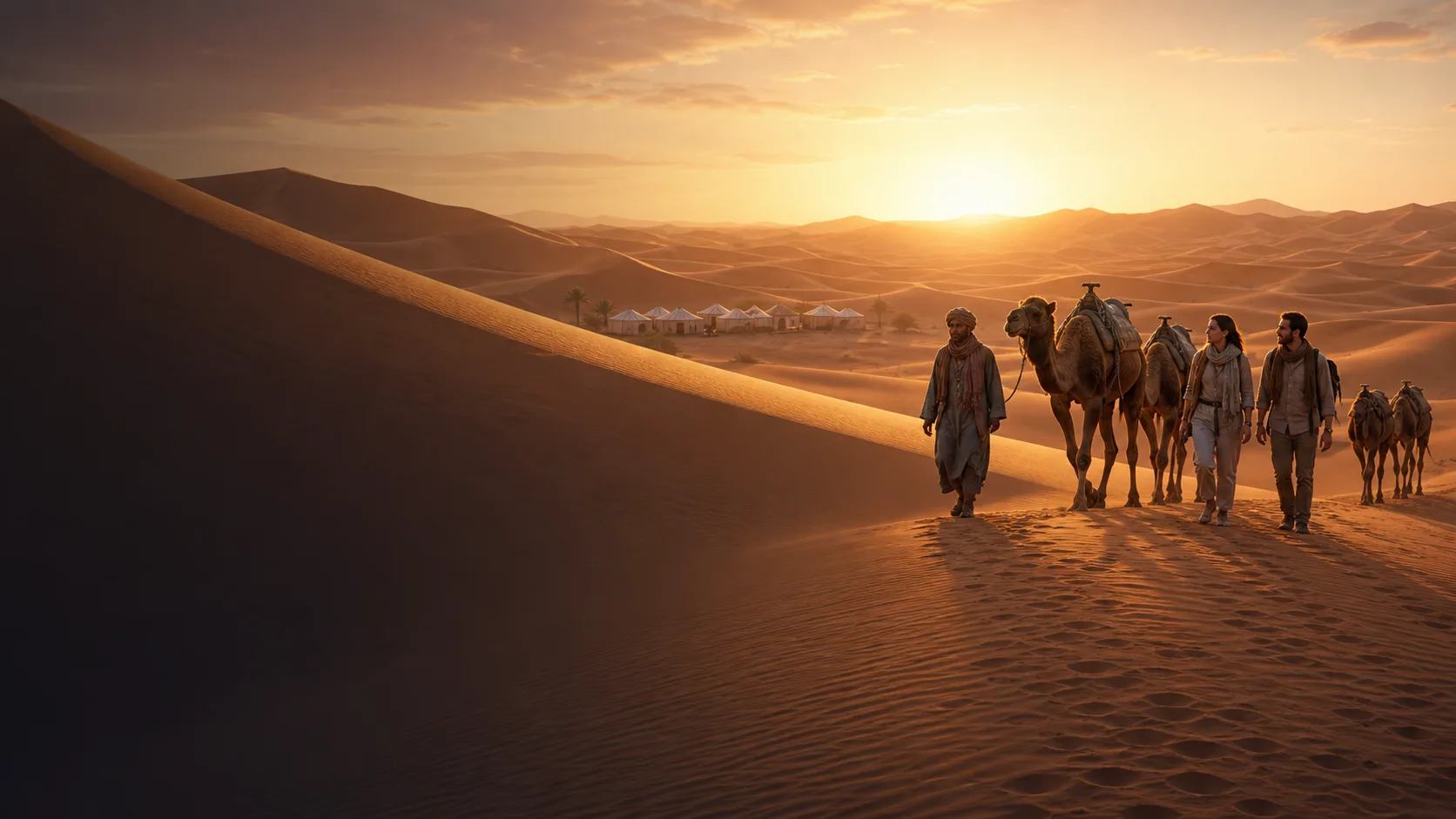
The Sahara
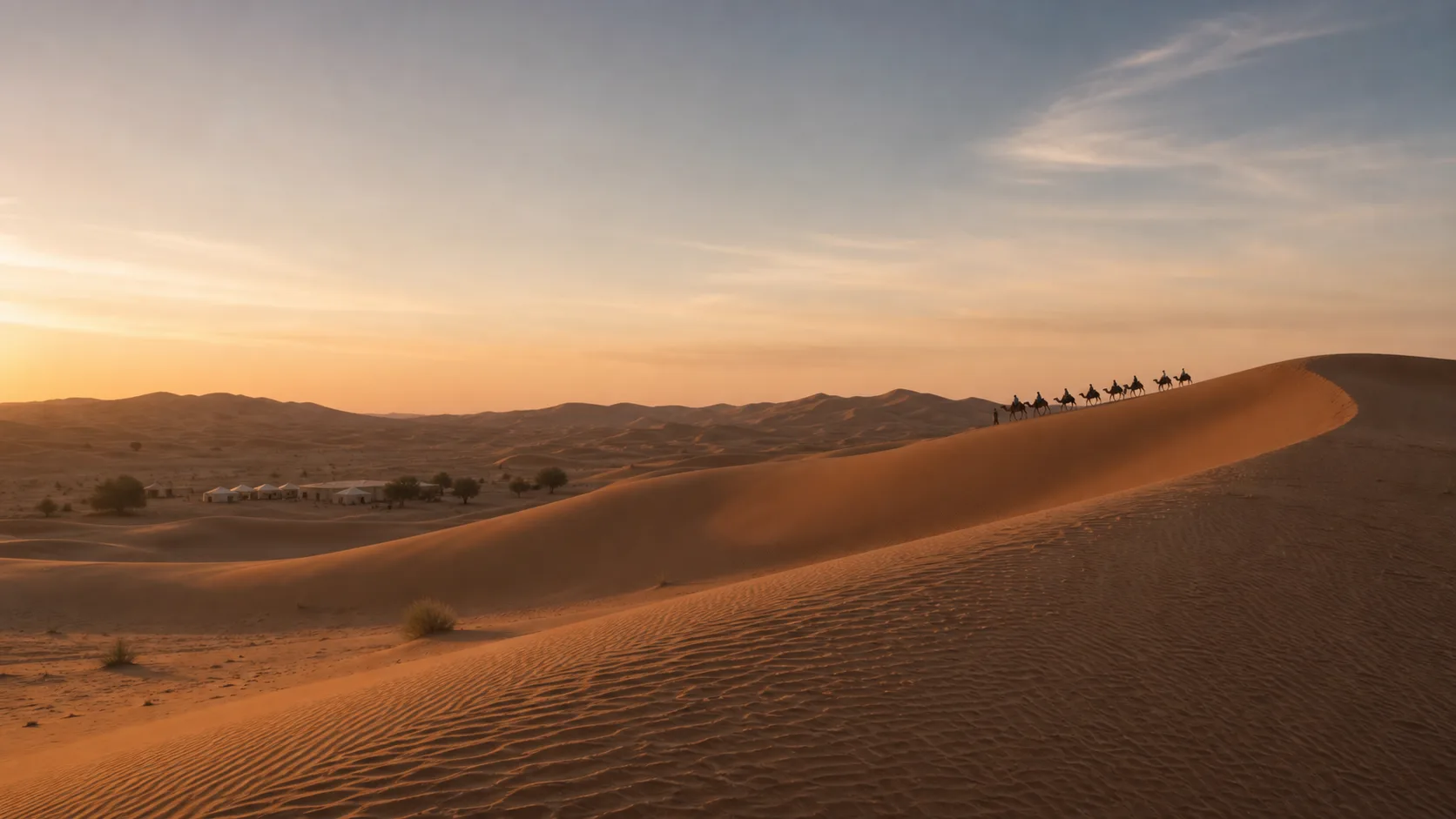
Camel rides over the Erg Chebbi or Erg Chigaga dunes and a night in a desert camp, with the stars the cities hide.
The Sahara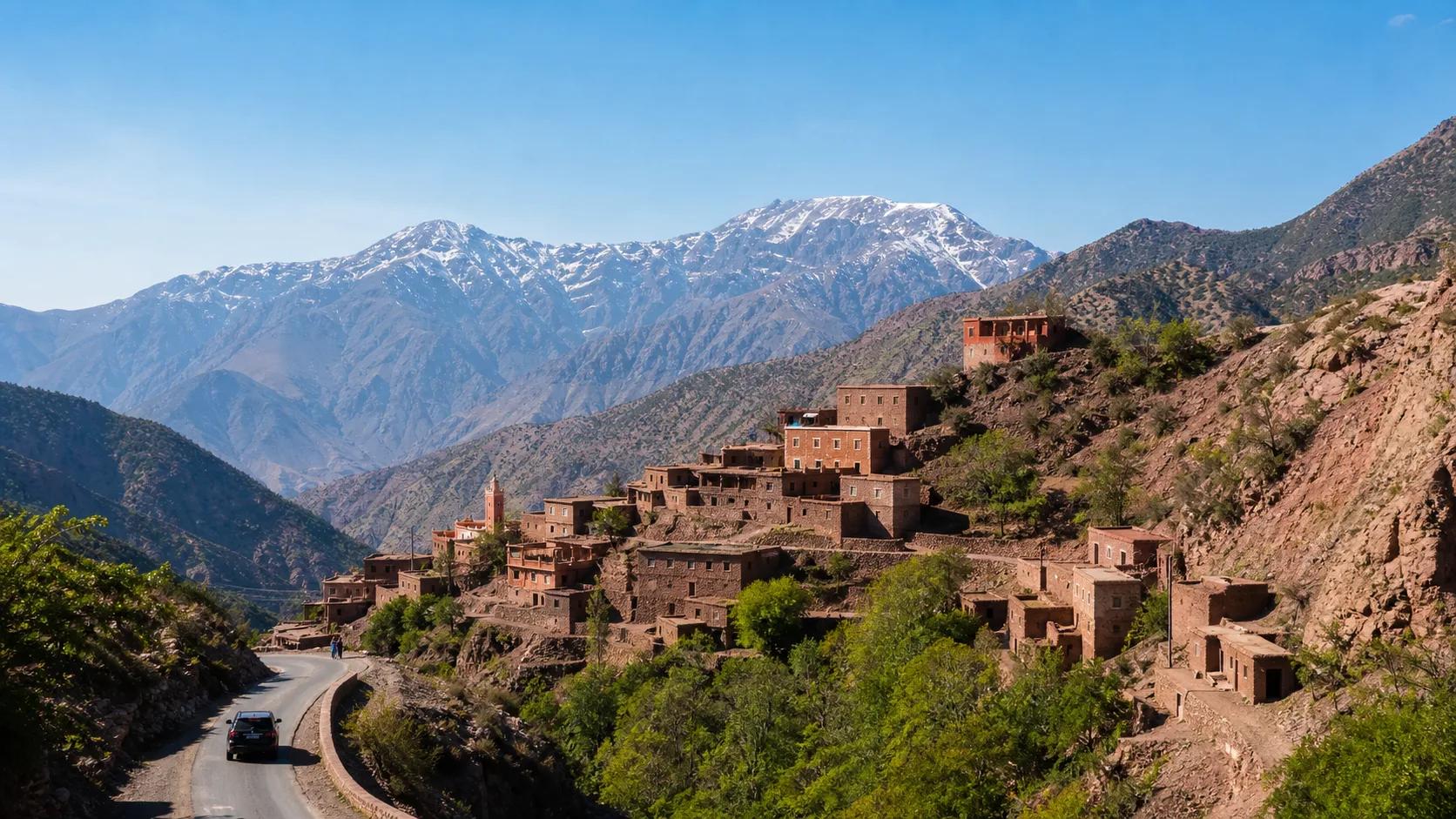
Mountains, coast and desert together
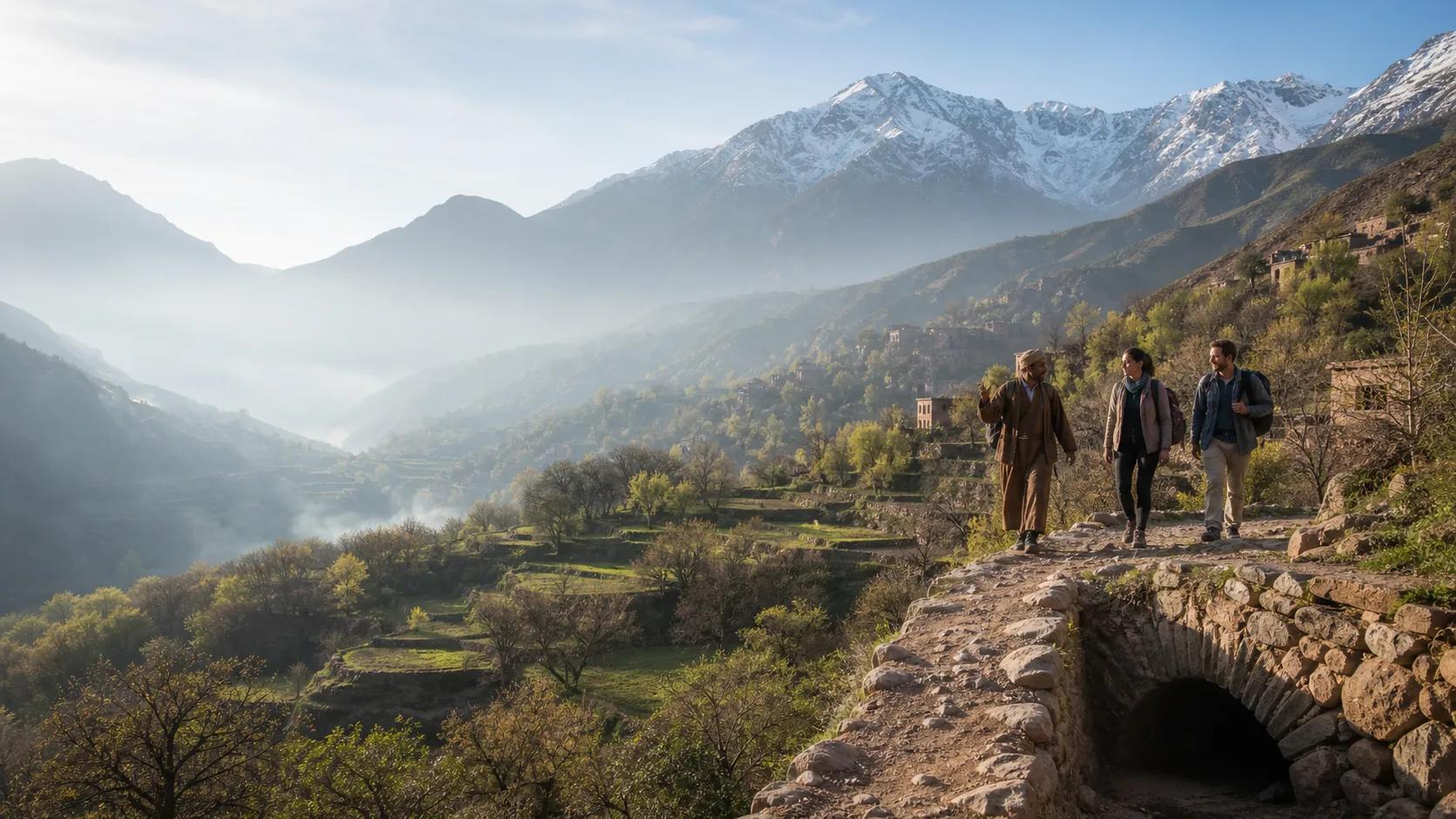
The High Atlas, with North Africa’s highest peak, Toubkal (4,167 m), the Atlantic coast and the Sahara are all within a few days’ drive of each other.
Colour everywhere
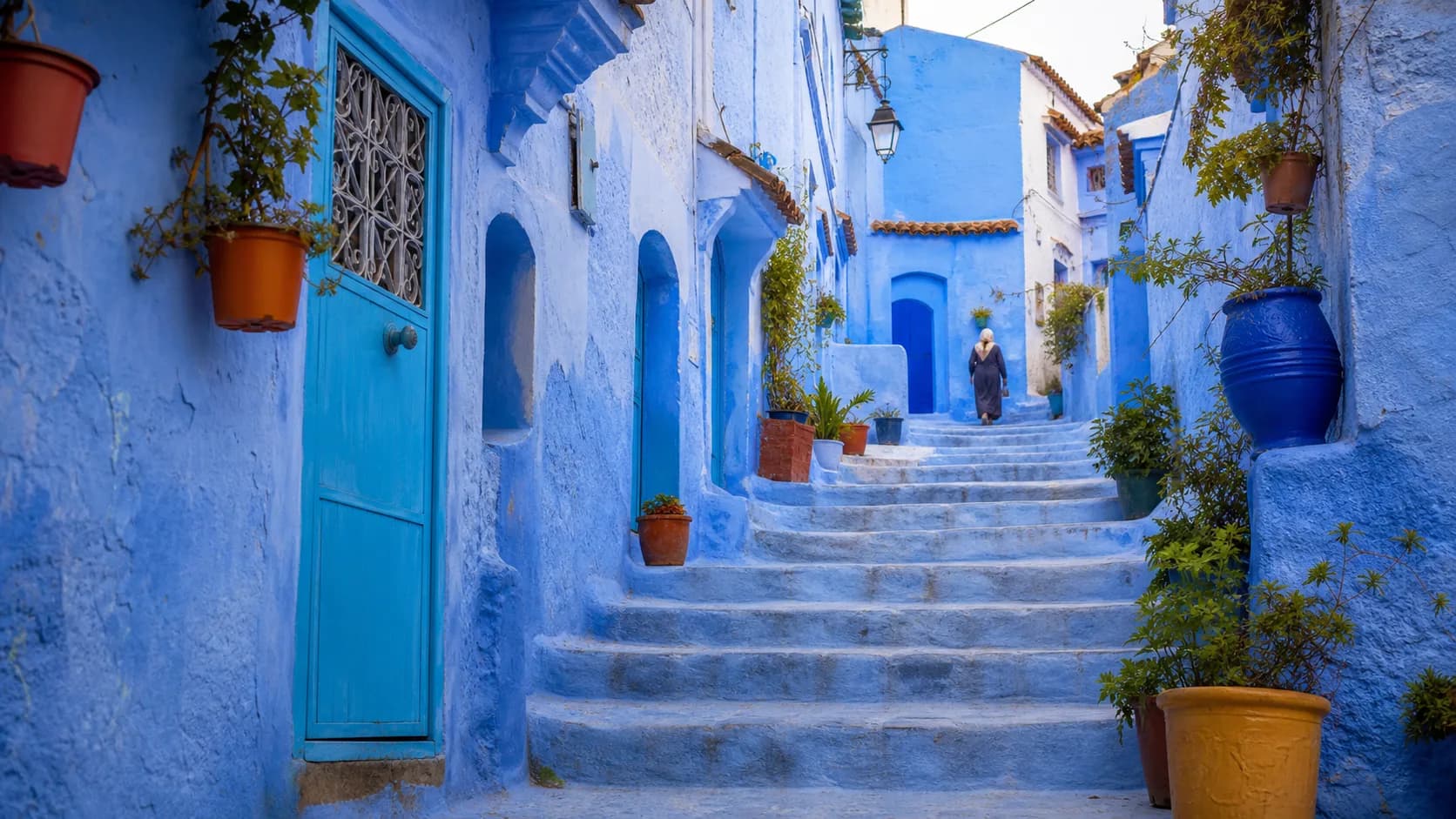
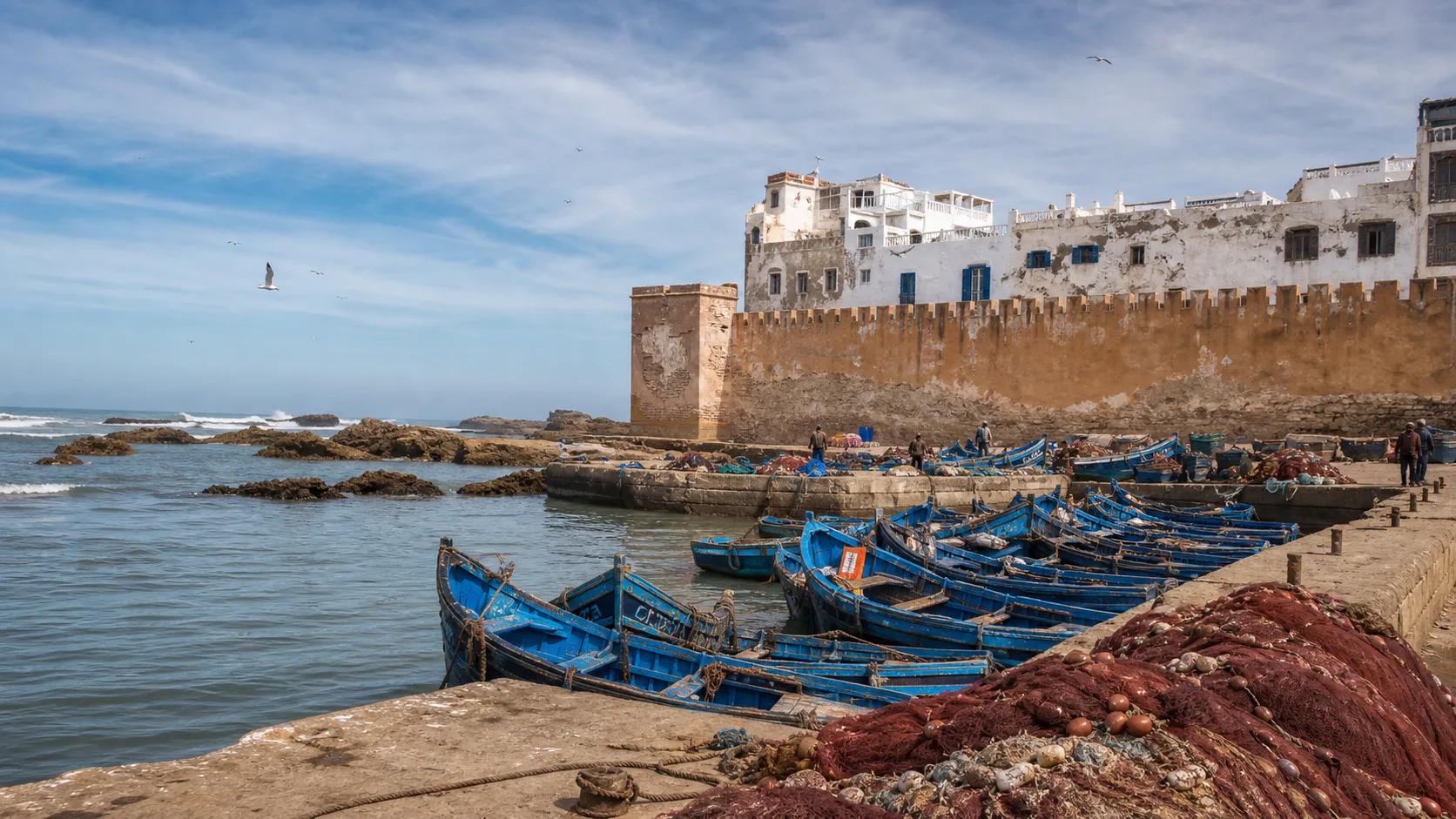
The blue lanes of Chefchaouen, the ochre of the south, the blue boats of Essaouira: a gift if you carry a camera.
Adventure at any pace
A Toubkal summit, Atlas valley walks, surf on the Atlantic, or simply a slow day in the souks.
Photographs are illustrative.
Reasons 6–10
The people and the table
The food
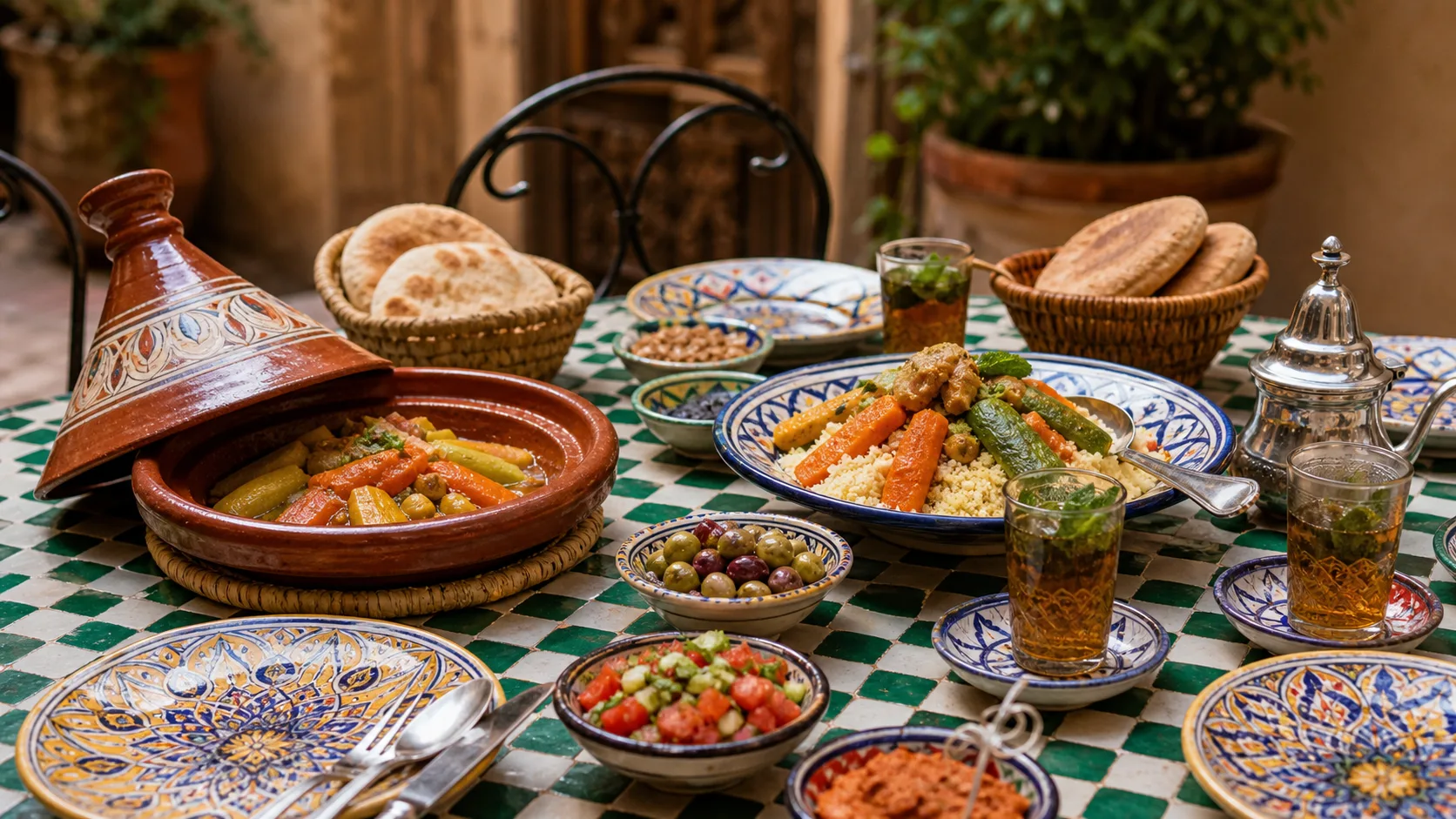
Slow-cooked tagines, Friday couscous, pastilla, street snacks and mint tea poured from height, and every region cooks it a little differently.
The food guide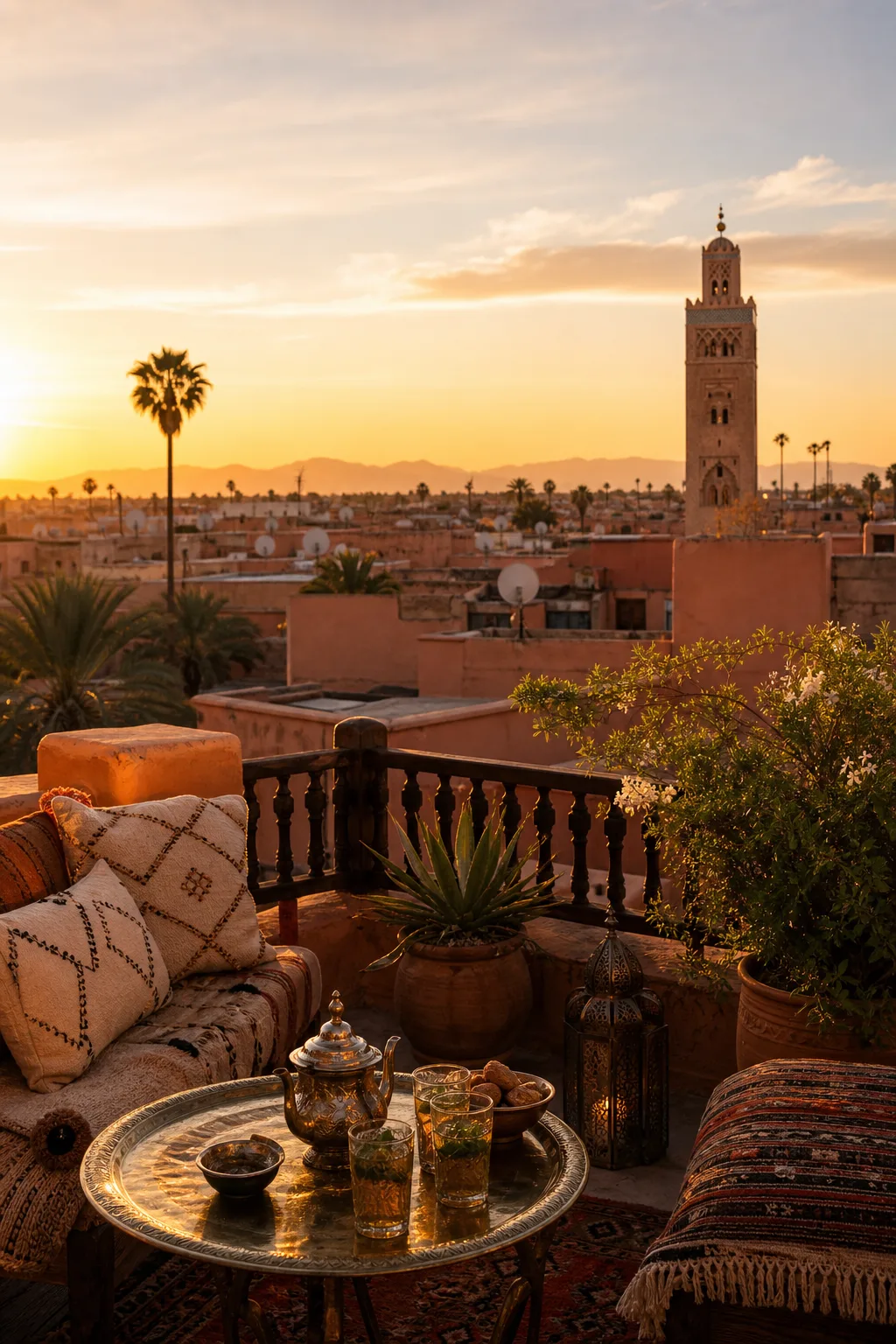
A real welcome
Tea offered in shops and homes, and genuine curiosity about where you come from: hospitality is a point of pride.
Etiquette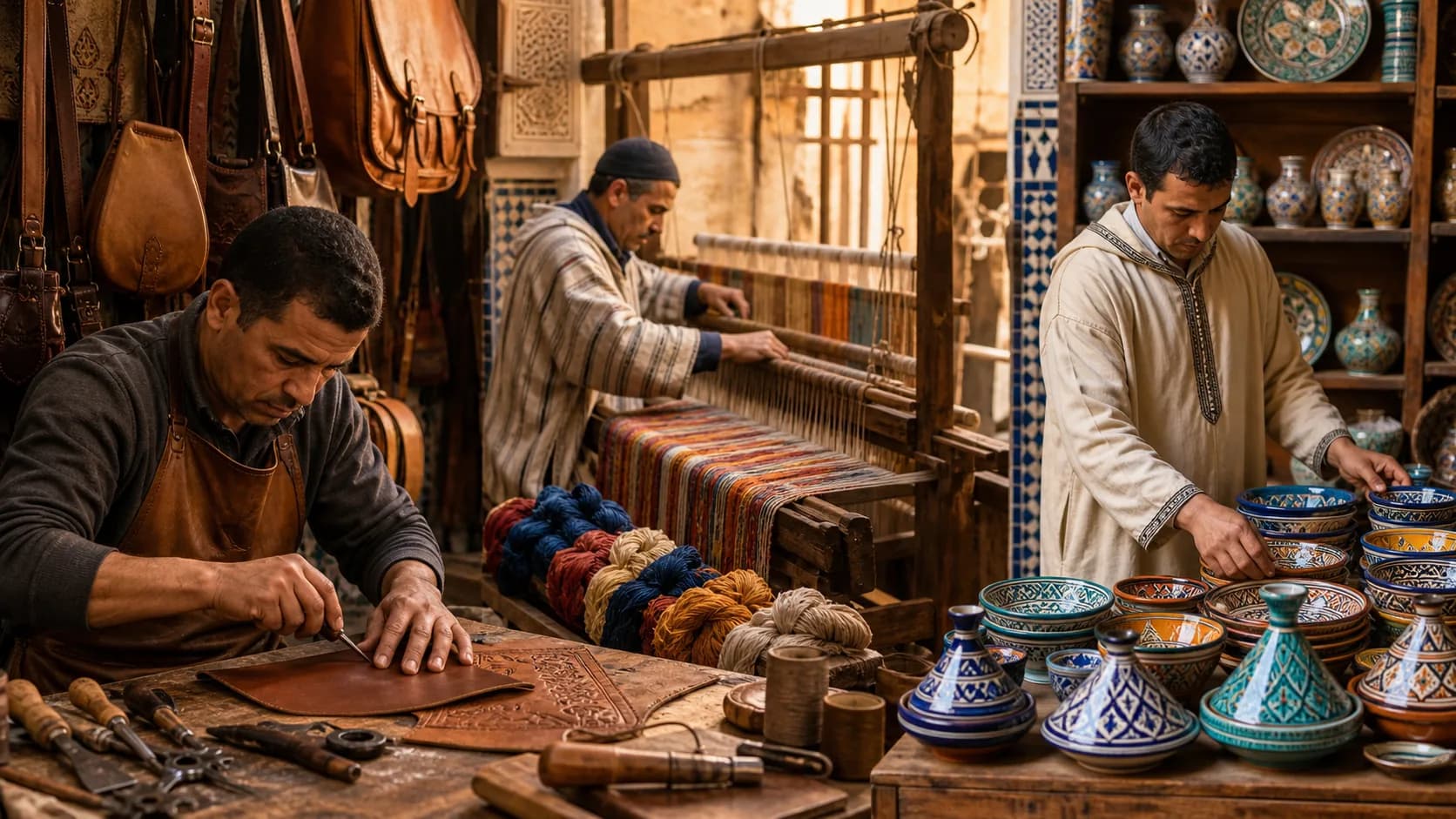
Crafts still made by hand
Zellige, carpets, leather, brass and pottery, made in workshops you can visit and buy from directly.
What to buy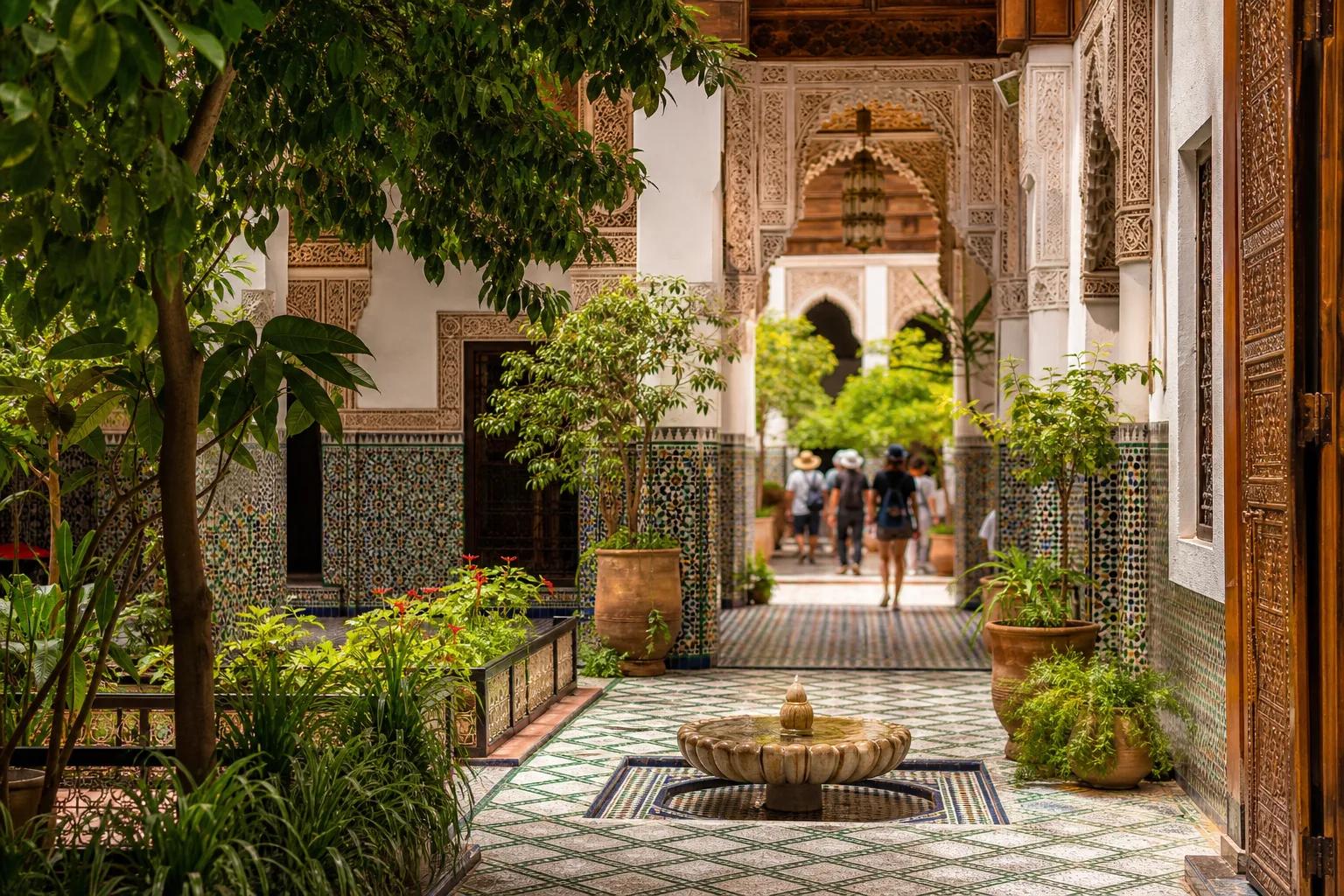
Many cultures in one
Amazigh, Arab, African, Andalusian and Jewish threads run through the music, the food and the buildings.
Moroccan culture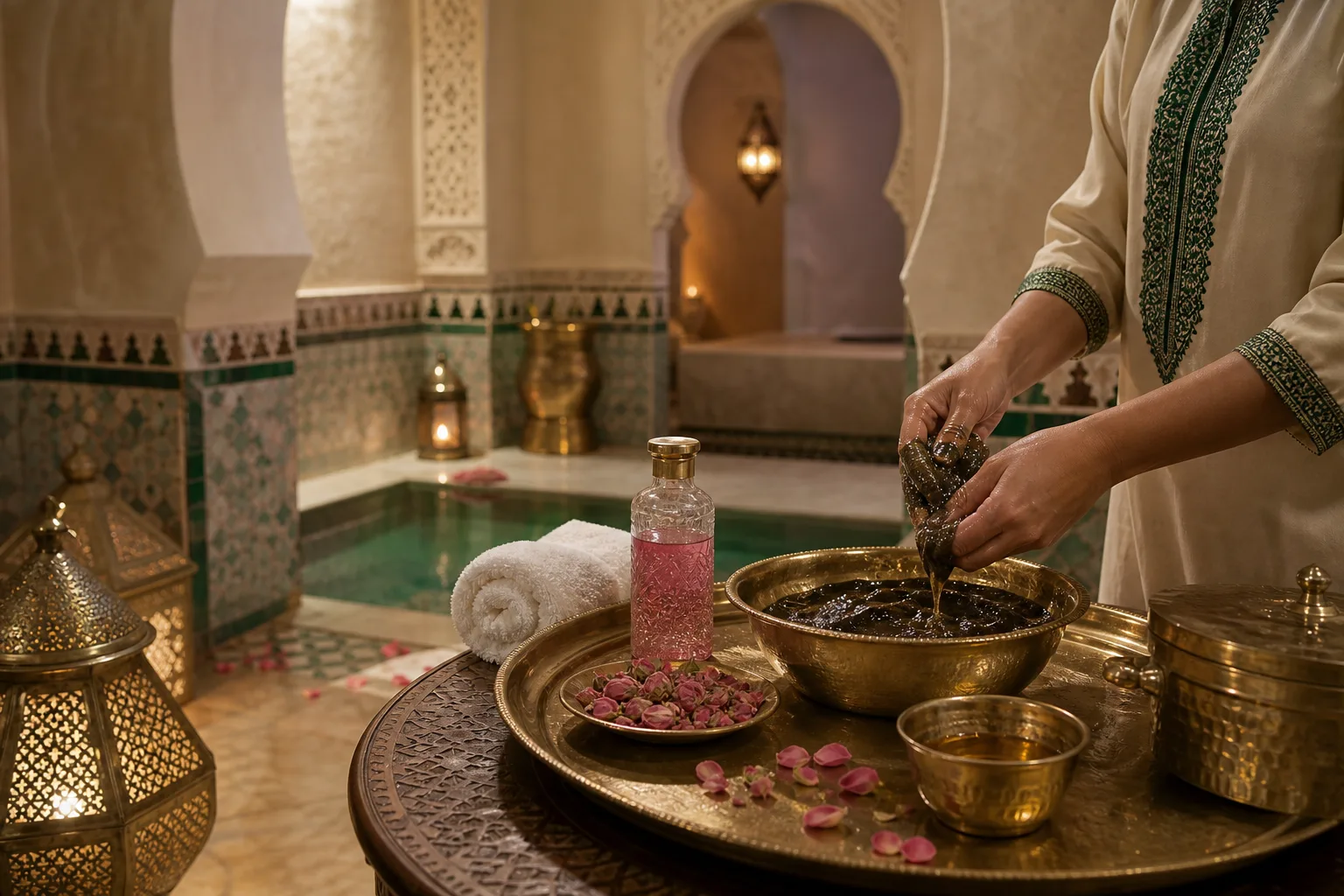
The hammam
A weekly ritual for many Moroccans, from neighbourhood bathhouses to riad spas: steam, black soap and a scrub.
The hammam
Photographs are illustrative.
Reasons 11–15
The practical side
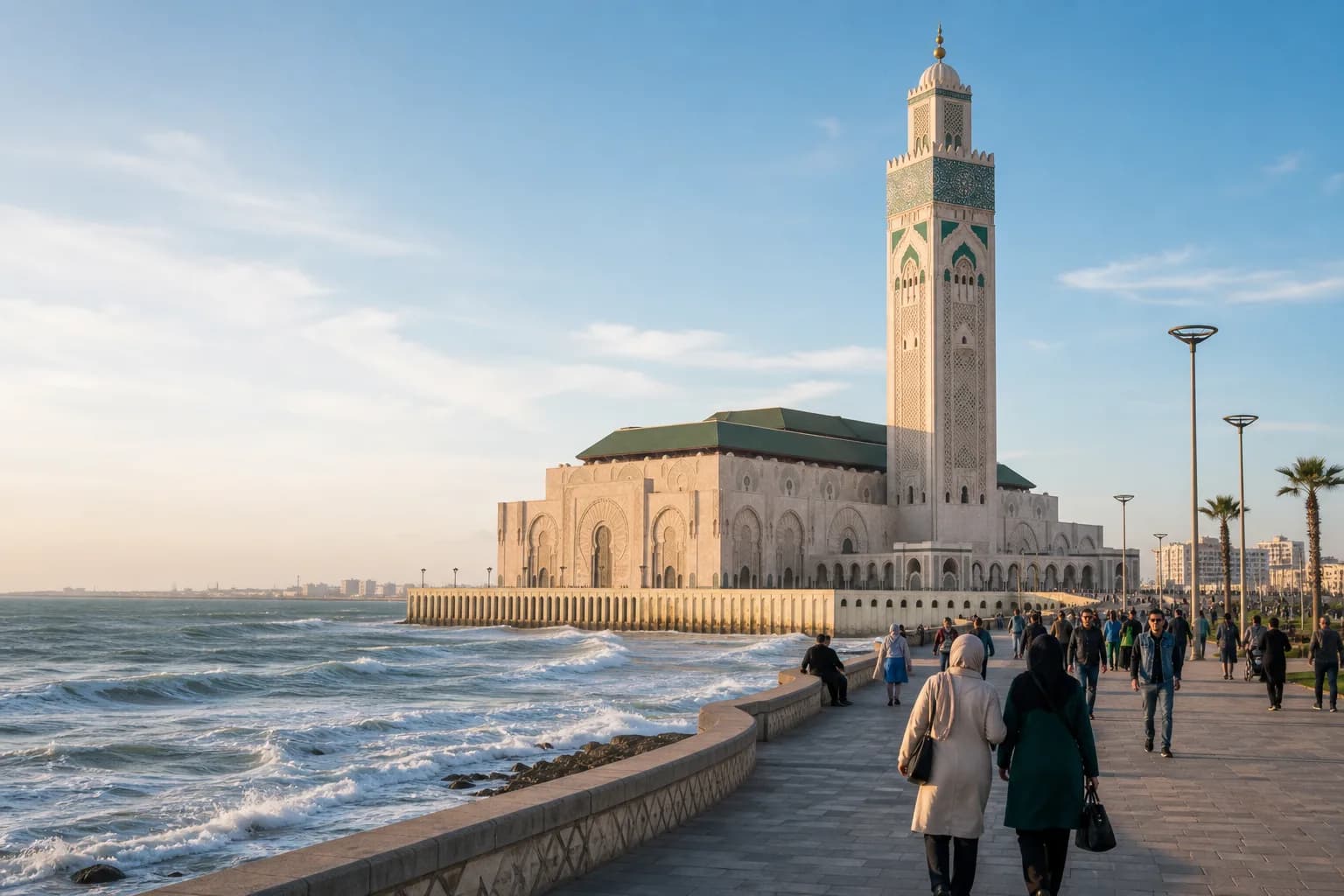
Close to Europe
About three hours’ flying from much of western Europe, with several international airports, so you can fly into one city and out of another.
A season for every month
Spring and autumn suit most routes; winter brings mild coast and city days (and cold desert nights); summer suits the coast and the mountains.
Best time to visit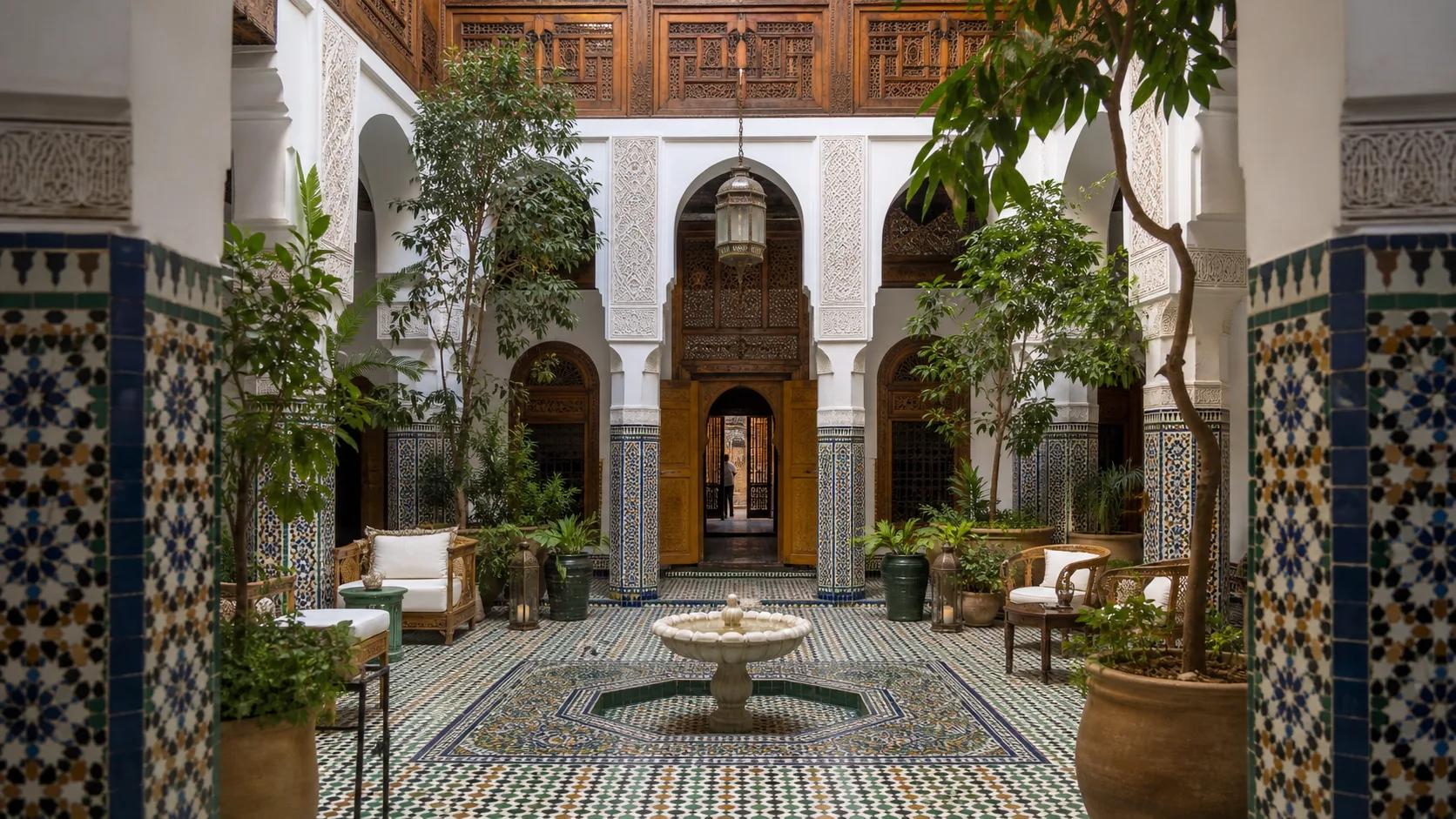
Riads
Small guesthouses built around a courtyard, inside the medinas: a stay that is part of the trip.
Easy with a local guide
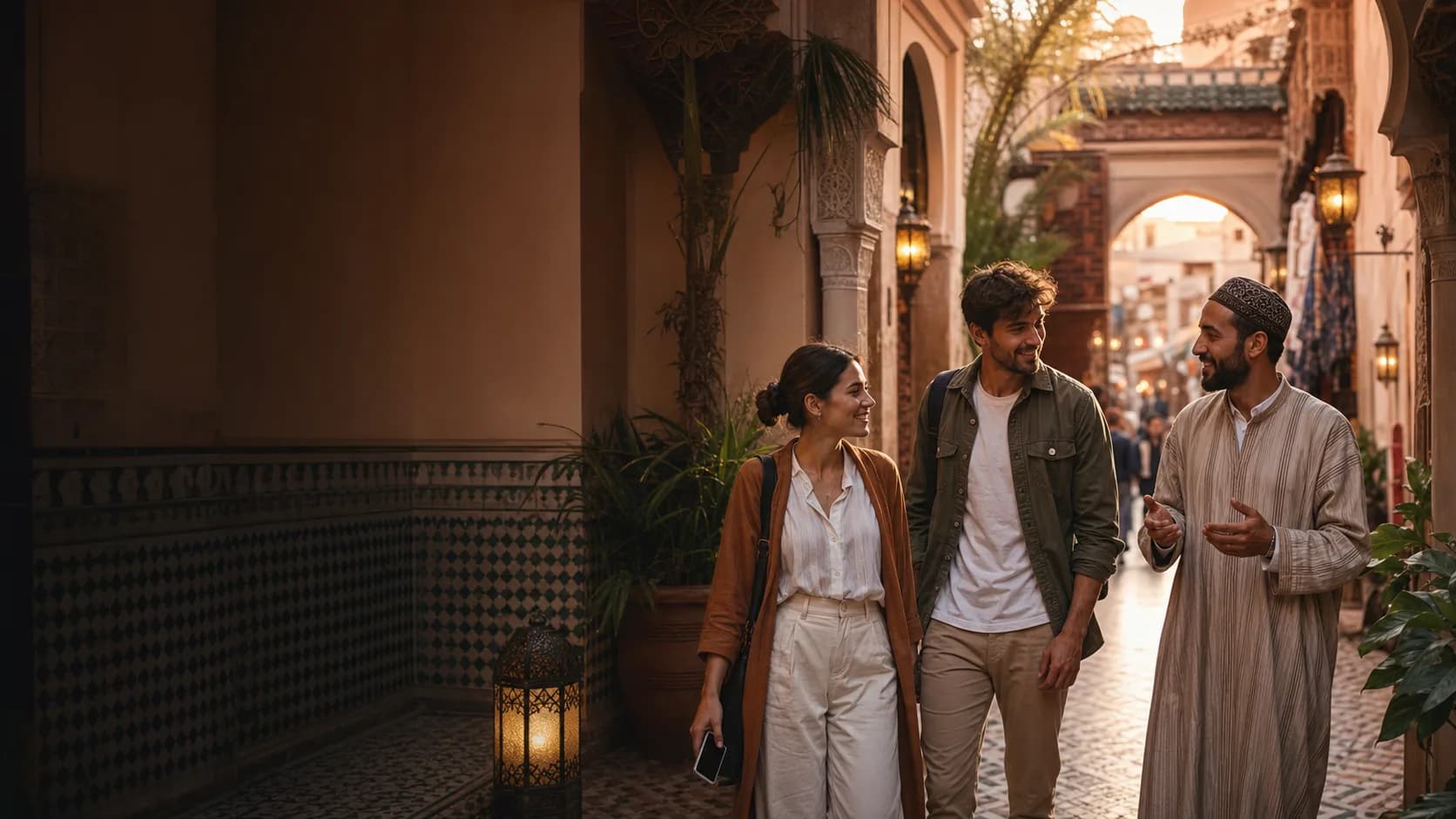
Millions visit every year. A local guide makes the medinas easier to read and the souks calmer to shop.
Is Morocco safe?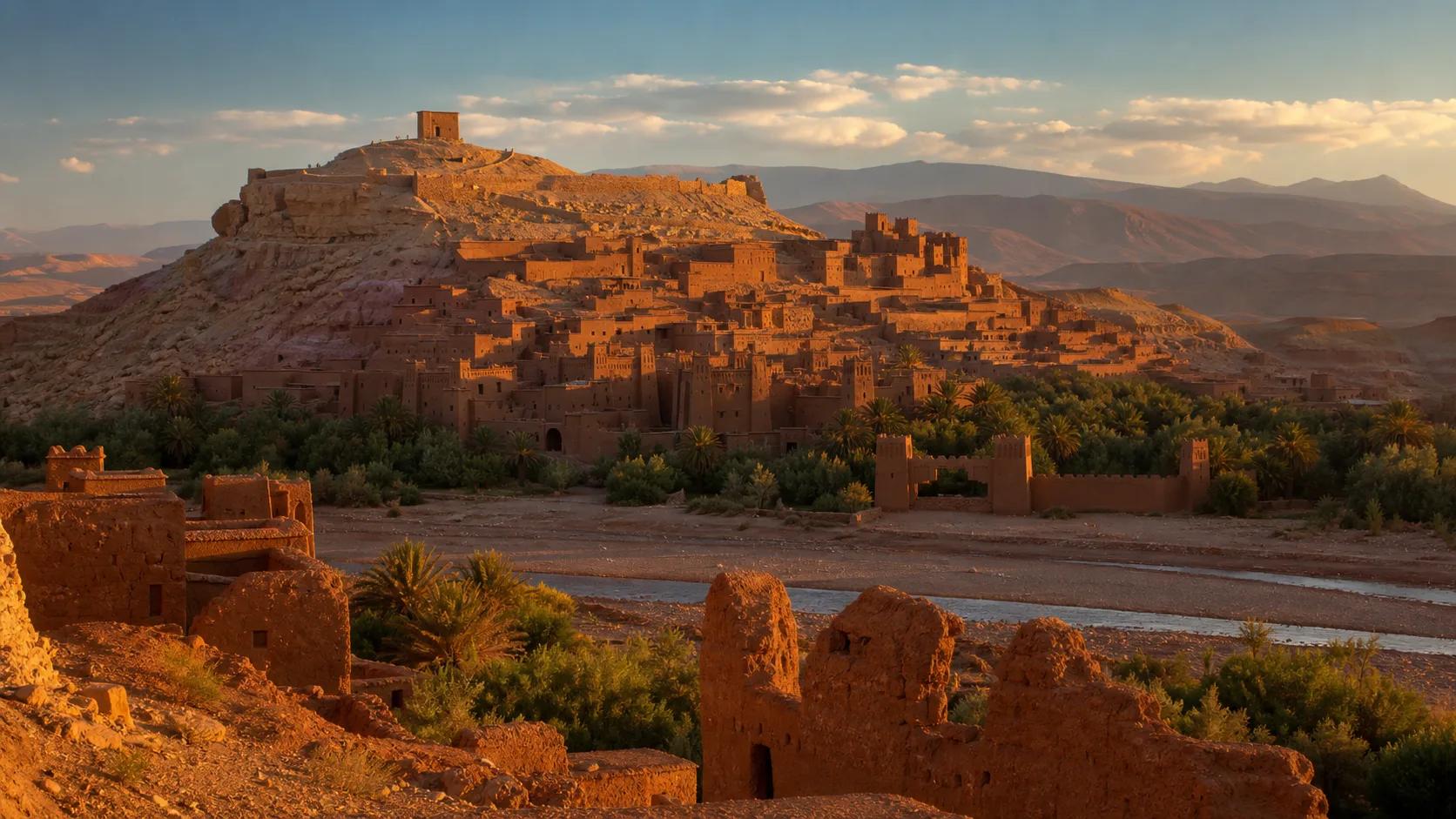
It changes how you see things
The noise of the souk and the silence of the desert, often in the same week.
Photographs are illustrative.
Honest notes
Before you go
Morocco is not for everyone, and it is better to know why before you book. Each of these is easy to plan around.
The souks are busy and persistent
Touts and hard selling happen. A calm “no, thank you”, or a local guide, helps.
Distances are real
The Sahara is a long drive from Marrakech; most routes split it over two days.
Summer heat inland
Marrakech and the desert can be very hot in July and August; the coast and mountains are cooler.
Ramadan changes the rhythm
Daytime opening hours shorten and many restaurants close until sunset; the evenings are lively.
Dress and photographs
Covering shoulders and knees is respectful in the medinas and villages; ask before photographing people.
Why Morocco: your questions
Is Morocco worth visiting?
For most travellers, yes. In one country you get UNESCO-listed medinas, the Sahara, the High Atlas and an Atlantic coast, a celebrated cuisine and a warm welcome, about three hours’ flight from much of western Europe. It suits travellers who enjoy busy markets and long drives between very different places.
What is Morocco best known for?
The medinas of Marrakech and Fes, camel treks and desert camps in the Sahara, tagines and mint tea, the blue lanes of Chefchaouen, the Atlas mountains and its crafts: zellige, carpets, leather and pottery.
How many people visit Morocco?
About 19.8 million arrivals in 2025, a record (provisional figure), according to the Ministry of Tourism; the count includes Moroccans living abroad.
How long do I need for Morocco?
About a week is a satisfying first taste, typically Marrakech, a Sahara night and Fes or the coast. Ten days or more lets you add the imperial cities and travel at a calmer pace.
When is the best time to visit Morocco?
Spring and autumn suit most routes. Winter is mild on the coast and in the cities but cold at night in the desert and mountains; summer is hot inland and pleasant on the coast.
Can you plan a private trip?
Yes. We plan private trips with a local guide and driver, built around your dates and interests. Tell us what you would like to see; a planner replies within 24 hours with a free quote.
After you ask for a quote
What you get within 24 hours
- A day-by-day route, with the driving time between stops
- Stays matched to your style (riads, kasbahs, desert camps or hotels), named so you can look them up
- Which moments are private to you, and which are shared, such as a camp’s dining tent
- An itemised quote: what is included and what is not
- Who is planning your trip, and how to reach them on WhatsApp
- Free, with no obligation to book
Every trip is private and priced to your dates, so there is no fixed price list. Ask, and the proposal shows the full cost before anything is booked.
Your own fifteen reasons, in one route.
المغربⵜⴰⴳⵍⴷⵉⵜ ⵏ ⵍⵎⵖⵔⵉⴱThe Kingdom of Morocco