Morocco vs Spain is one of the most common travel dilemmas for visitors flying out of Europe — or for anyone looking for a manageable long-weekend from the UK, a honeymoon with genuine cultural depth, or a first foray beyond Western Europe. And it is a genuine dilemma, because both are exceptional. Spain is among the most visited countries on earth for good reason: brilliant food, extraordinary architecture, a long Mediterranean coast and a pace of life that makes everywhere feel like a good idea. Morocco, just across the Strait of Gibraltar, is something else entirely — a world of medinas, hammams, the Sahara, riads and the Atlas Mountains that delivers a depth of immersion few single-country destinations can match. This guide is written to be honestly useful: if Spain suits you better, we'll say so.
The Core Difference
The most useful framing: Spain is a brilliant destination; Morocco is a different kind of experience altogether. Spain will feel familiar — modern infrastructure, European customs, wine and nightlife, beach resorts you could find echoes of elsewhere. That's not a criticism; it is consistently one of the world's great travel countries.
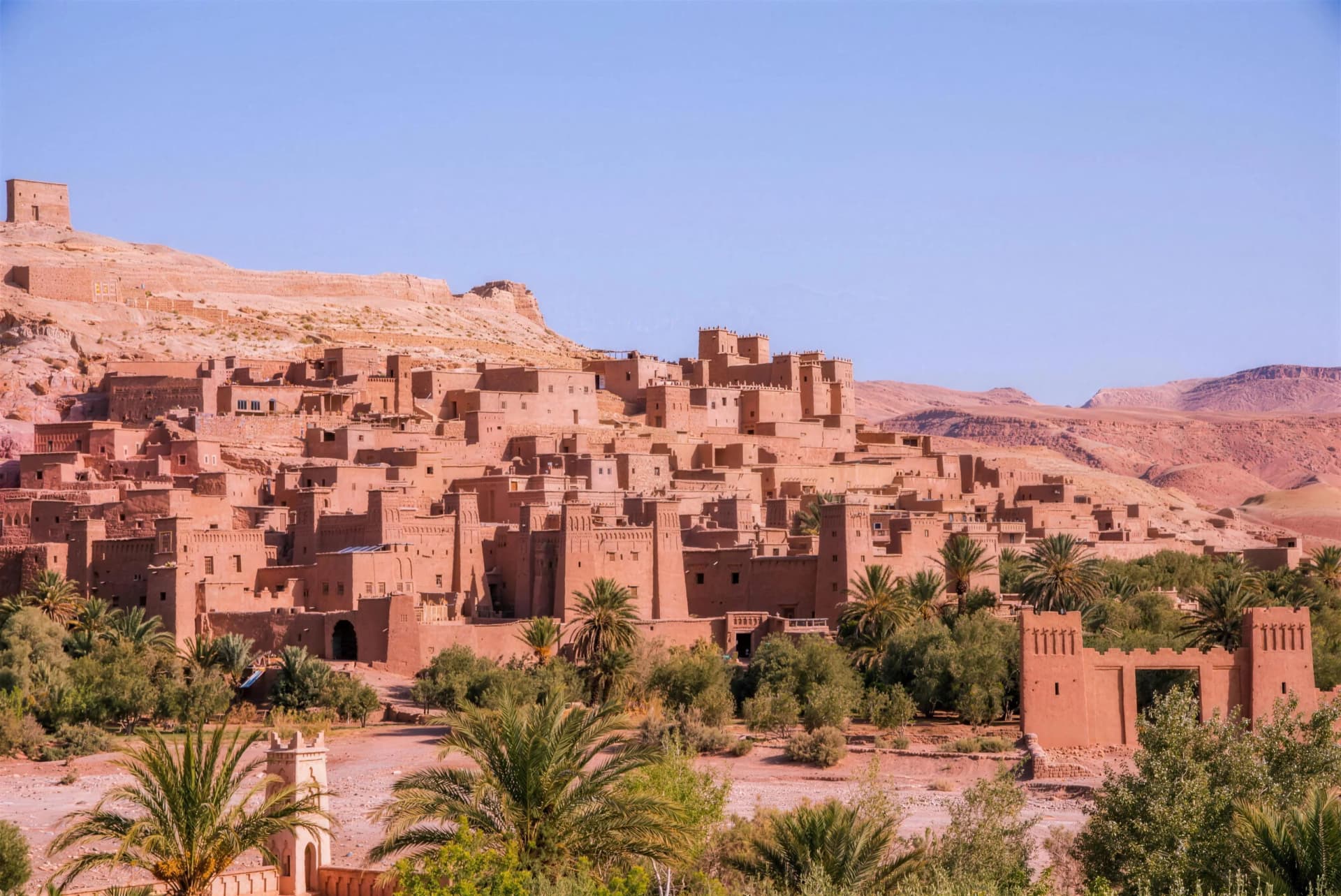
Morocco is genuinely different. Its imperial medinas — the medieval heart of Marrakech, Fes, and the other ancient cities — are not museum-pieces but living, working labyrinths where tanneries, carpet-weavers and spice-sellers have operated for centuries. Its accommodation (the riad, a traditional courtyard townhouse) is an experience in itself. Its landscape shifts from the High Atlas to the Sahara within a few hours. And its food is one of North Africa's great culinary traditions. If you want immersion in a culture genuinely different from your own, Morocco is the choice.
Getting There
From the UK and most European cities, both are short-haul. Spain (Madrid, Barcelona, Malaga) is typically around two to two-and-a-half hours from London; Morocco (Marrakech, Casablanca) is roughly three-and-a-half to four hours. The extra hour rarely matters. From North America, flights to both run around seven to nine hours; from Spain there is the short ferry crossing to Morocco across the Strait of Gibraltar (Tarifa to Tangier takes roughly 35–45 minutes), which makes a combined trip very easy.
Morocco and Spain can be combined in a single trip — many travellers fly into Madrid or Malaga, cross to Morocco by ferry from Tarifa or Algeciras, explore the Moroccan north and south, and return via Casablanca or Marrakech. The geography makes it unusually practical.
Climate and Best Time to Visit
Both countries share a broadly similar Mediterranean climate at the coast, but diverge inland. Spain's peak summer (July–August) sees temperatures soar — particularly in Seville, Córdoba and Andalusia, where 38–42°C is common — and the popular coasts fill with visitors. Spring (April–June) and early autumn (September–October) are widely considered the best times. Winter is mild on the coasts and cold in the mountains.
Morocco's pattern is similar but the heat hits inland cities harder. Marrakech in July or August can exceed 40°C, while Fes and the Sahara are even more intense. The coast (Essaouira, Agadir, Tangier) stays cooler throughout summer. The sweet spots are spring and autumn — March to May and September to November — when temperatures are comfortable and the light is beautiful. For a full seasonal breakdown, see our best time to visit Morocco guide.
Practical takeaway: both are better visited outside high summer if you're heading inland; the coasts of both are the summer option.
What Makes Morocco Unmissable
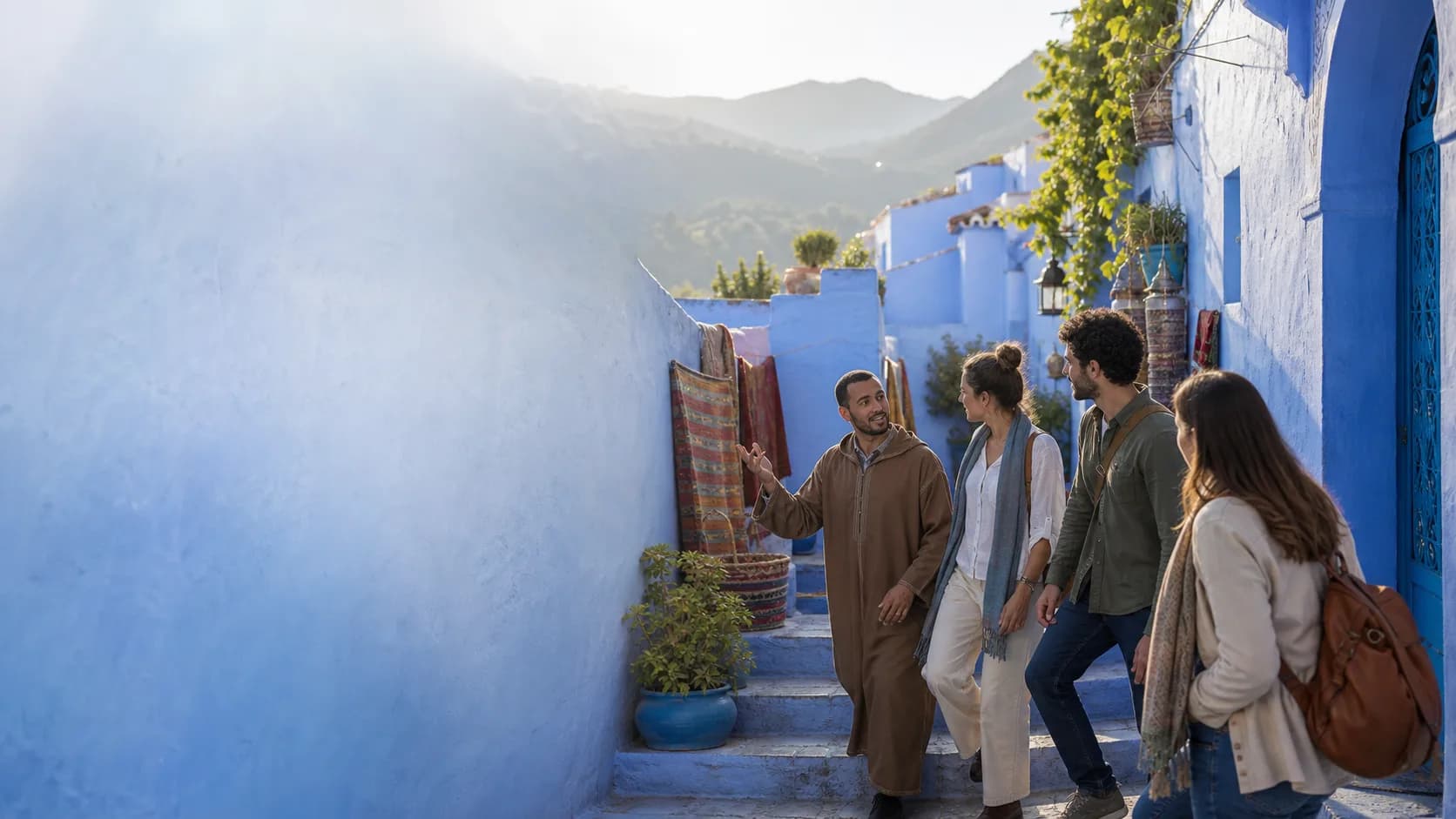
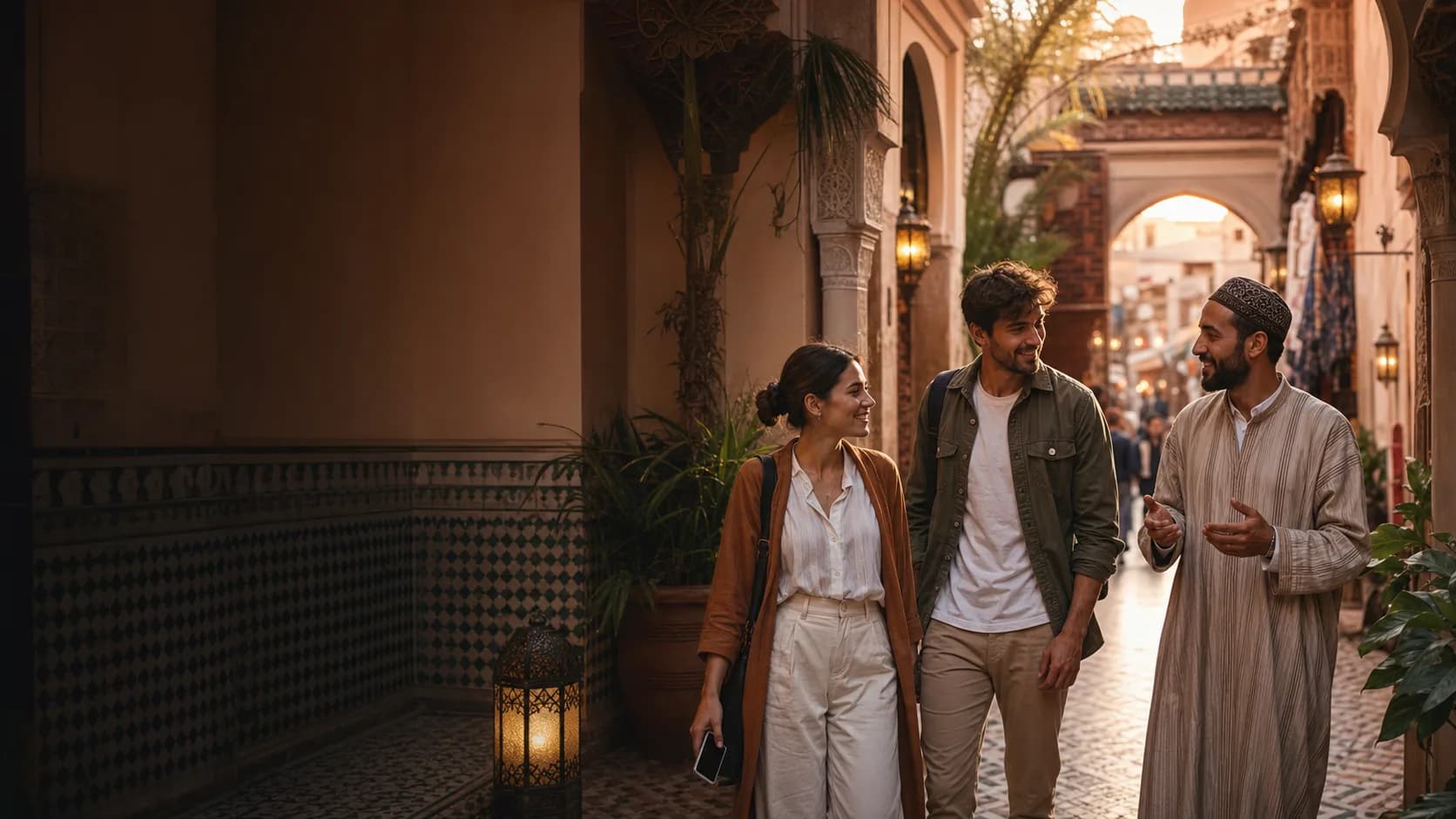
The medinas. The historic old cities of Marrakech, Fes, Meknes and Chefchaouen are unlike anything in Europe — dense, sensory, still alive with the trades and traditions of centuries. Getting lost in the Fes medina (a UNESCO World Heritage Site), standing before the tanneries, or navigating Marrakech's souks at dusk is an experience with no real European equivalent. Our Marrakech medina guide goes deeper.
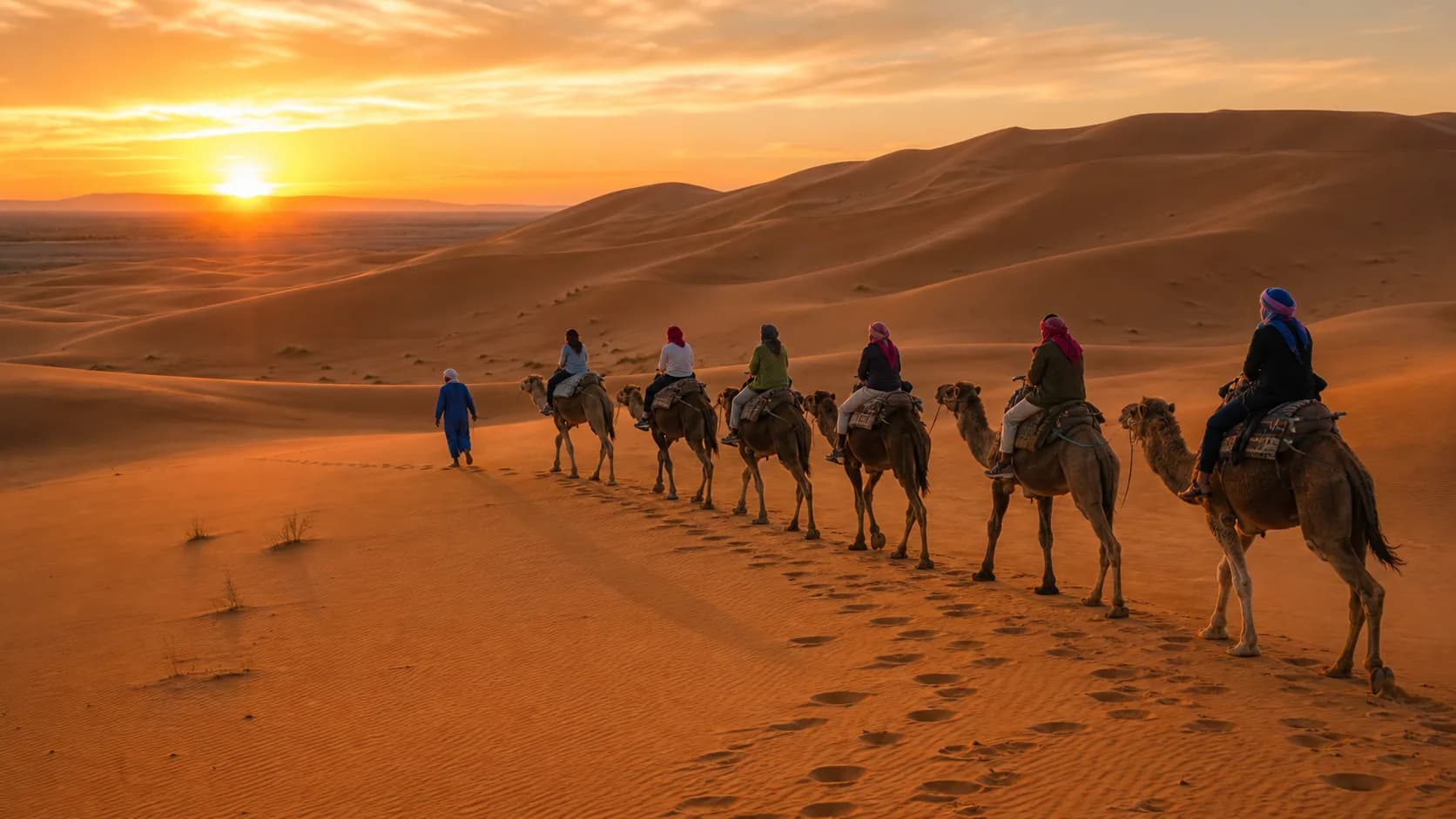
The Sahara. The Erg Chebbi dunes near Merzouga — vast, orange, rippling to the horizon — are one of the world's most arresting landscapes. Spending a night in a desert camp under the stars, reaching it on camelback, is a genuine bucket-list experience. Spain has no answer to this.
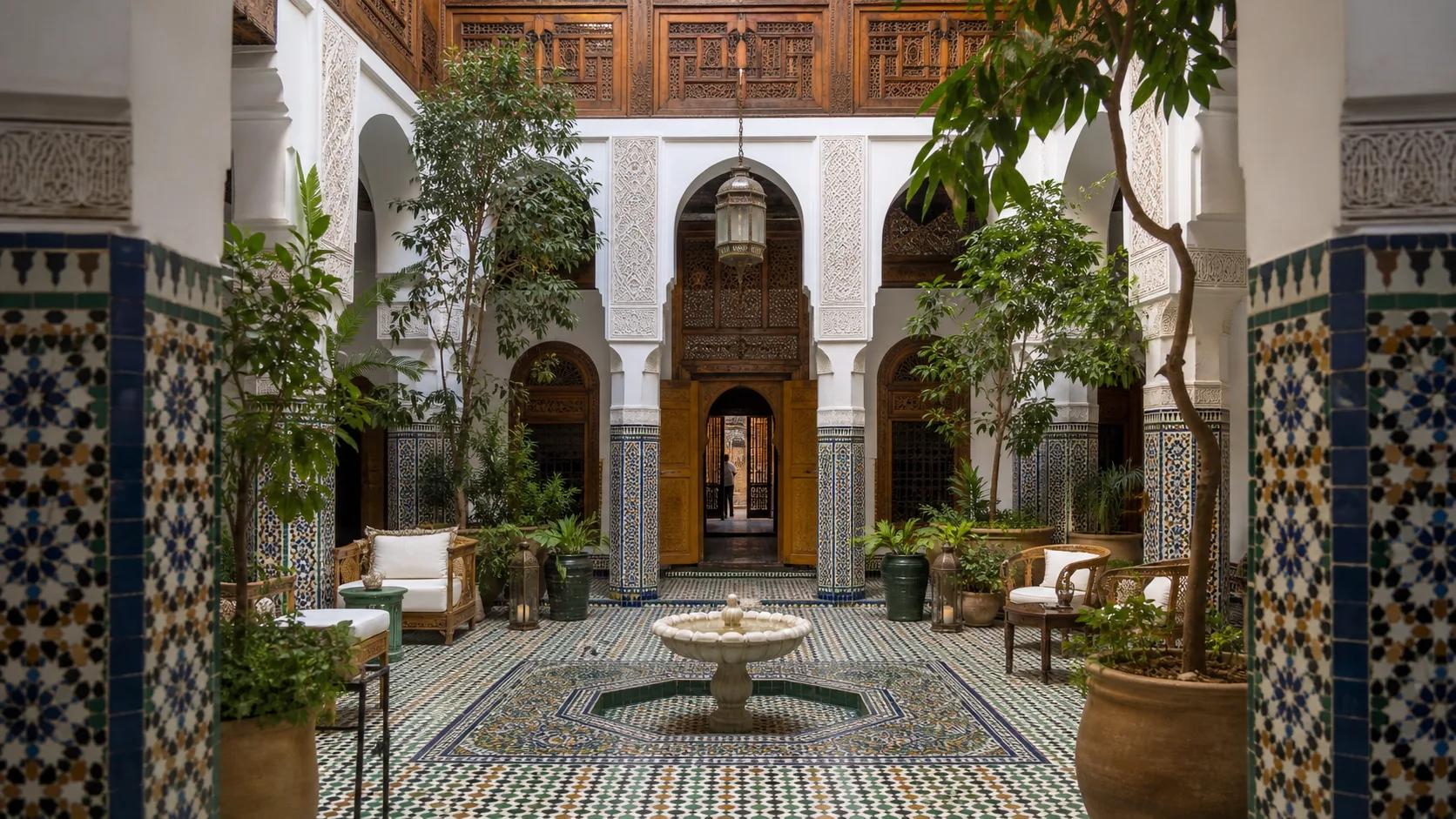
The riad. Morocco's traditional courtyard guesthouses — often hidden behind blank medina walls, with a central fountain, orange trees and zellige tilework — are among the world's most distinctive places to stay. Our Morocco riad vs hotel guide explains the difference and why it matters.
The food. Moroccan cuisine is extraordinary: tagines slow-cooked with preserved lemon and olives, couscous for Friday lunch, bastilla's crisp pastry and pigeon filling, and a street-food culture at Jemaa el-Fnaa that is itself a UNESCO Intangible Cultural Heritage.
The Atlas Mountains. From snowcapped peaks around Marrakech to Berber villages and ancient trade routes, the High Atlas offers some of North Africa's most dramatic trekking and scenery. Read more in our luxury Morocco travel guide.
What Makes Spain Unmissable
Spain's strengths are real and not to be underestimated. The architecture — Gaudí's Sagrada Família and Park Güell in Barcelona; the Alhambra in Granada (itself with strong Moorish echoes); the cathedrals of Toledo and Seville — represents some of the world's great built heritage. Andalusia, the southern region closest to Morocco, is particularly rich: the mosque-cathedral of Córdoba, the white hill towns, the sherry country around Jerez.
Food and wine culture. The Spanish tapas circuit, pintxos bars in the Basque Country, fresh seafood on the coast, and a wine tradition (Rioja, Albariño, Priorat) that Morocco cannot match. For travellers for whom wine is non-negotiable, Spain is the easier choice — Morocco is a predominantly Muslim country where alcohol, while available in tourist settings, is not central to the culture.
Beaches and coastline. The Costa de la Luz, the Balearics, the Costa Brava — Spain's coasts are varied and world-class. Morocco has a fine Atlantic coast (Essaouira, Agadir, Taghazout for surf), but beach-holiday infrastructure is more limited.
Familiarity. For first-time travellers or those who prefer fewer culture-shock moments, Spain is simply easier. It is comfortably European — the food is accessible, the language is learnable with phrasebook basics, and the infrastructure is modern throughout.
Budget and Travel Costs
This is where Morocco has a genuine edge. While precise costs vary widely by city, season and travel style, Morocco typically offers significantly better value than Spain at equivalent quality:
- A good mid-range riad room in Marrakech often costs less than a similar-quality boutique hotel in Seville or Barcelona
- A sit-down restaurant meal of tagine or couscous can come in at roughly 80–150 MAD (around €7–14 equivalent) in a good local restaurant, compared with €15–30 for similar quality in Spain
- Private guided tours and transport cost noticeably less per person in Morocco
Spain's budget varies hugely by region — rural Castile and Extremadura are excellent value; Madrid, Barcelona and the major coasts are mid-range to expensive by European standards.
Bottom line: for travellers watching their budget, Morocco typically delivers more per dirham. For those who want European wine, nightlife and beach infrastructure, Spain's extra cost may be worth it.
Logistics and Ease of Travel
Spain is marginally easier for first-time independent travellers. Modern rail (including AVE high-speed trains), clear signage, English widely spoken, card payments everywhere, and an infrastructure indistinguishable from the rest of Western Europe.
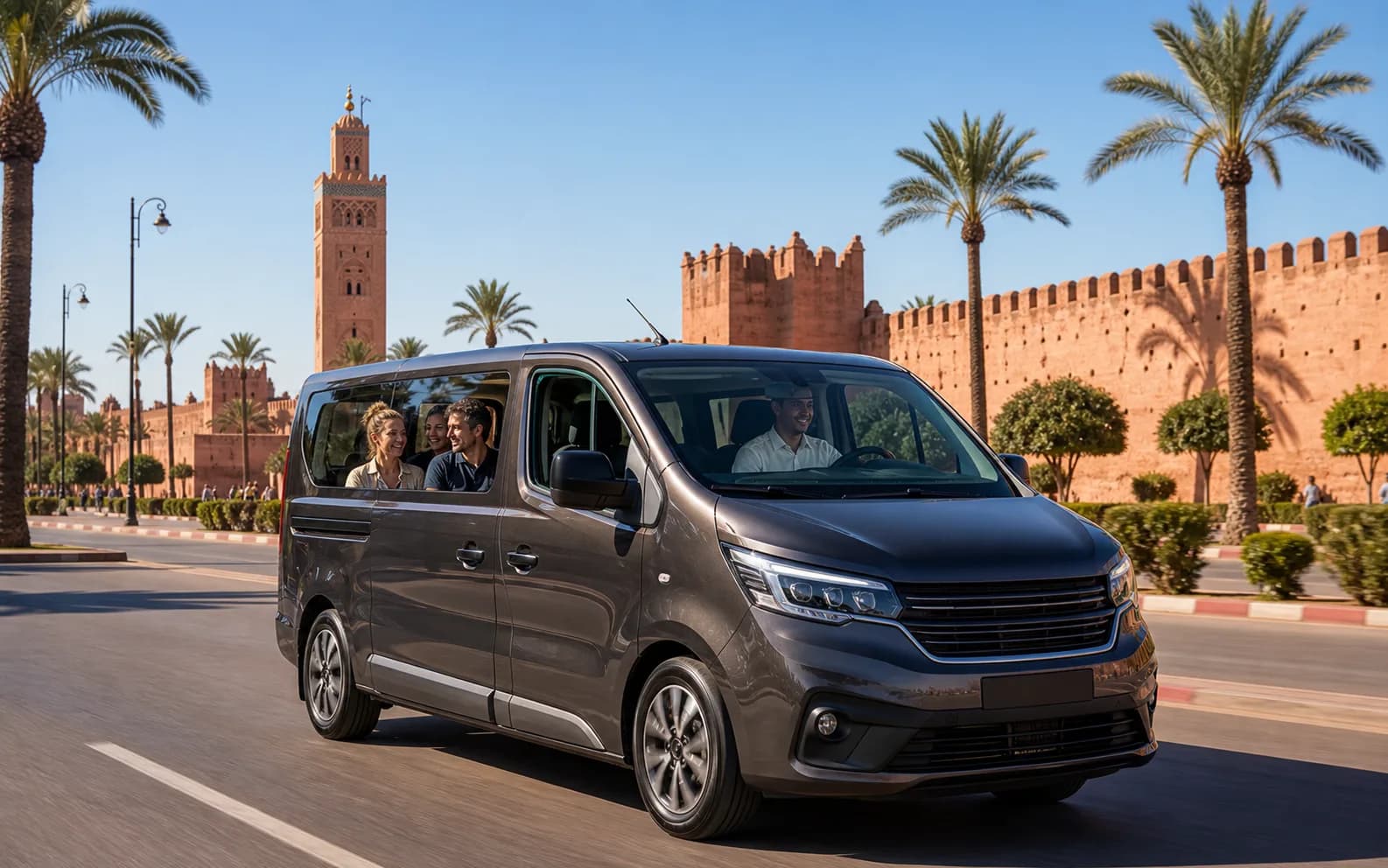
Morocco takes a little more preparation — but far less than many travellers expect. The major cities have good transport links, and a private driver makes the road trip between Marrakech, the desert and Fes genuinely comfortable. The medinas require some navigation tolerance (and a sense of adventure), and cash in dirham is more useful than cards in many settings. Our Morocco travel tips guide covers the practical realities.
For a fully organised, smooth experience, our private Morocco tours handle the logistics entirely — guides, drivers, accommodation and routing — so the question of ease becomes moot.
Could You Do Both?
Yes — and it makes a wonderful two-country trip. Spain and Morocco are separated by 14 km of water at the Strait of Gibraltar. Many travellers fly into Malaga or Madrid, spend a few days in Seville and Andalusia, cross to Tangier by ferry (roughly 35–45 minutes from Tarifa), and explore northern Morocco before flying home from Marrakech or Casablanca. The contrast — Moorish Spain and its Islamic North African source in the same fortnight — is one of travel's great juxtapositions.
If you have two weeks, combining both delivers something richer than either alone. Morocco's medinas and Andalusia's Moorish architecture exist in genuine dialogue — the Alhambra makes far more sense after you've seen the medina of Fes, and vice versa. For honeymoon planning, our Morocco honeymoon guide shows how Morocco alone makes a deeply romantic itinerary.
The Verdict
Choose Spain if you want a deeply enjoyable, easily navigated European holiday with world-class art, wine, coast and food — and prefer the familiar rhythms of a modern Western country.
Choose Morocco if you want immersion in a living culture genuinely different from your own: medinas, the Sahara, riads, hammams, the Atlas, and extraordinary food without a direct European parallel. Morocco is especially rewarding for travellers seeking atmosphere, adventure and a trip that feels unlike anywhere else — and those who want genuine warmth, deep culture and landscapes that simply don't exist in Europe.
If you're still deciding, our Morocco vs Egypt guide shows how Morocco compares with another great North Africa destination. And if Morocco is calling — we're ready.
FAQ
Is Morocco better than Spain? Neither is objectively better — they suit different trips. Spain is excellent for familiar European comforts, wine, beaches and art. Morocco wins for immersive, unlike-anywhere-else culture: medinas, the Sahara, riads and food. Choose Spain for a brilliant European holiday; choose Morocco for a trip that genuinely feels like another world.
Is Morocco cheaper than Spain? Generally yes. Mid-range accommodation, restaurant meals and private tours typically cost noticeably less in Morocco than equivalent quality in Spain, particularly in major cities. Both can be done at budget, mid-range and luxury levels — Morocco's luxury tier is genuinely excellent.
How far is Morocco from Spain? At the closest point — Tarifa in southern Spain to Tangier in Morocco — the Strait of Gibraltar is roughly 14 km wide. The fast ferry crossing takes approximately 35–45 minutes. Both countries are around 2.5–3.5 hours from London by air.
Do I need a visa for Morocco from the UK or US? As of 2026, both UK and US citizens can typically enter Morocco visa-free for stays up to 90 days. Spain (Schengen) is also visa-free up to 90 days, though US citizens are now required to register for ETIAS (the European Travel Information and Authorization System) — a simple online process costing around €7, valid for three years. Always verify current entry requirements with your government's official travel advice before travel, as conditions can change.
Is Morocco safe for tourists? Morocco is generally a safe destination for tourists. The main concerns are petty scams and souk hustle rather than serious crime — see our is Morocco safe guide for an honest assessment. It is consistently rated as one of the safer countries in the region for visitors.
Can you combine Morocco and Spain in one trip? Yes — very easily. Many travellers fly into Spain, explore Seville and Andalusia, cross to Morocco by ferry from Tarifa (roughly 35–45 minutes), tour Morocco, and fly home from Marrakech or Casablanca. The geographical proximity and shared Moorish history make the combination especially rewarding.
Plan Your Morocco Trip
If Morocco is the destination that's calling you, we make it easy. Our private Morocco tours cover the whole country — Marrakech, the Sahara, the Atlas, the imperial cities and the coast — with local guides and professional drivers who handle every detail. Browse all our tours, explore luxury Morocco options, read our Morocco safety guide for peace of mind, or design a private trip tailored exactly to you. Morocco isn't just a destination — it's a feeling you don't get anywhere else.
Tags
Share this article
Written by
Serenity Morocco editorial team
Serenity Morocco Tours
Our in-house editors and Morocco travel designers research, write, and fact-check every guide — drawing on first-hand local knowledge across the country's cities, desert, mountains, and coast.
Get Morocco Travel Insights