Do I still need to fill in an arrival card for Morocco?
The short answer
Our team's answerNo. Morocco abolished the paper arrival and departure forms at its airports and land borders on 16 September 2019, and sea ports were due to follow about two months later. You show your passport at passport control and get an entry stamp. A visa, e-visa or travel authorisation, if your nationality needs one, is a separate matter.
Serenity Morocco Expert Team
Travel Designer · Staff · November 2026
Question
The full answer
A common question when planning a trip to Morocco, answered honestly by our travel designers.
For years, everyone entering or leaving Morocco filled in a small police form, the fiche de police: name, passport number, flight, address in Morocco and the reason for the trip. The forms were handed out on flights and at the border, and a second one was needed on the way out. From Monday 16 September 2019 the national police, the DGSN, dropped the requirement at airports and at land border posts, for arrivals and departures alike. At the time it said sea ports would follow about two months later, once a system had been set up on board the ships.
You may still read about the card. Guidebooks printed before 2019, old forum threads and some travel websites still tell visitors to fill one in, and some suggest packing a pen for it. If you are reading advice that mentions an arrival card, check its date.
What happens now is simple. After landing you follow the signs for passport control and join the queue for foreign passports. The officer checks your passport, may ask where you are staying and for how long, and stamps you in. Have the address of your first hotel or riad and your return or onward ticket to hand in case you are asked. Before you walk away, check that your passport has been stamped: the UK government notes that some travellers have had difficulties leaving Morocco because their passport had no entry stamp. After passport control you collect your bags and pass through customs, where most visitors walk through the green channel with nothing to declare.
No arrival card does not mean no paperwork for everyone. Citizens of the UK, the US, the EU, Canada, Australia and many other countries need only a valid passport for a stay of up to 90 days. Other nationalities need a visa from a Moroccan consulate, or an e-visa applied for online before travel. The official portal, acces-maroc.ma, also handles an electronic travel authorisation (AEVM) that some nationalities need even though they do not need a visa. The portal has an eligibility checker that tells you which, if any, applies to your passport.
Leaving works the same way. There is no departure card: you check in, go through exit passport control, and the officer stamps your passport out. Allow time, as the exit queue at the busiest airports can be slow at peak hours, and keep your passport in your hand until you reach the gate, because it is checked again at security and at boarding.

Arriving by ferry from Spain, the police often check passports on board during the crossing, so keep yours with you rather than in a bag in the car. Whatever your route, every traveller, including a baby, needs their own passport.
- arrival card
- landing card
- immigration
- passport control
- entry requirements
- logistics
Helpful links
Serenity Morocco Expert Team — Travel Designers, Serenity Morocco Tours. Answered November 2026.
More questions on this
Is there a landing card or immigration form for Morocco?
No. The paper police forms for arrival and departure were abolished at airports and land borders on 16 September 2019. You show your passport and get a stamp.
Is there a digital arrival card for Morocco instead?
No. Some nationalities need an e-visa or an electronic travel authorisation (AEVM) before travel, but that is permission to enter, not an arrival card. The checker on acces-maroc.ma tells you whether one applies.
Do I fill in a form when leaving Morocco?
No. There is no departure card. You go through exit passport control and the officer stamps your passport out.
After you ask for a quote
What you get within 24 hours
Your proposal contains
- A day-by-day route, with the driving time between stops
- Stays matched to your style (riads, kasbahs, desert camps or hotels), named so you can look them up
- Which moments are private to you, and which are shared, such as a camp’s dining tent
- An itemised quote: what is included and what is not
- Who is planning your trip, and how to reach them on WhatsApp
- Free, with no obligation to book
Before you pay a deposit, we confirm
- Opening days for the places on your route, including Friday and holiday closures
- Meal stops along the way, and any dietary needs
- Prayer or Shabbat timing, if it matters to you
- Step-free access, wherever you need it
- The vehicle class for your group and your luggage
Every trip is private and priced to your dates, so there is no fixed price list. Ask, and the proposal shows the full cost before anything is booked.
From the answer to the trip
A local driver-guide, the whole way
With your own driver-guide in Morocco there is a local on hand for the everyday things, SIM cards, cash, laundry and the road, and a Morocco-based team on WhatsApp for the whole trip.
- 7 days · Central MoroccoEssential Morocco: Imperial Cities Circuit
- 6 days · Southeast MoroccoSahara Desert Expedition
- 14 days · All MoroccoGrand Morocco Tour
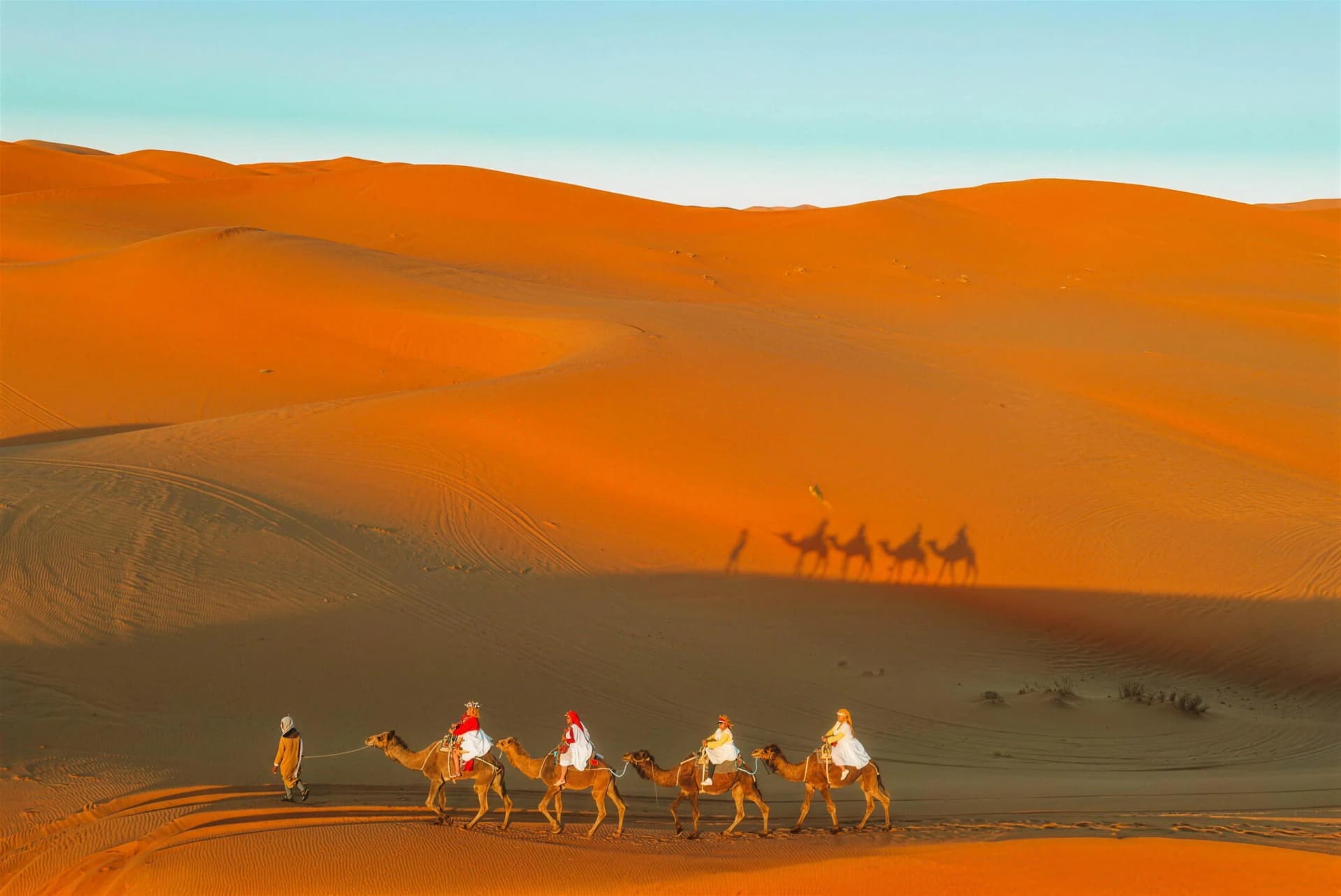
A planner in Casablanca replies with a day-by-day route and a quote within 24 hours.
Ask a follow-up question
Something this answer does not cover? Send us your question and our travel designers will read it.