Do I need to carry my passport with me in Morocco?
The short answer
Our team's answerCarry it on travel days and keep a copy on you the rest of the time. You need the original at the airport, at hotel check-in, to buy a SIM card and at road checkpoints, where Canada’s official advice says to carry identification at all times. On a city day, many visitors leave it in the riad safe.
Serenity Morocco Expert Team
Travel Designer · Staff · November 2026
Question
The full answer
A common question when planning a trip to Morocco, answered honestly by our travel designers.
Official advice is short on this point, so it helps to separate what it says from habit. Canada’s travel advice for Morocco, under road safety, notes that checkpoints are frequent and tells travellers to carry their identification and vehicle documents at all times. The UK’s advice tells visitors to keep their passport and belongings safe. Neither page sets out a detailed rule for a tourist walking around a city, and the government pages checked for this answer do not quote a specific Moroccan law on it, so the safe reading is: have your passport, or at least a good copy, with you, and carry the original whenever you are on the move.
There are several moments when you need the original. At the airport, the border officer should stamp it on arrival, and the UK government notes that some travellers have had trouble leaving because their passport had no entry stamp, so check it before you leave the desk. Hotels and riads ask for it at check-in to record your details; Moroccan press reported in 2016 that these guest forms are sent to the police and gendarmerie daily. Mobile phone shops need it to register a local SIM card. On road trips, police and gendarmerie checkpoints are common, and the officer may ask to see it along with the car’s papers.
On an ordinary day in a city, plenty of travellers leave the passport in the hotel or riad safe and carry a photocopy, or a clear photo on their phone, of the photo page and the entry stamp. That is a reasonable compromise in a medina, where the main risk to a passport is a pickpocket rather than a police check. If you do carry it, keep it in a zipped inside pocket or a money belt, never in a back pocket or an open bag. On days when you change towns, drive, or take a long-distance train or bus, carry the original.
Two rules are firm. Do not post a passport to or within Morocco: the UK and Canadian governments both say the authorities confiscate passports sent by mail. And avoid carrying someone else’s passport unless that person is travelling with you, as the UK advice warns that it can draw scrutiny from officials.
If your passport is lost or stolen, report it to the police straight away; the police number in Morocco is 190. You will need the police report to leave the country, along with an emergency travel document from your embassy or consulate. A copy of the photo page, kept separately from the original and in your email, makes that process quicker.
Finally, check the passport itself before you fly. The UK advice asks for at least three months’ validity after arrival and Canada’s asks for six months beyond your departure, so travel with six months left and a blank page, and read your own government’s current page for Morocco before you go.
- passport
- documents
- id
- checkpoints
- safety
- entry stamp
Helpful links
Serenity Morocco Expert Team — Travel Designers, Serenity Morocco Tours. Answered November 2026.
More questions on this
Is a photocopy of my passport enough in Morocco?
For a walk around a city, many visitors carry a copy and leave the original in the hotel safe. For check-in, SIM registration, driving and travel days you need the original.
Will the police ask to see my passport?
Possibly, especially at road checkpoints, which are frequent. Canada’s advice says to carry identification and vehicle documents at all times when travelling by road.
What if I lose my passport in Morocco?
Report it to the police on 190 and get a police report, which you need to leave the country, then contact your embassy or consulate for an emergency travel document.
After you ask for a quote
What you get within 24 hours
Your proposal contains
- A day-by-day route, with the driving time between stops
- Stays matched to your style (riads, kasbahs, desert camps or hotels), named so you can look them up
- Which moments are private to you, and which are shared, such as a camp’s dining tent
- An itemised quote: what is included and what is not
- Who is planning your trip, and how to reach them on WhatsApp
- Free, with no obligation to book
Before you pay a deposit, we confirm
- Opening days for the places on your route, including Friday and holiday closures
- Meal stops along the way, and any dietary needs
- Prayer or Shabbat timing, if it matters to you
- Step-free access, wherever you need it
- The vehicle class for your group and your luggage
Every trip is private and priced to your dates, so there is no fixed price list. Ask, and the proposal shows the full cost before anything is booked.
From the answer to the trip
A local driver-guide, the whole way
With your own driver-guide in Morocco there is a local on hand for the everyday things, SIM cards, cash, laundry and the road, and a Morocco-based team on WhatsApp for the whole trip.
- 7 days · Central MoroccoEssential Morocco: Imperial Cities Circuit
- 6 days · Southeast MoroccoSahara Desert Expedition
- 14 days · All MoroccoGrand Morocco Tour
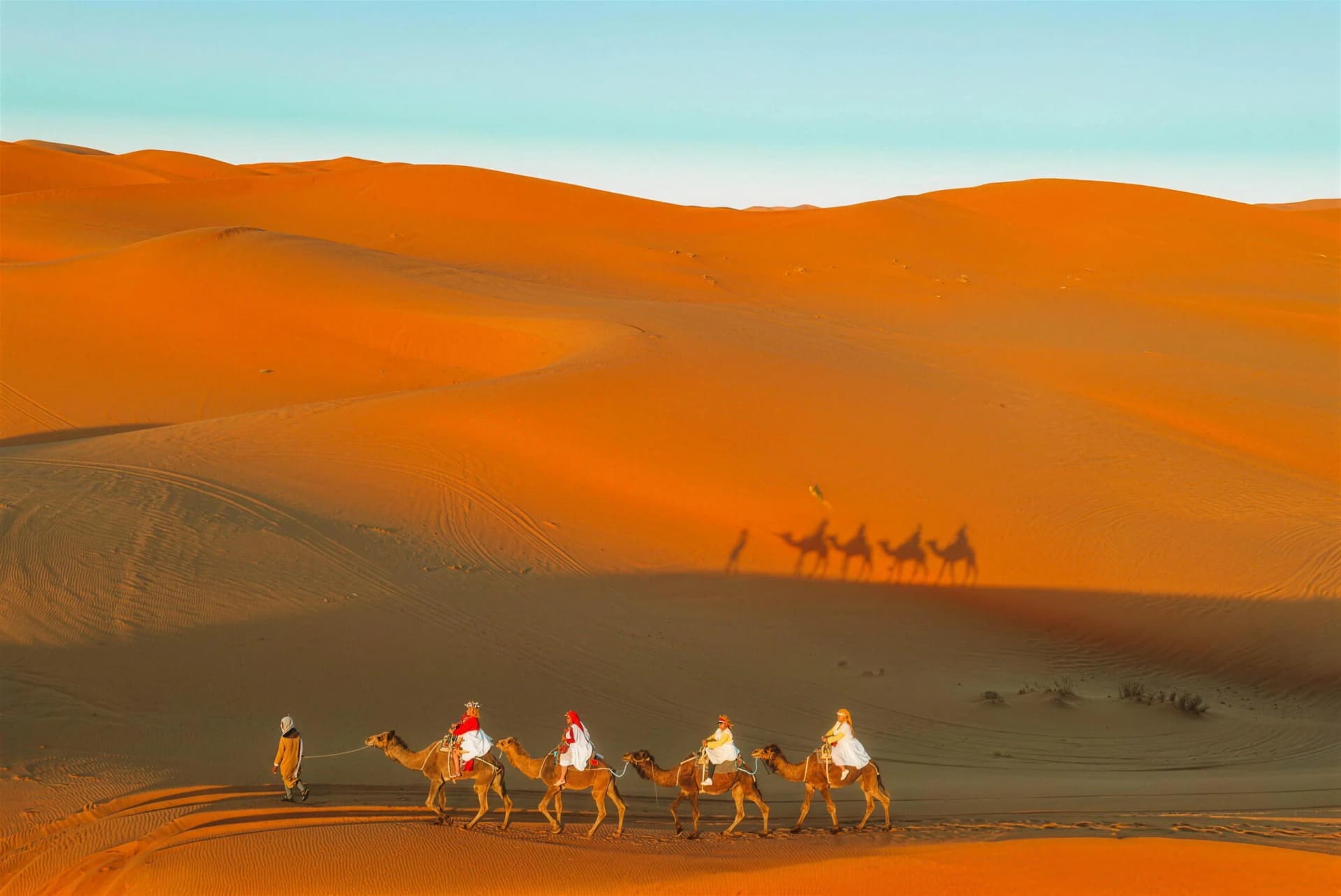
A planner in Casablanca replies with a day-by-day route and a quote within 24 hours.
Ask a follow-up question
Something this answer does not cover? Send us your question and our travel designers will read it.