Is Toubkal harder than Kilimanjaro, and is it good training for it?
The short answer
Our team's answerNo, Toubkal is easier than Kilimanjaro: it is 4,167 m against 5,895 m, and the usual climb takes two or three days from Imlil rather than five to nine on the mountain. It is still a real altitude trek with a long, steep summit day, which is why many people use it as a training climb before Kilimanjaro.
Serenity Morocco Expert Team
Travel Designer · Staff · November 2026
Question
The full answer
A common question when planning a trip to Morocco, answered honestly by our travel designers.
Toubkal is the easier of the two, mostly because of height and length. Jebel Toubkal, the highest peak in North Africa, reaches 4,167 metres. Kilimanjaro reaches 5,895 metres, more than 1,700 metres higher. Most people climb Toubkal in two or three days from the village of Imlil, while Kilimanjaro routes usually spend five to nine days on the mountain, and the longer routes give the body more time to adjust to the altitude.
That does not make Toubkal easy. The standard route climbs from Imlil at about 1,740 metres to the refuge at 3,207 metres on the first day, usually five to six hours of walking. The summit day starts before dawn, climbs about a thousand metres over loose scree and rock to the top, then descends all the way to Imlil. Expect eight to ten hours on your feet that day. The ground on Toubkal is rougher and steeper underfoot than the long, graded paths on much of Kilimanjaro.
Altitude is the real difference. At 4,167 metres, some climbers on Toubkal get headaches, poor sleep or nausea, especially if they arrive from sea level and go up fast. On Kilimanjaro the summit is almost 1,750 metres higher, so altitude is the main challenge of the whole climb, and the summit night is far colder. A two-day Toubkal climb gives your body little time to adapt, so a three-day plan with an extra night lower down is kinder if you have never been above 3,000 metres.
Neither peak needs technical climbing skills in normal conditions. The exception on Toubkal is winter. From roughly November to April the upper slopes are often under snow and ice, and crampons and an ice axe become necessary, along with someone who knows how to use them. Kilimanjaro is close to the equator, so its summit conditions are less seasonal, though the rainy seasons change the trail.
As training, Toubkal works well. It lets you test your boots, your layering and your response to altitude over a long weekend, and it is about an hour and a half from Marrakech. Several months before a Kilimanjaro trip is a sensible time to do it. On Kilimanjaro the park authority requires every climber to go with a licensed guide. On Toubkal a local mountain guide has been required on the Imlil trail in recent years, so plan for one and check the current rule locally.
Our honest view: if Toubkal leaves you comfortable at the summit, Kilimanjaro is within reach with good training and a longer route. If Toubkal is a struggle, it has done its job by showing you what to work on.
- toubkal
- kilimanjaro
- trekking
- altitude
- high atlas
- training
Helpful links
Serenity Morocco Expert Team — Travel Designers, Serenity Morocco Tours. Answered November 2026.
More questions on this
Is Toubkal good preparation for Kilimanjaro?
Yes. A Toubkal climb tests your fitness, boots, layers and response to altitude over two or three days, close to Marrakech. It does not reach Kilimanjaro height, so treat it as a rehearsal, not proof that you will have no altitude symptoms higher up.
Do you need technical skills to climb Toubkal?
Not in the warmer months, when it is a steep walk on rock and scree. From roughly November to April snow and ice usually cover the upper slopes, and crampons, an ice axe and an experienced guide are needed.
After you ask for a quote
What you get within 24 hours
Your proposal contains
- A day-by-day route, with the driving time between stops
- Stays matched to your style (riads, kasbahs, desert camps or hotels), named so you can look them up
- Which moments are private to you, and which are shared, such as a camp’s dining tent
- An itemised quote: what is included and what is not
- Who is planning your trip, and how to reach them on WhatsApp
- Free, with no obligation to book
Before you pay a deposit, we confirm
- Opening days for the places on your route, including Friday and holiday closures
- Meal stops along the way, and any dietary needs
- Prayer or Shabbat timing, if it matters to you
- Step-free access, wherever you need it
- The vehicle class for your group and your luggage
Every trip is private and priced to your dates, so there is no fixed price list. Ask, and the proposal shows the full cost before anything is booked.
From the answer to the trip
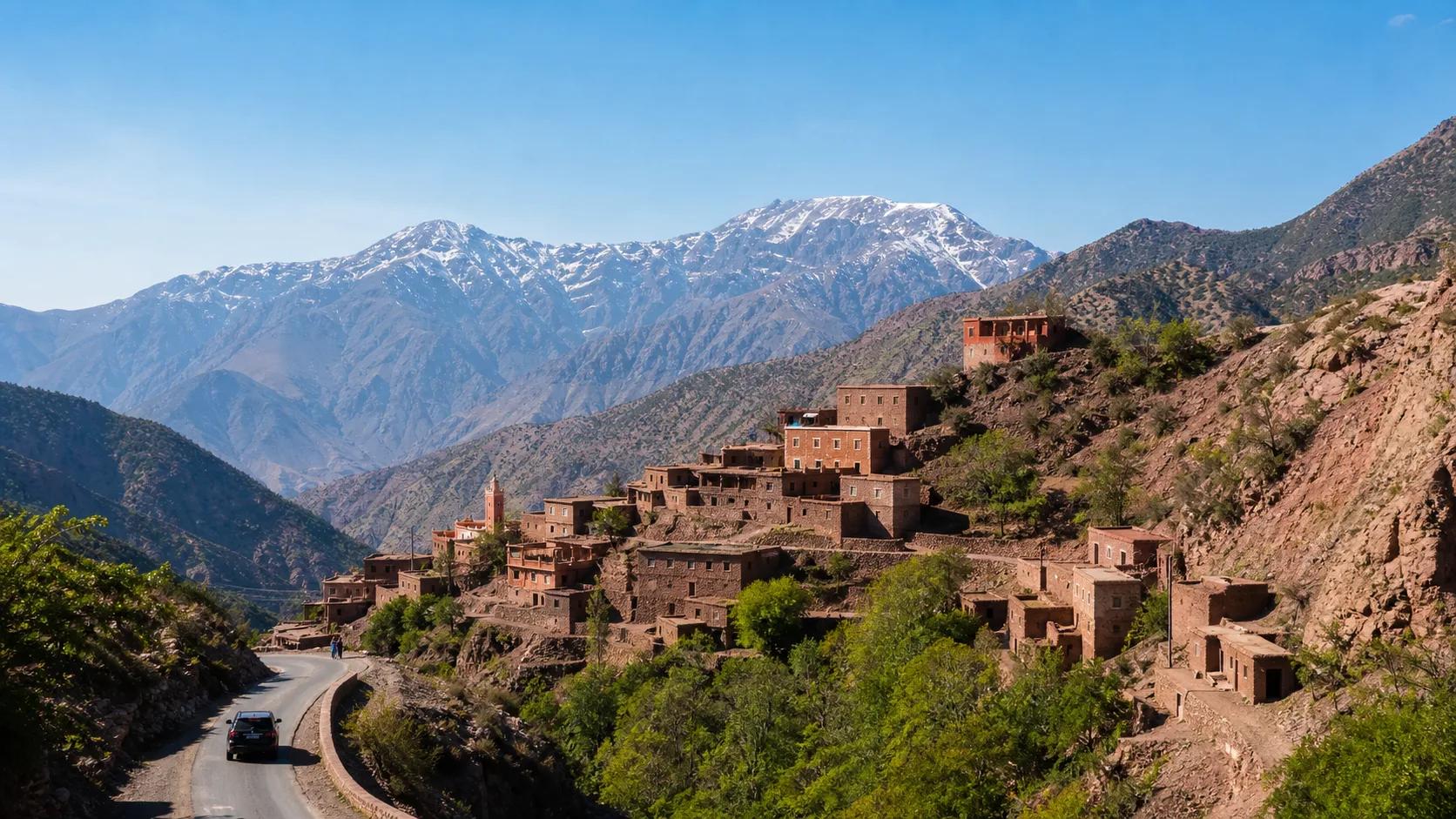
The High Atlas, an hour from Marrakech
Mule trails between Amazigh villages, mint tea on a terrace and the peaks in view, with a local mountain guide and a driver waiting at the end of the walk.
- 5 days · High AtlasAtlas Mountains Adventure
- 5 days · High AtlasBerber Cultural Deep Dive
- 7 days · High AtlasAtlas Mountains Trekking Adventure

A planner in Casablanca replies with a day-by-day route and a quote within 24 hours.
Ask a follow-up question
Something this answer does not cover? Send us your question and our travel designers will read it.