How many UNESCO World Heritage sites does Morocco have?
Morocco’s Heritage
Morocco has nine UNESCO World Heritage sites: the medinas of Fez, Marrakech, Tétouan and Essaouira, the Ksar of Aït Benhaddou, the historic city of Meknes, Volubilis, the Portuguese city of Mazagan at El Jadida, and Rabat. Five sit on one classic route, Fes, Volubilis, Meknes, Marrakech and Aït Benhaddou; the other four suit a second trip.
In short
Morocco has nine UNESCO World Heritage sites, all cultural, from the medina of Fez (1981) to Rabat (2012), and sixteen living traditions on UNESCO’s intangible heritage lists.
Roman ruins above green fields, earth-built ksars on the caravan road, medinas still lived in after a thousand years. Below, each one on a single line of years, then on the map.
1981 to 2012
The inscription line
Each seal is a year UNESCO added a Moroccan site to the World Heritage List. Tap a name to jump to it.
- 1981
The first
- 1985
4 years later
- 1987
2 years later
- 1996
9 years later
- 1997
- 2001
4 years later
- 2004
3 years later
- 2012
8 years later
Where they are
The nine sites
From the Rif to the edge of the Sahara, in order of inscription.

The Chouara tannery, Fes 1 · Fes · inscribed 1981
Medina of Fez
Fes el-Bali, founded under the Idrisids and filled with madrasas by the Marinids: tanneries, fountains and lanes too narrow for cars. A living city, not a museum.
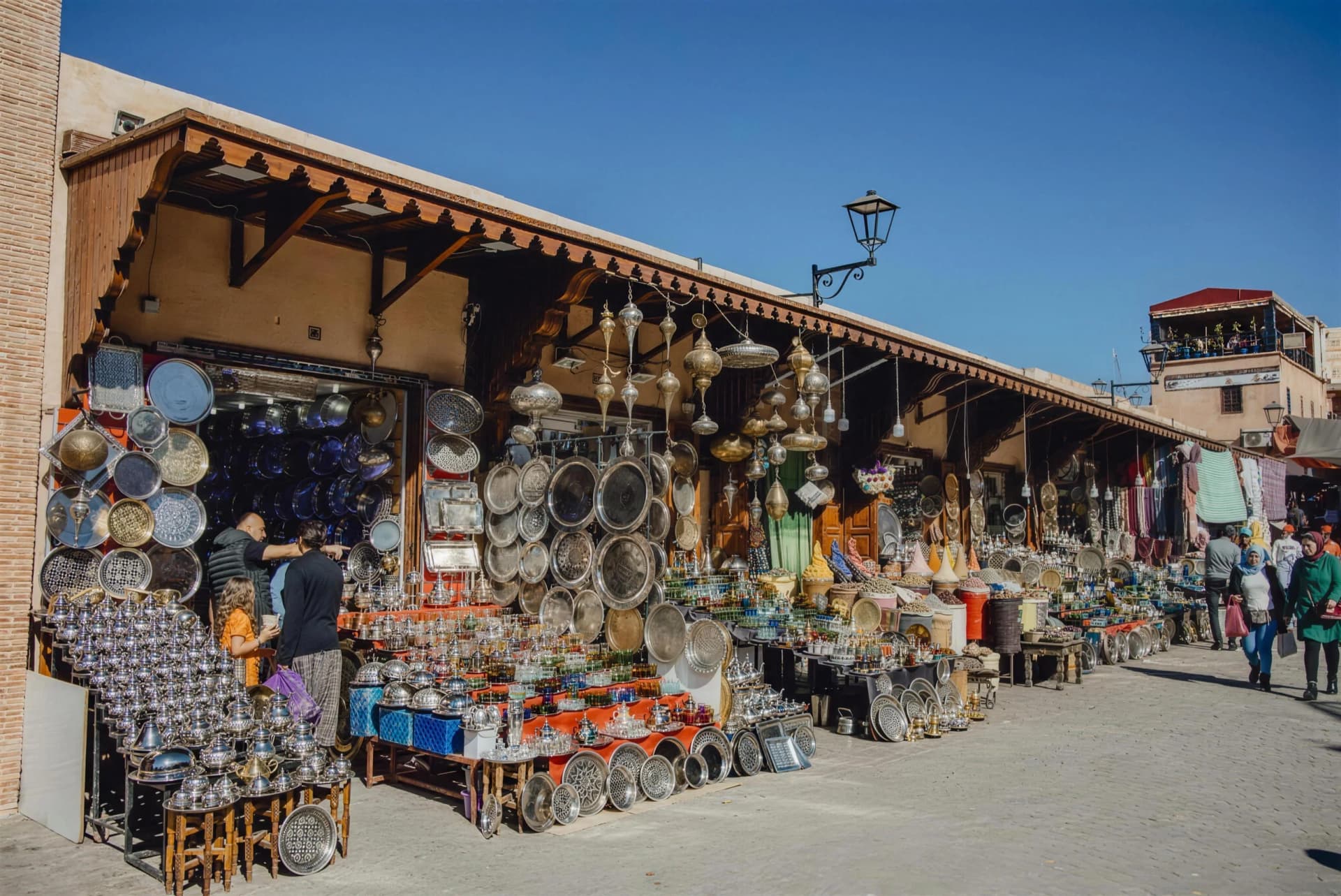
A souk square, Marrakech 2 · Marrakech · inscribed 1985
Medina of Marrakech
Founded by the Almoravids in the 11th century: the Koutoubia, the red ramparts, the souks and Jemaa el-Fnaa square.

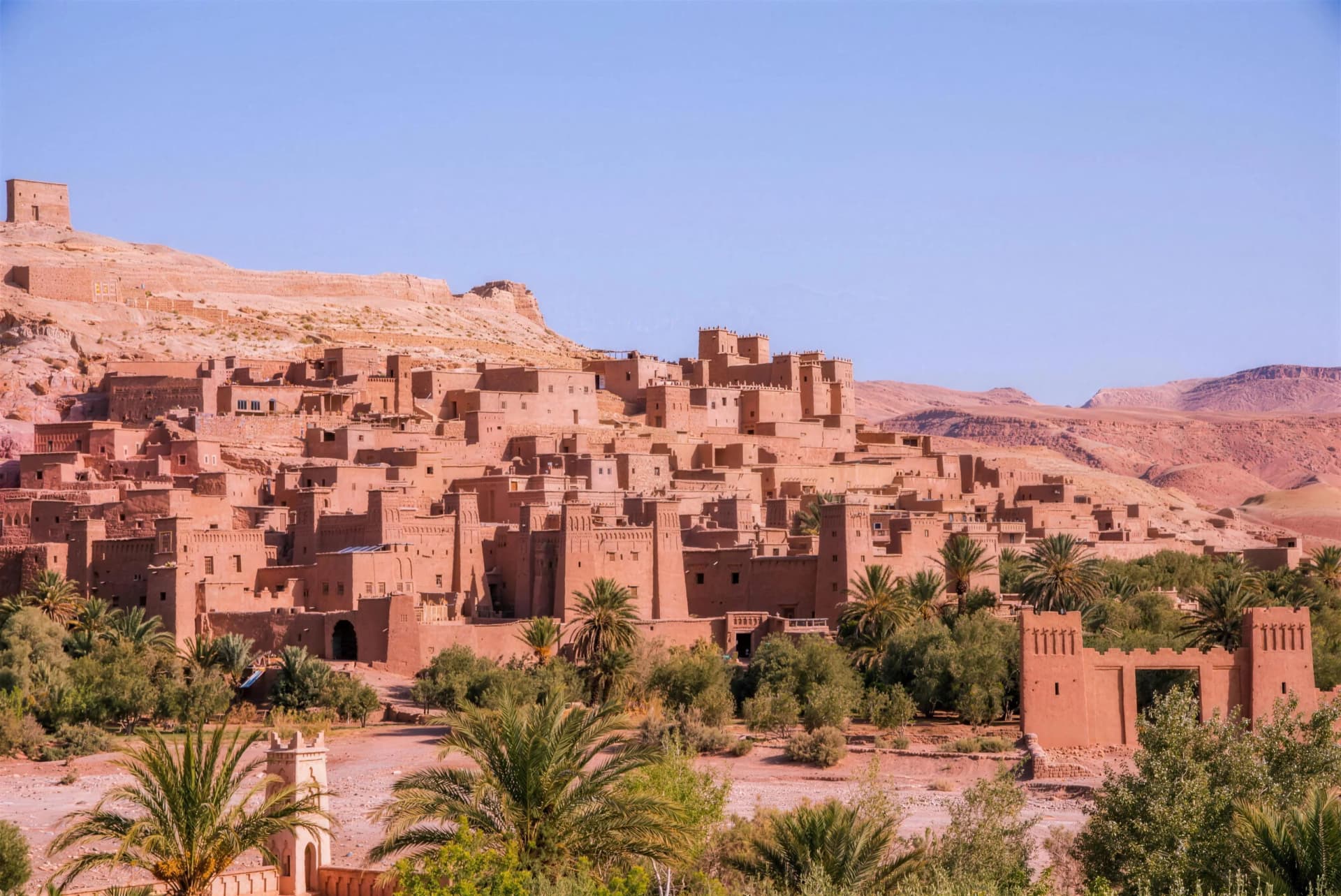
Rooftops and towers of the ksar 3 · near Ouarzazate · inscribed 1987
Ksar of Aït Benhaddou
An earth-built fortified village on the old caravan road between the Sahara and Marrakech, south of the High Atlas.
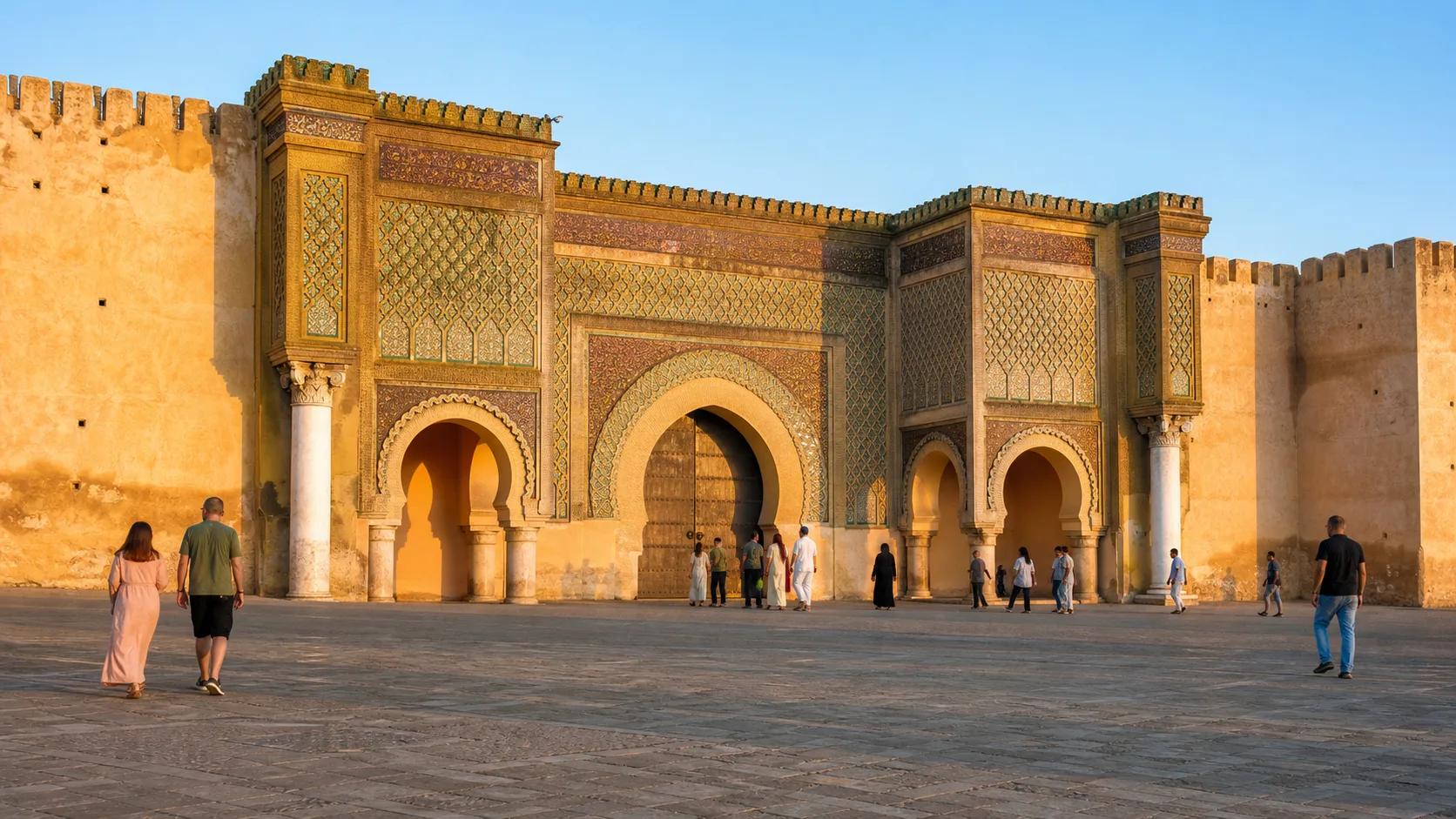
Illustrative: Bab Mansour 4 · Meknes · inscribed 1996
Historic City of Meknes
Moulay Ismail’s 17th-century imperial capital: monumental gates such as Bab Mansour, granaries and long lines of walls.
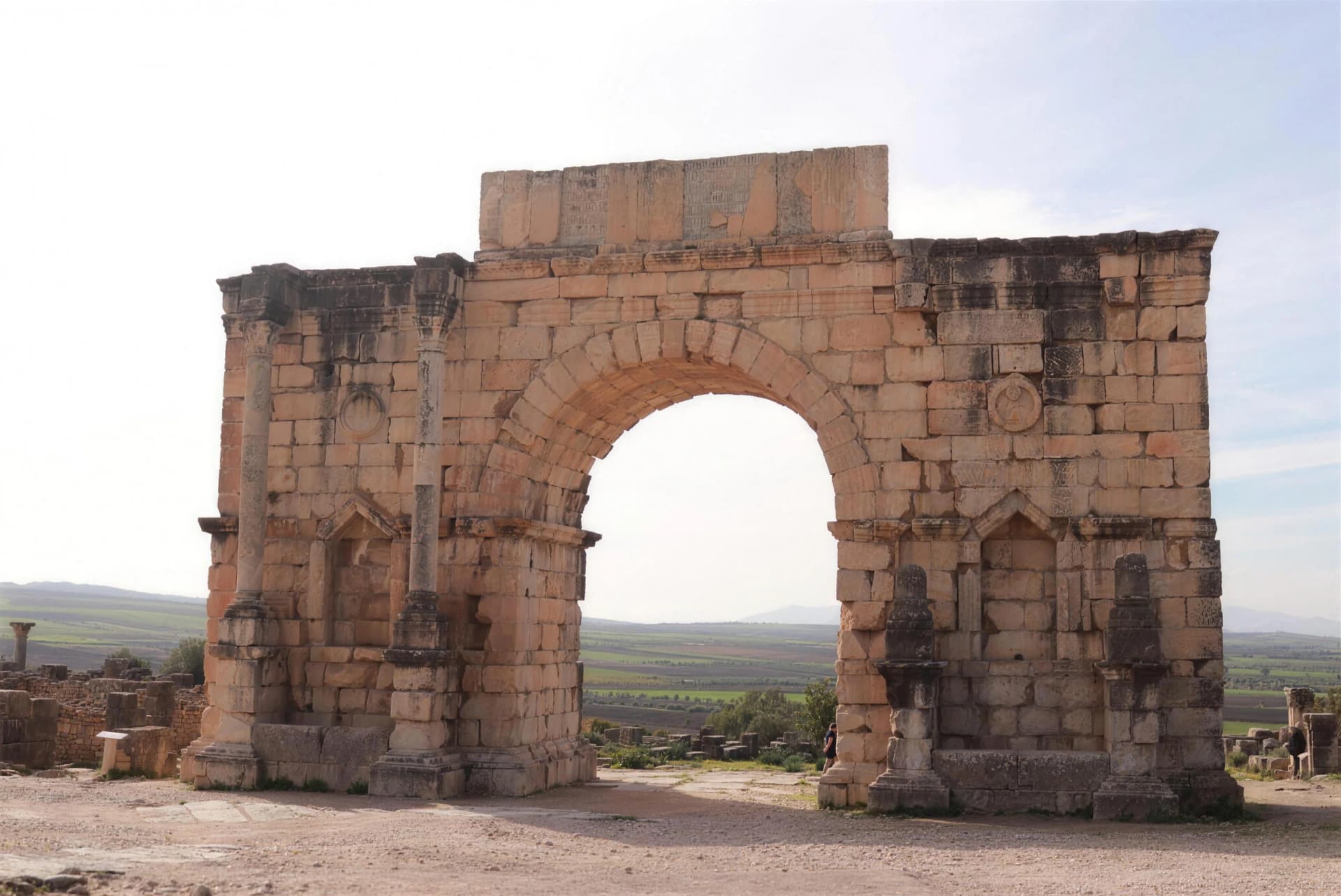
The triumphal arch of Volubilis 5 · near Meknes · inscribed 1997
Volubilis
The ruins of a Roman city of Mauretania Tingitana, with floor mosaics still in place and a triumphal arch above the fields.
6 · Tétouan · inscribed 1997
Medina of Tétouan
A small, whitewashed medina below the Rif, rebuilt by Andalusian refugees after the fall of Granada.
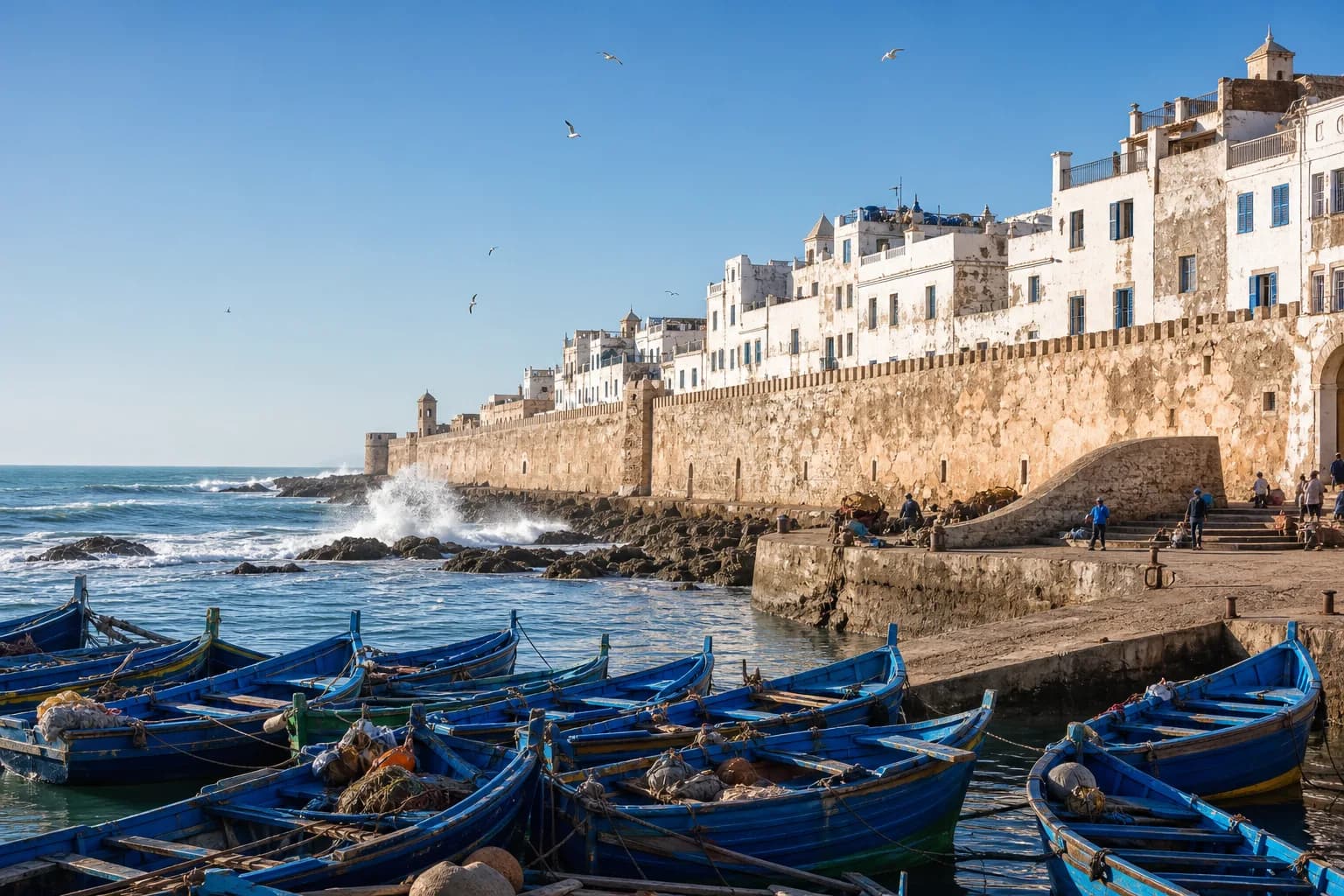
Illustrative: the ramparts and the port 7 · Essaouira · inscribed 2001
Medina of Essaouira
Mogador, an 18th-century fortified port laid out for Sultan Sidi Mohammed ben Abdallah, its ramparts facing the Atlantic.
8 · El Jadida · inscribed 2004
Portuguese City of Mazagan
A 16th-century Portuguese fortress town on the Atlantic, with a vaulted underground cistern.
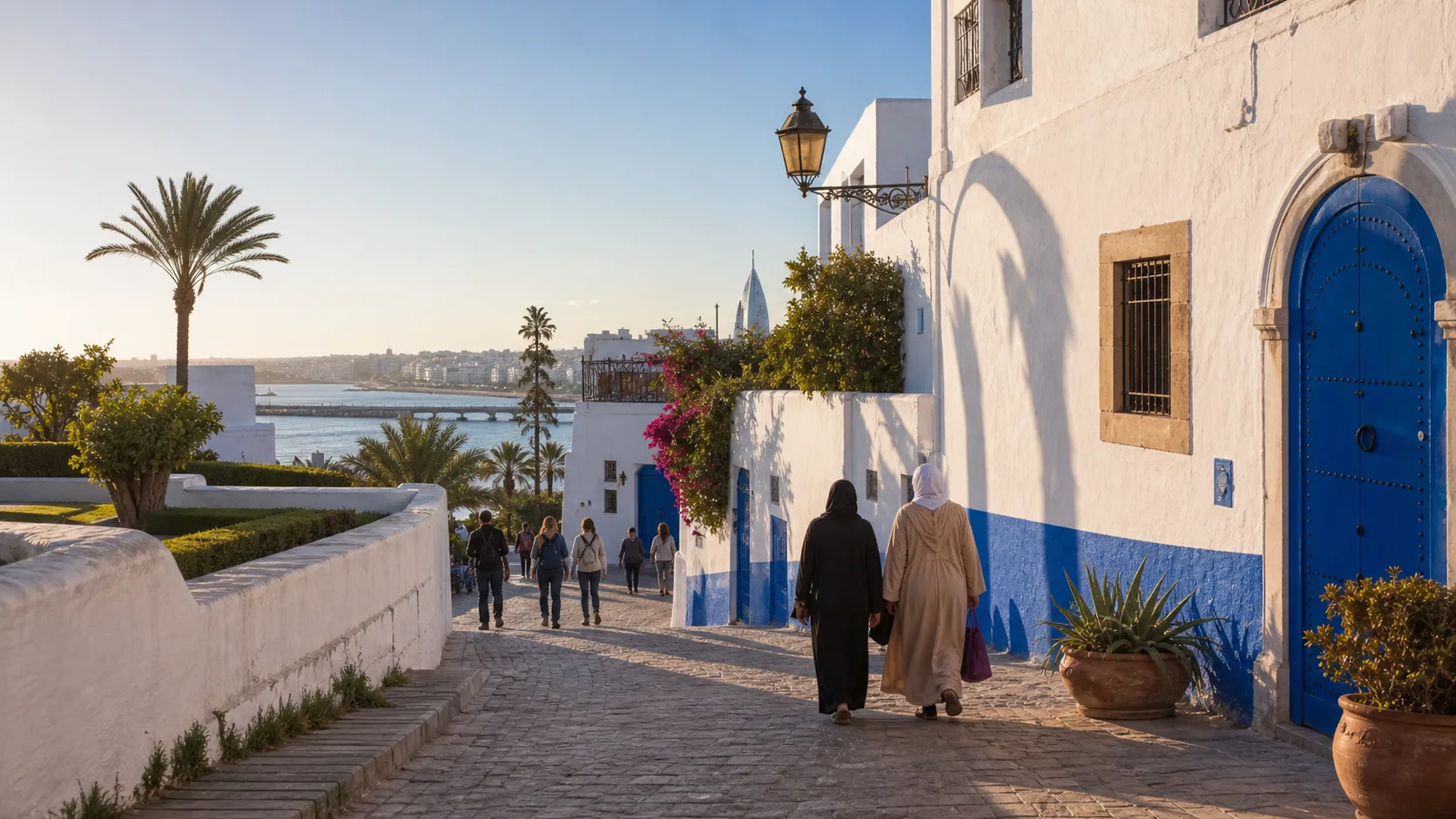
Illustrative: the Kasbah of the Oudayas 9 · Rabat · inscribed 2012
Rabat, Modern Capital and Historic City
The Almohad Hassan Tower and ramparts, the Kasbah of the Oudayas and the 20th-century new town, side by side.
Who built them
Three ages
To the 7th century
Before Islam
Amazigh kingdoms, Phoenician and Carthaginian trading posts on the coast, then the Roman province of Mauretania Tingitana, whose city of Volubilis still stands.
See it in: Volubilis
8th to 15th centuries
The great dynasties
The Idrisids founded Fes; the Almoravids founded Marrakech; the Almohads raised the Koutoubia and the Hassan Tower; the Marinids filled Fes with madrasas.
See it in: Fes, Marrakech, Rabat
16th century to today
Saadians and Alaouites
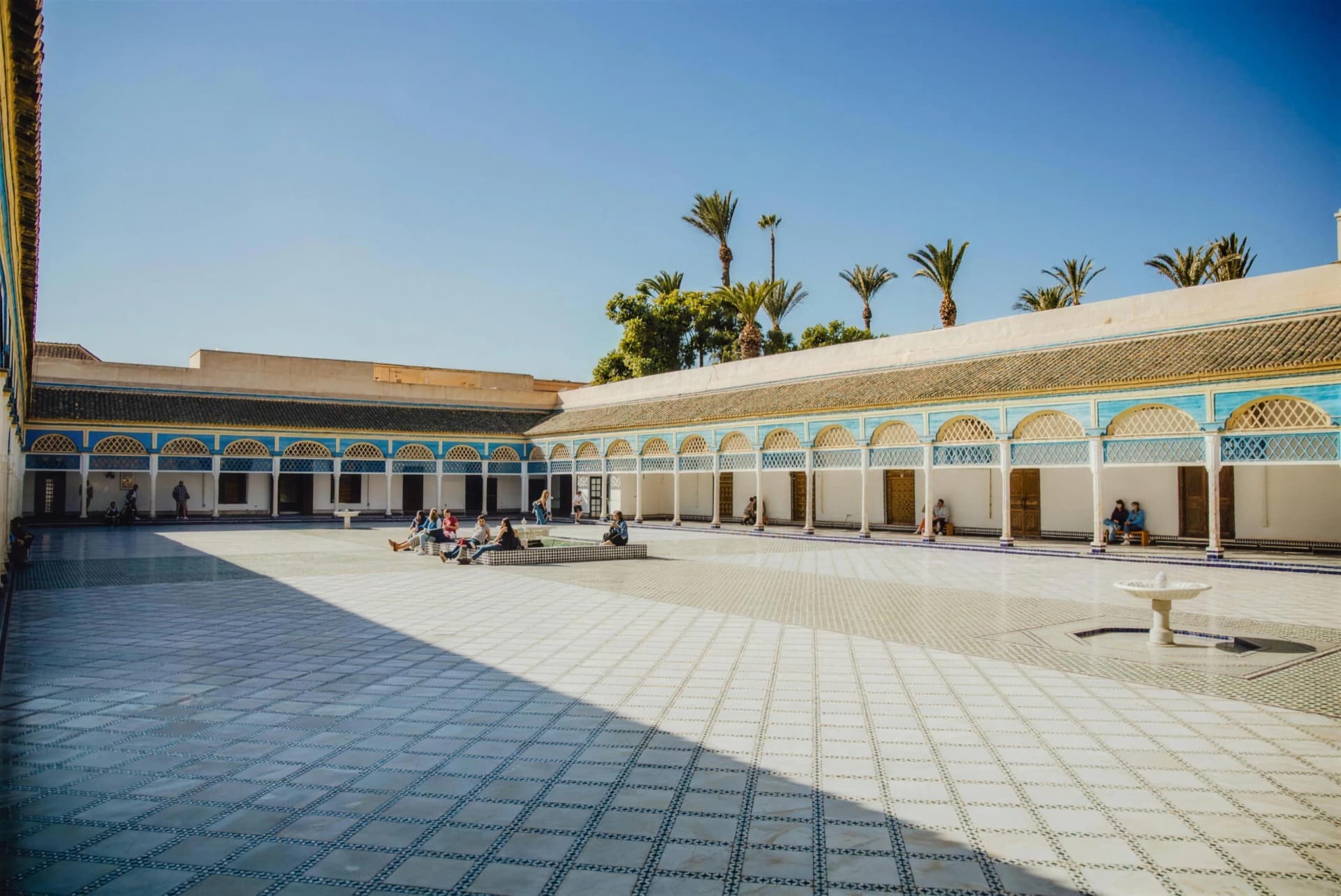
The Saadians built their tombs and the El Badi palace in Marrakech; the Alaouite dynasty, which still reigns, made Meknes Moulay Ismail’s capital. Rabat has been the capital since 1912.
See it in: Meknes, Essaouira, Rabat
Intangible heritage
Living heritage
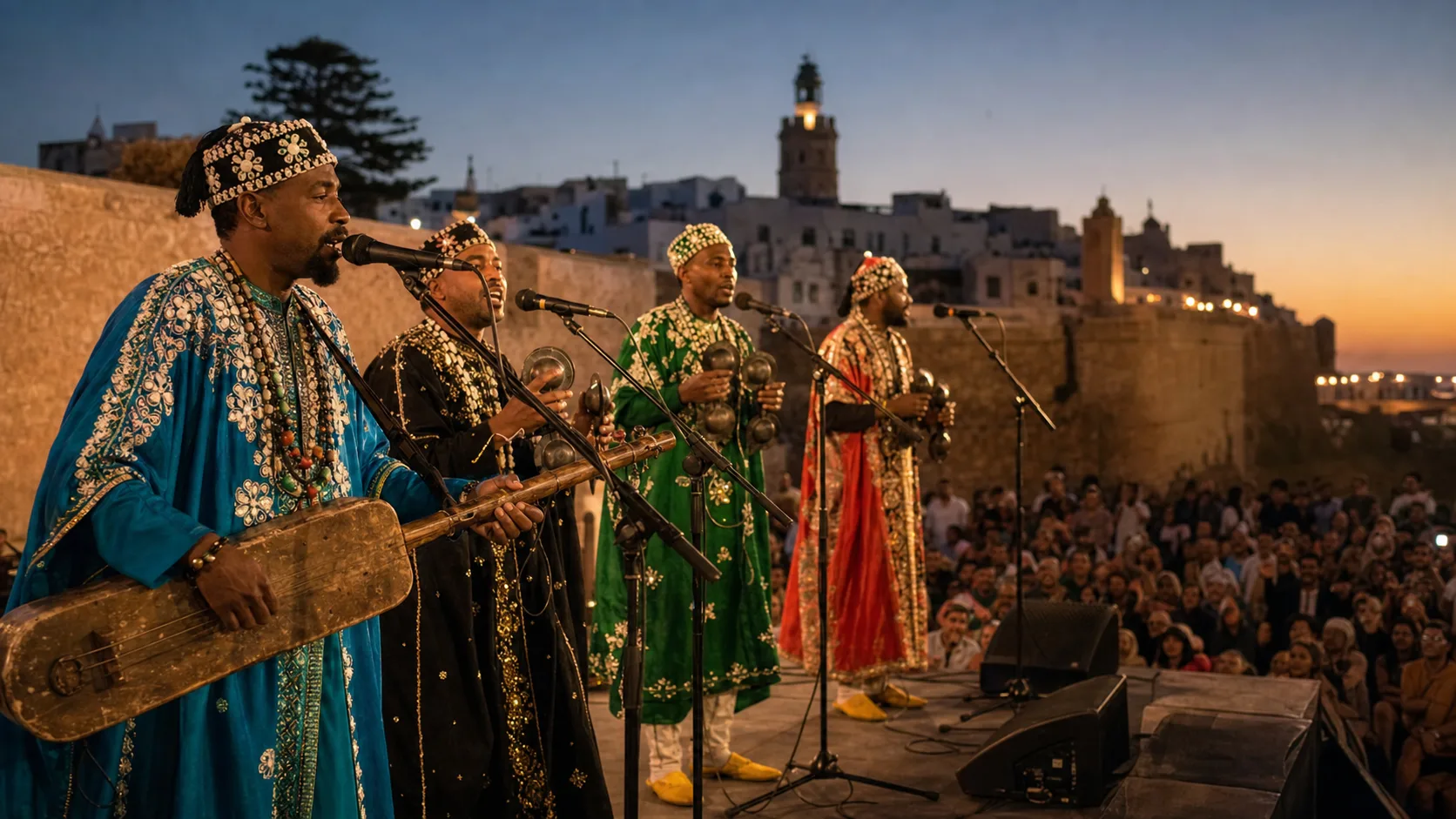
UNESCO also lists sixteen Moroccan traditions that people still keep alive. Many can be part of a trip: an evening in Jemaa el-Fnaa, an argan cooperative, a Gnawa concert, a couscous lunch with a family.
- Listed 2008Jemaa el-Fnaa squareStorytellers, musicians and food stalls in Marrakech’s great square.
- Listed 2014ArganThe knowledge and practices around the argan tree of the south-west.
- Listed 2019GnawaMusic and ritual of healing, heard best in Essaouira.
- Listed 2020CouscousIts making and eating, shared with Algeria, Mauritania and Tunisia.
- Listed 2021TbouridaThe “fantasia”: riders charging in line and firing as one.
- Listed 2024HennaThe rituals, art and customs of henna.
With a local guide
A heritage route
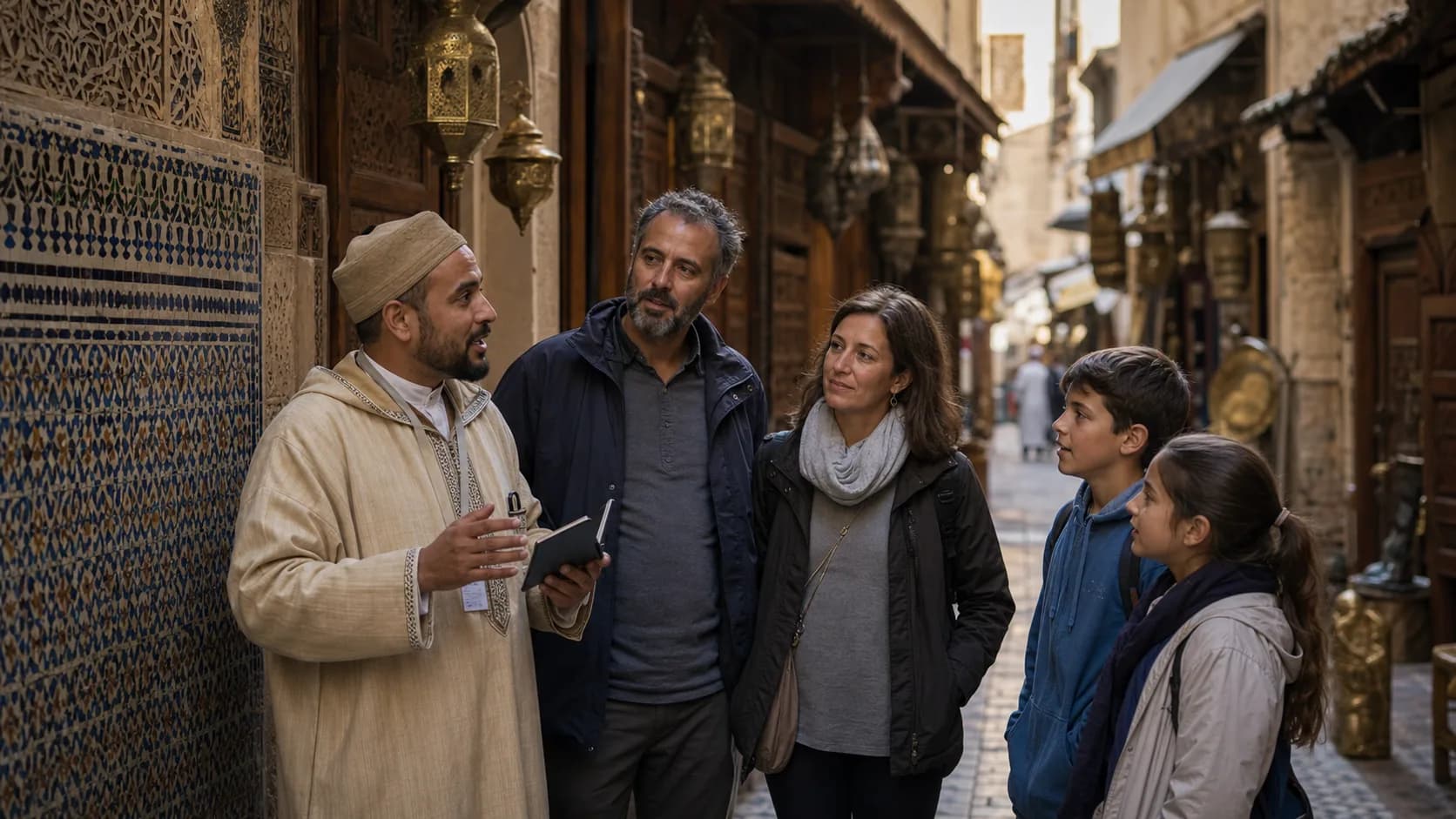
Don’t try to tick off all nine. Stand quietly in a few: the madrasas of Fes with a local guide who knows the lanes, Volubilis in the morning light, Aït Benhaddou before the day trips arrive. A private driver links them at your pace, and we plan where to sleep so each visit falls at the right hour.
Morocco’s heritage: your questions
How many UNESCO World Heritage sites does Morocco have?
Nine, all cultural: the medinas of Fez, Marrakech, Tétouan and Essaouira, the ksar of Aït Benhaddou, the historic city of Meknes, Volubilis, the Portuguese city of Mazagan in El Jadida, and Rabat.
Which was the first, and which the most recent?
The Medina of Fez was the first, inscribed in 1981. The most recent is Rabat, inscribed in 2012 as a modern capital and historic city.
Can I see several of them on one trip?
Yes. A classic route links Fes, Volubilis, Meknes, Marrakech and Aït Benhaddou, with Essaouira if you want the coast. Rabat, El Jadida and Tétouan suit a second, slower journey, or a northern or coastal route.
What are the imperial cities?
Fes, Marrakech, Meknes and Rabat, the four cities that have served as Morocco’s capital. All four are on the World Heritage list.
What is Morocco’s intangible heritage?
Living traditions that UNESCO recognises: as of 2026, 16 elements for Morocco, from Jemaa el-Fnaa square and Gnawa to couscous, Tbourida, malhun, henna and the caftan. Taskiwin, a High Atlas dance, is on the list needing urgent safeguarding.
Do I need a guide at the heritage sites?
Not at every one, but a local guide makes the medina of Fes far easier and brings Volubilis and Aït Benhaddou to life. A private trip can include a local guide in the places you choose.
How much does a heritage tour of Morocco cost?
It depends on the number of days, the route, the season, the hotels or riads you choose and how many guided visits you want. Tell us your dates and a planner replies within 24 hours with a free quote.
A thousand years, at your pace.
المغربⵜⴰⴳⵍⴷⵉⵜ ⵏ ⵍⵎⵖⵔⵉⴱThe Kingdom of Morocco