In Morocco you can photograph tourist sites, streets, medinas, markets with discretion and landscapes, but not military sites, police stations, government buildings, airport security areas, borders or checkpoints. Always ask before photographing people. This guide covers the rules, etiquette, places to avoid and the best spots for golden hour and night photography.
Morocco Photography Guide: Laws, Ethics, and Best Locations
Photography Laws and Regulations
What is Legal to Photograph
Permitted:
- Tourist attractions
- Public streets and medinas
- Landscapes and nature
- Markets (with discretion)
- Architecture (non-military)
- Your private accommodation
- Willing subjects (with permission)
Prohibited:
- Military installations
- Police stations
- Government buildings
- Airports (inside secure areas)
- Borders and checkpoints
- Royal palaces (exteriors sometimes OK)
- People without permission
- Strategic infrastructure
Legal Consequences
What can happen:
- Police or security staff may ask you to show and delete photos
- Your camera or drone may be held
- Photographing military or security sites is treated seriously, and can lead to questioning
Penalties depend on the case and are set by Moroccan law; your own government's travel advice for Morocco covers photography and drones.
If Stopped by Police:
- Be polite and cooperative
- Show photos if requested
- Delete if required
- Don't argue
- Tourist police can help if innocent
- Keep embassy contact handy
Cultural Sensitivity and Ethics
Photographing People
The Golden Rule: ALWAYS ASK PERMISSION
Why People May Refuse:
- Religious beliefs (images forbidden)
- Privacy concerns
- Fear of evil eye
- Cultural modesty
- Previous bad experiences with tourists
How to Ask Permission:
Verbal:
- Arabic: "Mumkin tsawer?" (Can I take photo?)
- French: "Je peux prendre une photo?"
- Show camera and gesture
- Smile and be friendly
Non-Verbal:
- Point to camera
- Point to person
- Questioning expression
- Wait for nod or head shake
After Permission:
- Take photo quickly
- Show them the result
- Say thank you: "Shukran"
- Offer to send photo (get email if you can)
If Refused:
- Respect immediately
- Thank them anyway
- Move on gracefully
- Never photograph secretly after refusal
Tipping for Photos
When Payment Expected:
- Street performers (water sellers, snake charmers, acrobats)
- Henna ladies in squares
- Professional models in traditional dress
- Anyone in costume
Standard Rates:
- Photo with performer: 10-20 MAD
- Multiple photos: 20-50 MAD
- Agree price BEFORE taking photos
Candid Street Photography:
- Generally no payment expected
- But still ask permission
- Small tip appreciated
- Building rapport helps
Sensitive Subjects
Women:
- More conservative about photos
- Rural women especially shy
- Never photograph without permission
- Be extra respectful
- Female photographers have easier time
Children:
- Always ask parents first
- Never photograph alone without guardian
- Some parents say no (respect it)
- Candy/small gifts not recommended (encourages begging)
Religious Contexts:
- Never photograph people praying
- Mosques: Non-Muslims can't enter most
- Religious ceremonies: Ask first
- Friday prayers: Extra sensitive
Private Moments:
- Hammams: Absolutely no photos
- Inside homes: Only if invited and permitted
- Family gatherings: Ask host
- Grief/funerals: Never
Respectful Photography Practices
Do:
- Ask permission always
- Smile and be friendly
- Learn basic Arabic greetings
- Show people their photos
- Be patient
- Respect refusals
- Photograph culture respectfully
- Hire local guides who can help
- Share contact to send photos
Don't:
- Sneak photos
- Use long lenses secretly
- Photograph poverty voyeuristically
- Photograph children alone
- Photograph women inappropriately
- Photograph religious contexts insensitively
- Ignore "no photography" signs
- Harass for photos
When and Where NOT to Photograph
Absolutely Forbidden
Military and Security:
- Military bases
- Police stations
- Army vehicles
- Police checkpoints
- Barracks
- Security personnel
- Border crossings
- Coastal defense installations
Government:
- Royal palaces (some exteriors OK, ask)
- Government ministry buildings
- Official residences
- Parliament building
Infrastructure:
- Airports (secure areas)
- Bridges (some strategic ones)
- Dams
- Power plants
- Telecommunications facilities
Restricted (Ask First)
Religious Sites:
- Mosque interiors (non-Muslims can't enter anyway)
- Mosque exteriors (usually OK but ask)
- Medersas (Quranic schools) - some allow, some don't
- Shrines and mausoleums (check signs)
Commercial:
- Hammams (privacy)
- Inside shops (ask owner)
- Restaurants (ask management)
- Hotels (common areas usually OK)
Cultural Sites:
- Museums (often no flash, sometimes no photos)
- Archaeological sites (usually OK, check)
- Palaces (some allow, some don't)
Posted Restrictions
Look for Signs:
- Camera with X through it
- "No Photography" (English/French/Arabic)
- Security guards indicating no
- When in doubt, ask
Common Posted Restrictions:
- Museums (to protect artifacts)
- Palaces (privacy)
- Tanneries (some, though many welcome photos)
- Certain souks
Best Photography Locations
Marrakech (50+ Spots)
Djemaa el-Fna:
- Best time: Sunset to evening (magical light and activity)
- What: Snake charmers, food stalls, performers, crowds
- Tips: Rooftop cafés for overview shots
- Caution: Pay performers, watch belongings
Majorelle Garden:
- Best time: Morning (9-11 AM, fewer people, soft light)
- What: Blue buildings, exotic plants, YSL museum
- Fee: 70 MAD entry
- Tips: Arrive at opening, beautiful colors
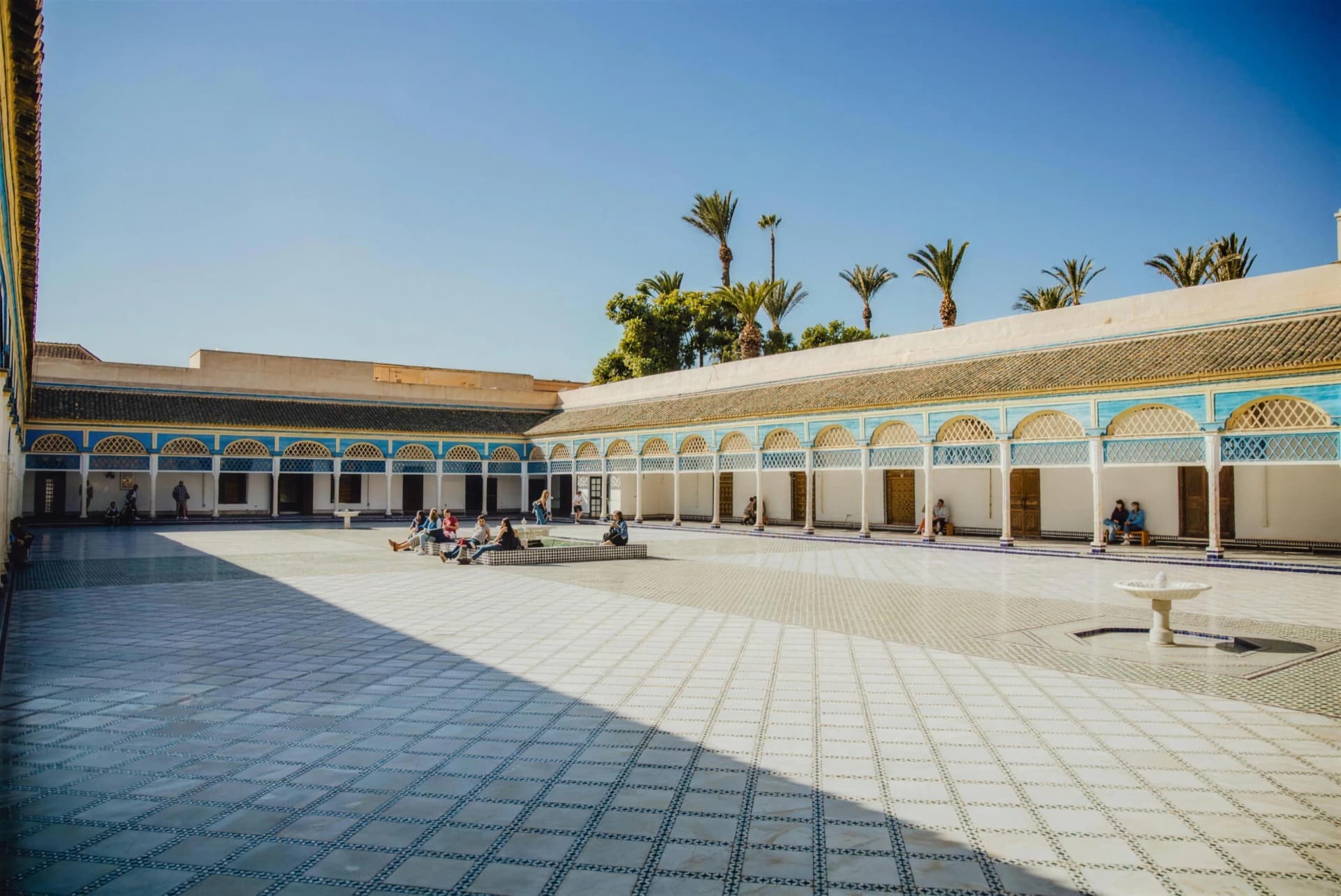
Bahia Palace:
- Best time: Morning (10-11 AM)
- What: Intricate tilework, courtyards, architecture
- Tips: Use wide-angle for rooms, details with macro
Saadian Tombs:
- Best time: Early morning
- What: Ornate tombs, peaceful gardens
- Challenge: Crowded afternoons
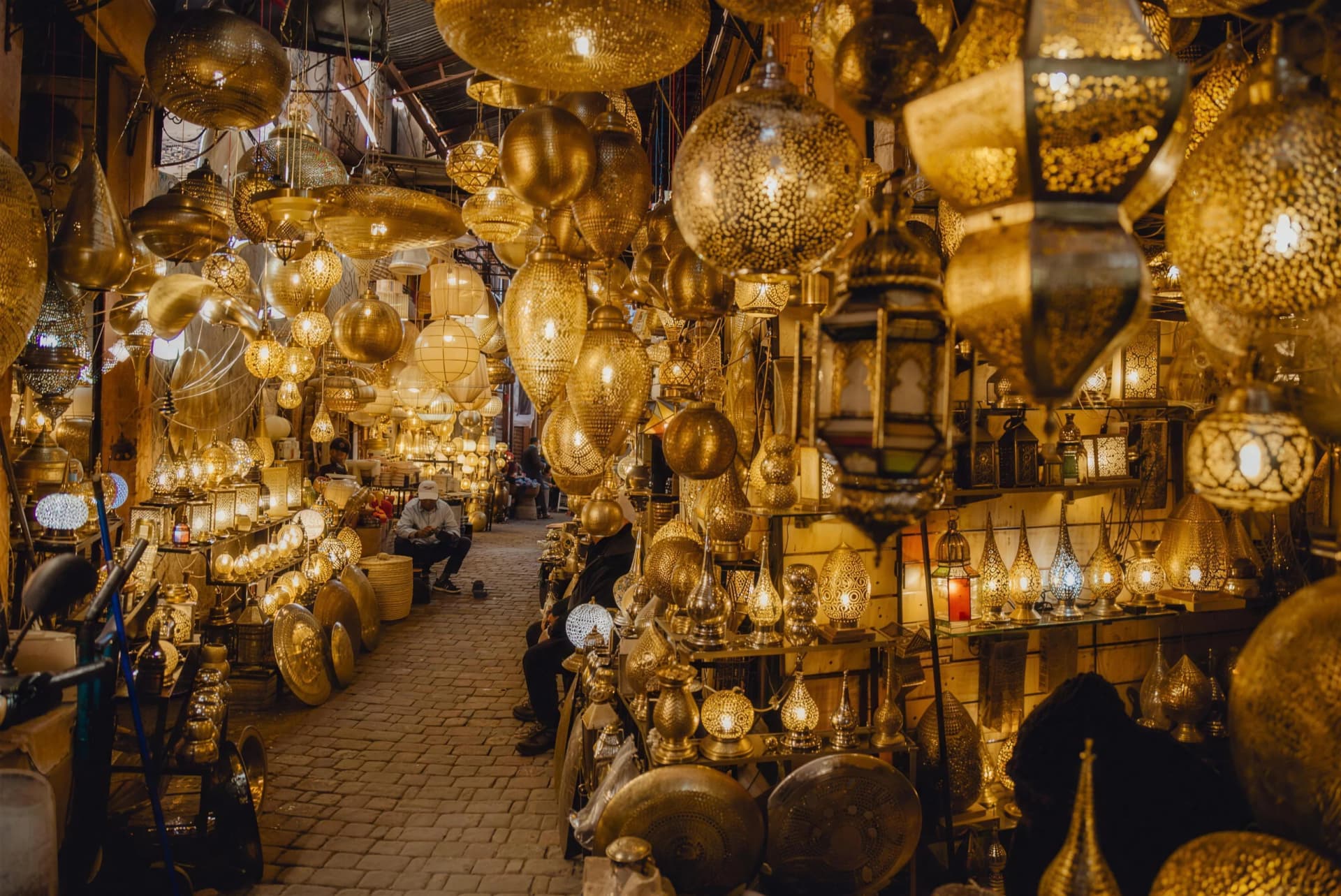
Souks:
- Best locations: Spice souk, metalwork souk, dyer's souk
- Best time: Morning (better light penetration)
- What: Colors, textures, people at work
- Tips: Ask permission, respectful of vendors
Koutoubia Mosque:
- Best time: Sunset (golden hour on minaret)
- What: Iconic minaret, gardens
- Exterior only (non-Muslims)
Ben Youssef Medersa:
- Best time: Midday (light in courtyard)
- What: Stunning tilework, carved cedar, architecture
- Tips: Tripod useful, bring wide-angle
Le Jardin Secret:
- Best time: Morning
- What: Peaceful gardens, Islamic architecture
- Photography: Allowed
Rooftop Cafés:
- Café Arabe, Nomad, Café des Épices
- Views: Over medina, Atlas Mountains backdrop
- Best time: Sunset
Fes (25+ Spots)
Bab Bou Jeloud (Blue Gate):
- Best time: Morning or late afternoon
- What: Iconic blue and green tilework
- Tips: Frame with archway
Tanneries (Chouara, Sidi Moussa):
- Best time: Morning (active work, good light)
- What: Colorful dye vats, workers, traditional process
- Access: Through leather shops (may expect purchase)
- Tips: Wide-angle for overview, telephoto for workers
- Smell: Strong! Mint offered
Medina Alleys:
- Best time: Midday (light penetrates narrow alleys)
- What: Daily life, architecture, atmosphere
- Tips: Ask locals permission for portraits
Bou Inania Medersa:
- Best time: Midday (courtyard light)
- What: Exquisite tile and carved plaster work
- Tips: Macro for details, wide for courtyard
Nejjarine Museum/Fountain:
- Best time: Morning
- What: Beautiful fountain, woodwork museum
- Photography: Allowed
Pottery Quarter:
- Best time: Morning (workers active)
- What: Traditional pottery making
- Tips: Ask permission, respectful of work
Chefchaouen (The Blue Pearl)
Entire Medina:
- Best time: Morning (soft light on blue walls)
- What: Blue-painted buildings, streets, doors
- Famous spots: Plaza Uta el-Hammam, Ras El Maa waterfall
- Tips: Early morning (no crowds), endless photo ops
Kasbah:
- Gardens and museum
- Best time: Late afternoon
Ras El Maa:
- Waterfall and washing area
- Best time: Morning
Spanish Mosque:
- Sunset: Best view over blue city
- Hike: 30 minutes uphill
Essaouira (Coastal Beauty)
Fishing Port:
- Best time: Morning (fishermen return with catch)
- What: Blue boats, seagulls, seafood market
- Tips: Action shots of fish auction
Ramparts:
- Best time: Sunset (golden hour on ocean)
- What: Cannons, ocean views, old fortifications
- Tips: Wide-angle for landscape
Medina:
- Blue and white theme
- Souks: Less crowded than Marrakech
- Woodworkers: Thuya wood crafts
Beach:
- Windsurfers and camels
- Sunset shots
Ait Benhaddou (UNESCO Site)
The Ksar:
- Best time: Sunrise or late afternoon (golden light on mud brick)
- What: Ancient fortified village, film location
- Tips: Cross river for best angle, climb to top for panorama
View Points:
- Across river
- From hilltop restaurant
- From opposite hill
Film History:
- Gladiator, Game of Thrones location
- Very photogenic
Sahara Desert (Erg Chebbi/Erg Chigaga)
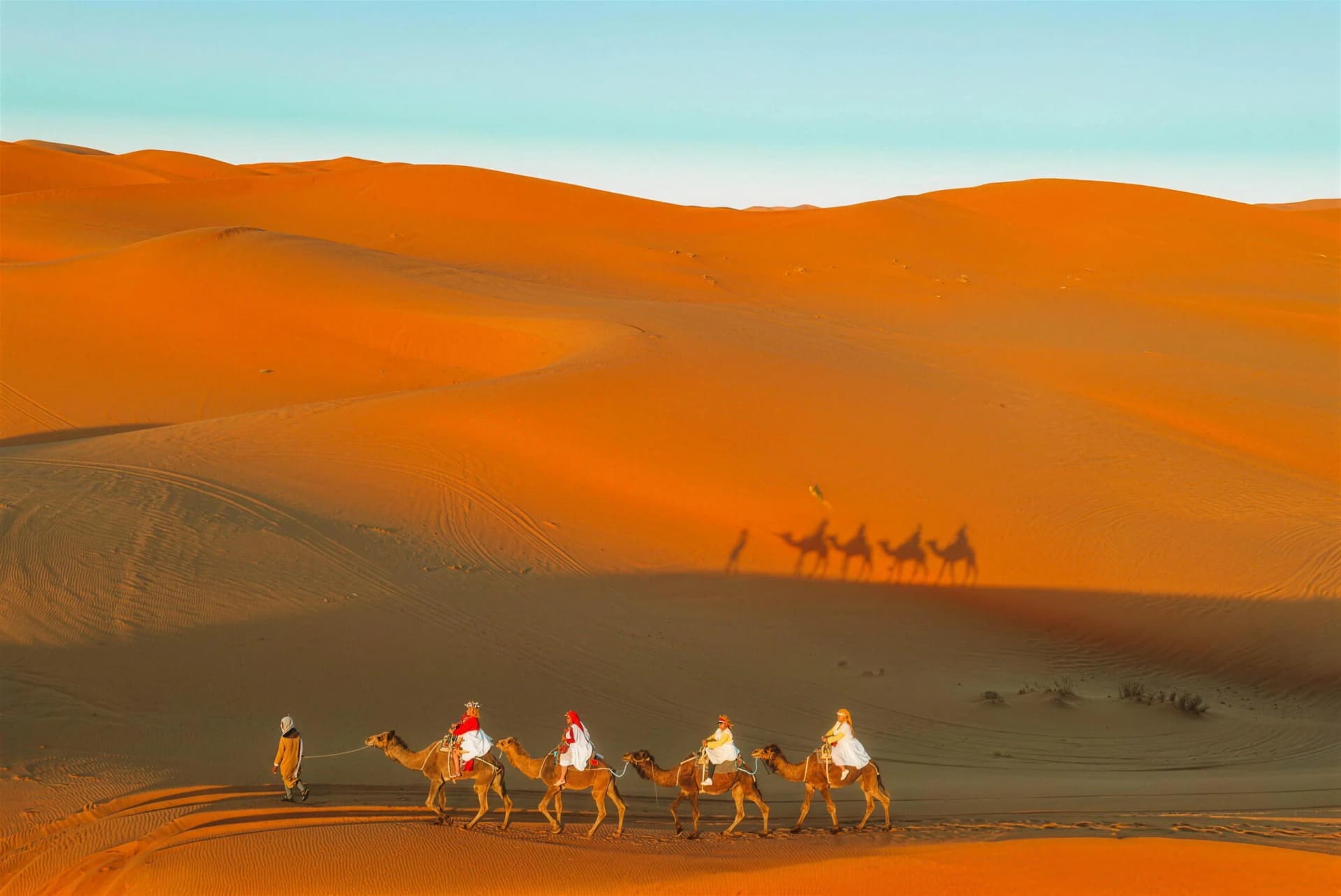
Sand Dunes:
- Best time: Sunrise and sunset (golden/blue hour)
- What: Endless dunes, camel caravans, stars
- Tips: Footprints in sand, shadows on dunes, silhouettes
Night Photography:
- Milky Way visible (no light pollution)
- Best: New moon period
- Equipment: Tripod essential, wide aperture lens
- Settings: 20-30 sec exposure, ISO 3200-6400, f/2.8
Camel Treks:
- Silhouettes at sunset
- Best: Golden hour
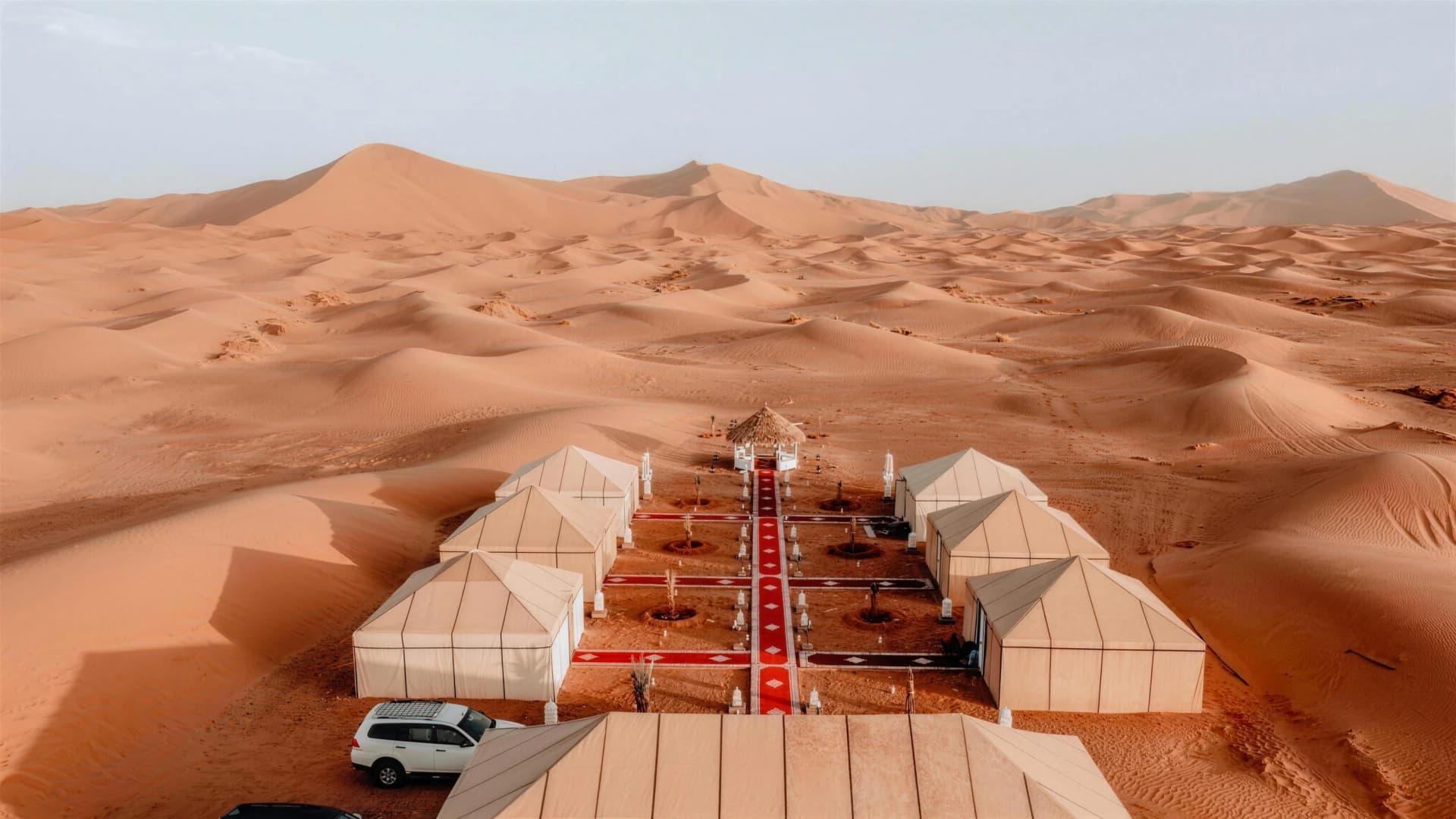
Desert Camps:
- Berber tents
- Campfire scenes
Atlas Mountains (Valleys and Villages)
Imlil and Toubkal:
- Best time: Spring (wildflowers), autumn (clear skies)
- What: Mountain landscapes, Berber villages, waterfalls
- Tips: Early morning (mountain light), trekking shots
Dades Valley:
- Rock formations
- Kasbahs
- Best: Late afternoon light
Todra Gorge:
- Best time: Midday (light reaches canyon floor)
- What: Towering canyon walls, oasis, climbers
Valley of Roses (Kelaa M'gouna):
- Best: May (rose harvest festival)
- Pink roses and processing
Ouzoud Waterfalls:
- Best time: Morning (rainbows in mist)
- What: 110m waterfalls, monkeys, lush vegetation
Berber Villages:
- Ask permission before photographing people or homes
- Architecture and landscapes usually OK
Casablanca
Hassan II Mosque:
- Best time: Sunset (on ocean)
- What: One of the world's largest mosques, stunning architecture
- Interior tours: Non-Muslims allowed (photography OK inside)
- Tips: Exterior from corniche, interior details
Corniche:
- Ocean views
- Beach scenes
- Modern architecture
Art Deco Architecture:
- City center
- Beautiful details
Rabat
Kasbah of the Udayas:
- Best time: Late afternoon
- What: Blue and white streets, gardens, ocean views
- Andalusian Gardens: Beautiful
Hassan Tower:
- Best time: Golden hour
- What: Unfinished minaret, ruins, modern mausoleum
Chellah:
- Roman and Islamic ruins
- Storks nesting
- Peaceful gardens
Additional Photo Spots
Tangier:
- Caves of Hercules (rock formations, Atlantic views)
- Old medina (Spanish influence)
- Cap Spartel (lighthouse, meeting of seas)
Meknes:
- Bab Mansour (ornate gate)
- Volubilis (Roman ruins nearby)
Asilah:
- Murals (annual art festival)
- White and blue medina
Golden Hour Spots (Best Sunset/Sunrise)
Sunset:
- Djemaa el-Fna rooftop cafés (Marrakech)
- Essaouira ramparts
- Chefchaouen Spanish Mosque
- Ait Benhaddou (across river)
- Sahara dunes
- Ouzoud waterfalls
Sunrise:
- Sahara dunes (absolutely stunning)
- Atlas Mountains (from Imlil)
- Ait Benhaddou
- Chefchaouen (blue walls)
Night Photography
Best Locations:
- Sahara (stars, Milky Way)
- Djemaa el-Fna (evening activity)
- Hassan II Mosque (lit up)
- Medina streets (ambient light)
Settings:
- Tripod essential
- ISO 1600-6400 (stars)
- Long exposure (15-30 seconds for stars)
- f/2.8 or wider (stars)
- Wide-angle lens (stars)
Challenges:
- Street lighting (yellow/orange cast)
- Safety (stay in tourist areas)
- Crowds (tripods difficult)
Portrait Photography
Where to Find Willing Subjects:
- Performers in Djemaa el-Fna (paid)
- Friendly shopkeepers (ask nicely)
- Tour guides
- Artisans at work (cooperatives)
Tips for Great Portraits:
- Natural light preferred
- Shade for even lighting
- Eye contact
- Capture personality
- Environmental portraits (context)
- Respect and rapport essential
What to Offer:
- Show them the photo
- Send via email/WhatsApp if possible
- Small tip (if appropriate)
- Respect and gratitude always
Architecture Photography
What Makes Morocco Special:
- Intricate tilework (zellige)
- Carved plaster and cedar
- Geometric patterns
- Colorful doors
- Riads (interior courtyards)
- Islamic architecture
Tips:
- Wide-angle lens (10-24mm)
- Straight lines (correct lens distortion)
- Details with macro/telephoto
- Symmetry and patterns
- Look up (ceilings often spectacular)
Best Architecture:
- Palaces (Bahia, El Badi)
- Medersas (Ben Youssef, Bou Inania)
- Mosques (exteriors)
- Riads
Landscape Photography
Diverse Landscapes:
- Desert (dunes, rocky desert)
- Mountains (Atlas, Rif)
- Coast (Atlantic, Mediterranean)
- Valleys and gorges
- Oases
Equipment:
- Wide-angle for grand vistas
- Telephoto for compressed landscapes
- Polarizing filter (blue skies, reduce haze)
- ND filter (waterfalls, long exposures)
- Tripod
Best Times:
- Golden hour (sunrise/sunset)
- Blue hour (twilight)
- Overcast (even light, no harsh shadows)
Equipment Recommendations
Essential Gear
Camera:
- DSLR or mirrorless (full-frame or APS-C)
- Or quality smartphone (iPhone, Samsung, Google Pixel)
Lenses (Interchangeable Lens Cameras):
- Wide-angle (10-24mm): Architecture, landscapes
- Standard zoom (24-70mm): Versatile, portraits
- Telephoto (70-200mm): Distant subjects, compression
- Prime lens (35mm or 50mm): Low light, portraits
Accessories:
- Spare batteries (essential)
- Memory cards (multiple, high capacity)
- Lens cleaning kit (dust everywhere)
- Polarizing filter
- Tripod (lightweight travel tripod)
- Camera bag (discreet, secure)
- Rain cover (rare rain, but dust protection)
Optional Gear
- External flash
- ND filters
- Reflector (portraits)
- Gimbal (video)
- Drone (see regulations below)
Smartphone Photography
Advantages:
- Always with you
- Less intimidating
- Quick/easy
- Great quality (modern phones)
- Edit on device
Tips:
- Clean lens
- Use HDR mode
- Portrait mode for depth
- Edit apps: Snapseed, Lightroom Mobile, VSCO
- Backup to cloud
Drone Regulations
Legal Status
Drones Largely Prohibited for Tourists
Current Regulations:
- Permit required from ANRT (National Telecommunications Agency)
- Difficult/expensive for tourists
- Military permission needed
- Insurance required
- Registration required
Reality:
- Drones confiscated at customs often
- Can be retrieved when leaving (sometimes)
- Flying without permit: Heavy fines, imprisonment possible
- Not worth the risk for most travelers
Where Absolutely Forbidden:
- Near airports
- Military areas
- Government buildings
- Crowds
- Populated areas
If You Must Fly:
- Apply for permit weeks in advance
- Hire local production company (they have permits)
- Risk assessment: Is it worth potential confiscation?
Alternatives:
- Hire local drone operators
- Use existing drone footage (stock)
- Focus on ground photography (just as beautiful)
Photo Tours and Workshops
Guided Photo Tours:
- Local photographers know best spots and times
- Help with permissions
- Access to private locations
- Cultural context
Recommended:
- Marrakech Photo Tours
- Fes Medina Photography Workshops
- Desert photography expeditions
- Atlas Mountains trekking + photography
Cost:
- Half-day: 500-800 MAD
- Full-day: 1,000-1,500 MAD
- Multi-day: 3,000-8,000+ MAD
Photography Etiquette Summary
The 10 Commandments:
- Always ask permission before photographing people
- Respect refusals gracefully
- No military or police installations
- Pay performers before photographing
- Respect privacy (homes, hammams, prayers)
- Women and children - extra sensitivity
- Show your subjects the photos you took
- Share photos if you promised
- Don't photograph poverty voyeuristically
- Be respectful and humble - you're a guest
Golden Rule: When in doubt, ask. Better to miss a photo than cause offense.
Last Updated: February 2026 Key Phrase: "Mumkin tsawer?" (Can I take a photo?)
Get Morocco Travel Insights