Full day · private · from Tangier
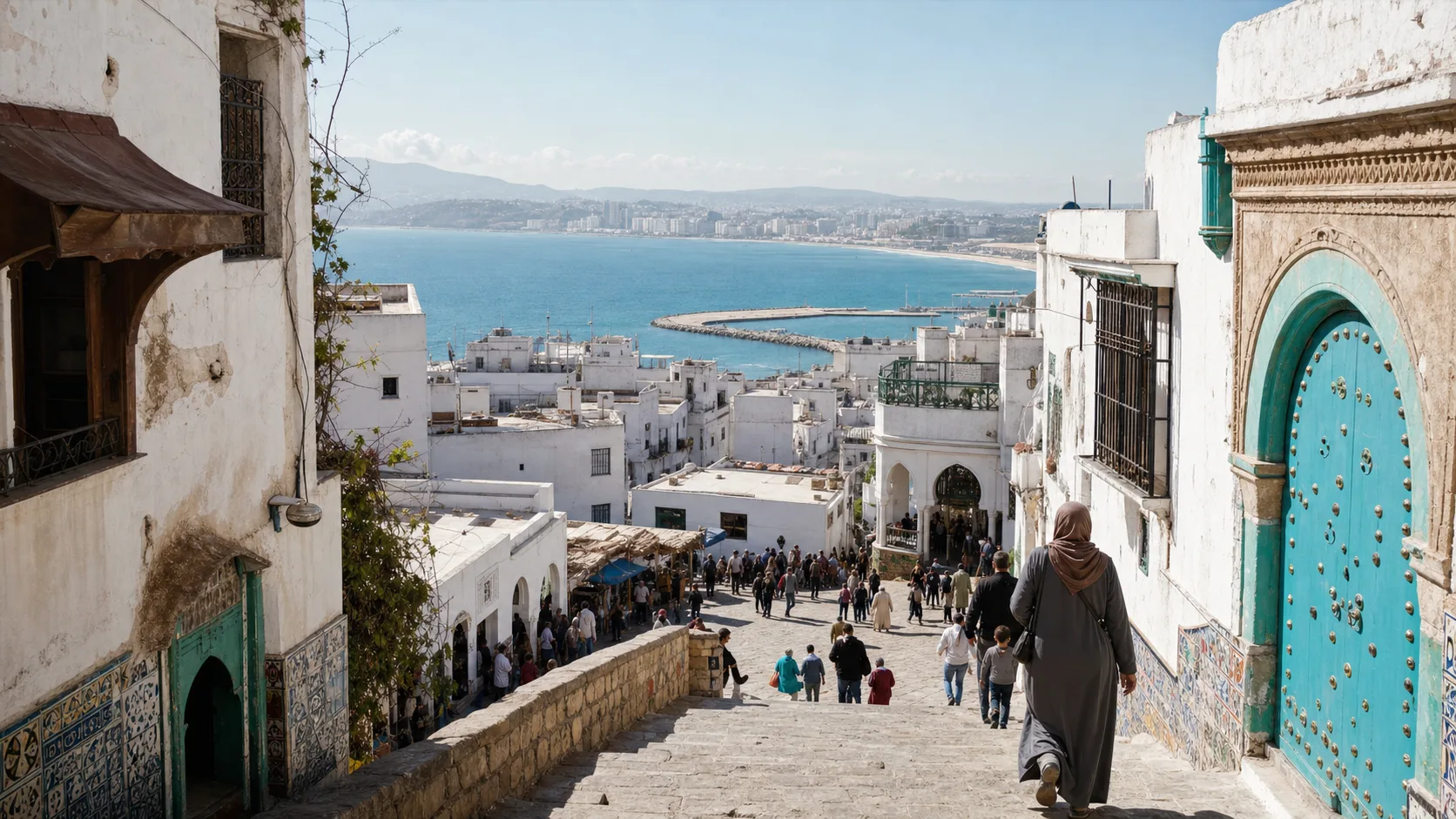
Tetouan Day Trip from Tangier the white medina below the Rif
Tetouan is the white city at the foot of the Rif, 60 km east of Tangier, about an hour each way at the wheel on our planning road map. You walk its UNESCO-listed medina, built up by families who came from Andalusia, see craftsmen at work in the old school of traditional arts, cross the Royal Palace square and can end the day on the Mediterranean at Martil. It suits travellers who want a working medina with few tour groups.
At a glance
Tetouan from Tangier
- Length
- Full day
- Starts
- Your riad or hotel in Tangier
- Each way
- About 1 h at the wheel · 60 km
- Best for
- Medina lovers, Crafts, Fewer crowds
- Best time
- March to June; September to November
The road
- Tangier → Tetouanabout 1 h · 60 km
- Tetouan → Tangierabout 1 h · 60 km
Stops along the way
- The Tangier to Tetouan motorway. A fast road through green hills; on a clear day the Rif rises ahead of you.
- Martil (optional, on the way back). The beach town on the Mediterranean a short drive from Tetouan, for a walk on the sand or a swim in summer.
A suggested timeline
The day, hour by hour
A private day runs to your pace: this is how we usually plan it, and your planner adjusts it to your date and group.
08:45
Pickup in Tangier
Your driver meets you at your hotel or the port and takes the motorway east.
09:45
Place Hassan II and the Royal Palace
Start on the wide square in front of the Royal Palace. You see the palace from outside only; it is not open to visitors.
10:15
Into the medina with your guide
Walk through the gates into white lanes of Andalusian houses, the souks of the leather workers and the carpenters, and the old Jewish quarter.
11:45
Dar Sanaa, the crafts school
In the school of traditional arts by Bab el-Okla, students learn zellige, carved plaster, painted wood and embroidery. You watch them work, when the school is open.
13:00
Lunch
Northern dishes in a medina restaurant or a house with a courtyard: fish, harira, tagines with olives.
14:30
Martil or the museums
Drive down to the beach at Martil, or stay for a museum in the town, then start back.
16:30
Back in Tangier
Home in the late afternoon, with time to rest before dinner.
What you see
What to see on the day
The Tetouan medina
Listed by UNESCO in 1997. White walls, green-tiled doorways and quarters laid out by refugees from Andalusia after the fall of Granada. It is a lived-in medina: shoppers outnumber visitors.
Dar Sanaa
The school of traditional arts and crafts, where young craftsmen learn zellige, plasterwork, wood and embroidery in workshops around a courtyard.
Place Hassan II and the Royal Palace
The ceremonial square between the medina and the Spanish-era town. The palace is seen from the square only.
The Spanish-era town
White arcaded streets and balconies from the years when Tetouan was the capital of the Spanish protectorate, a contrast with the medina next door.
When to go in 2027
Tetouan, month by month
Spring and autumn are the best: mild days for walking and green hills behind the town. Summer is warm rather than hot, and Martil is crowded with holidaymakers. Winter is the wet season in the north: bring a rain jacket, and the medina is at its quietest.
Januaryaround 16 °C by day
- Wet and windy; the wettest season in the north.
Februaryaround 17 °C by day
- Rain on and off; green hills.
- Ramadan is expected from about 8 February to 8 March 2027 (the exact start follows the moon sighting). Sights stay open; roadside cafés may close by day, and the day is planned to finish before the sunset meal.
Marcharound 18 °C by day
- Showers; spring flowers on the capes.
- Ramadan is expected from about 8 February to 8 March 2027 (the exact start follows the moon sighting). Sights stay open; roadside cafés may close by day, and the day is planned to finish before the sunset meal.
- Eid al-Fitr is expected around 9 March: a family holiday, with some shops and souks closed for a day or two.
- Easter Sunday is 28 March 2027: European school holidays make the week around it one of the busiest of the spring.
Aprilaround 19 °C by day
- Mild and green. Good walking on the capes.
Mayaround 22 °C by day
- Warm, fresher by the sea. A good month.
- Eid al-Adha is expected around 16 May: roads are busy the days before as families travel, and many businesses close for two or three days.
Junearound 25 °C by day
- Warm and dry. The Levante wind can blow hard across the Strait for a few days.
Julyaround 28 °C by day
- Warm. Martil fills with Moroccan families on holiday and the beach road is busy at weekends.
Augustaround 28 °C by day
- As July: the busiest beach month on the Mediterranean coast. Go to the medina early.
Septemberaround 26 °C by day
- Warm and clear.
Octoberaround 23 °C by day
- Mild; the first rain arrives late in the month.
Novemberaround 19 °C by day
- Wet spells begin.
Decemberaround 17 °C by day
- Wet and mild.
Temperatures are typical daytime highs, not a forecast. Ramadan and Eid dates follow the moon sighting and can move by a day; festival dates are set by their organisers each year.
Before you go
What to wear, what to bring
Wear
- Comfortable shoes for stepped, uneven lanes
- Shoulders and knees covered in the medina
- A rain jacket from November to March
Bring
- Small change for tea and tips
- Swimwear if you plan Martil in summer
- Water and sun cream
Access
The square, the Spanish-era streets and Martil seafront are flat and possible with a wheelchair. The medina has steps, slopes and narrow lanes, so it is not wheelchair-possible beyond its edges; your guide can plan a shorter, flatter loop.
Families
Older children enjoy watching the craftsmen at Dar Sanaa and the busy souks; younger ones will want the beach at Martil after lunch. The drive is short, and the day can end early.
Photography
Where to take the pictures
- The medina lanes. Morning light on the white walls; ask before photographing traders and craftsmen, many prefer not.
- Dar Sanaa courtyard. Ask permission inside the workshops. The tile and plaster details work best close up.
- Place Hassan II. A wide shot from the square takes in the palace and the white town behind it.
Food
Where to eat
- Medina restaurants serving northern dishes: fish, harira and tagines
- Courtyard houses in the medina for a set lunch
- Fish grills and cafés on the Martil seafront
Your driver or guide suggests where to stop on the day; tell us about allergies or a vegetarian diet when you book.
Make it part of a longer trip
How to combine it
Tetouan and Chefchaouen make a natural pair: a white medina and a blue one. Sleep in Chefchaouen after Tetouan and the drive is short, or come back to Tangier and go to Chefchaouen another day.
- Chefchaouen day trip from Tangier
- Tangier to Chefchaouen, the ways to travel
- Design a longer trip in the Atelier
Read more
Tetouan day trip: your questions
How far is Tetouan from Tangier?
About 60 km east by motorway: about an hour each way at the wheel on our planning road map, before stops.
Is Tetouan worth visiting?
Yes, for anyone who likes medinas. Its UNESCO-listed old town is large, white and lived-in, with far fewer visitors than Fes or Chefchaouen, and the crafts school shows work you rarely see made.
Can we go inside the Royal Palace in Tetouan?
No. Like all royal palaces in Morocco it is closed to visitors. You see the façade and the gates from Place Hassan II.
Chefchaouen or Tetouan: which should I choose?
Chefchaouen is the blue town in the mountains, smaller and more photographed. Tetouan is bigger, white and a working city with a deeper medina. With one day, choose by taste; with two, see both and sleep in Chefchaouen.
Can we visit Tetouan during Ramadan 2027?
Yes. The medina stays open, though the souks are slower by day and livelier after sunset. Ramadan is expected from about 8 February to 8 March 2027.
Your own car, your own pace.
المغربⵜⴰⴳⵍⴷⵉⵜ ⵏ ⵍⵎⵖⵔⵉⴱThe Kingdom of Morocco