What craft experiences can I do in Morocco?+
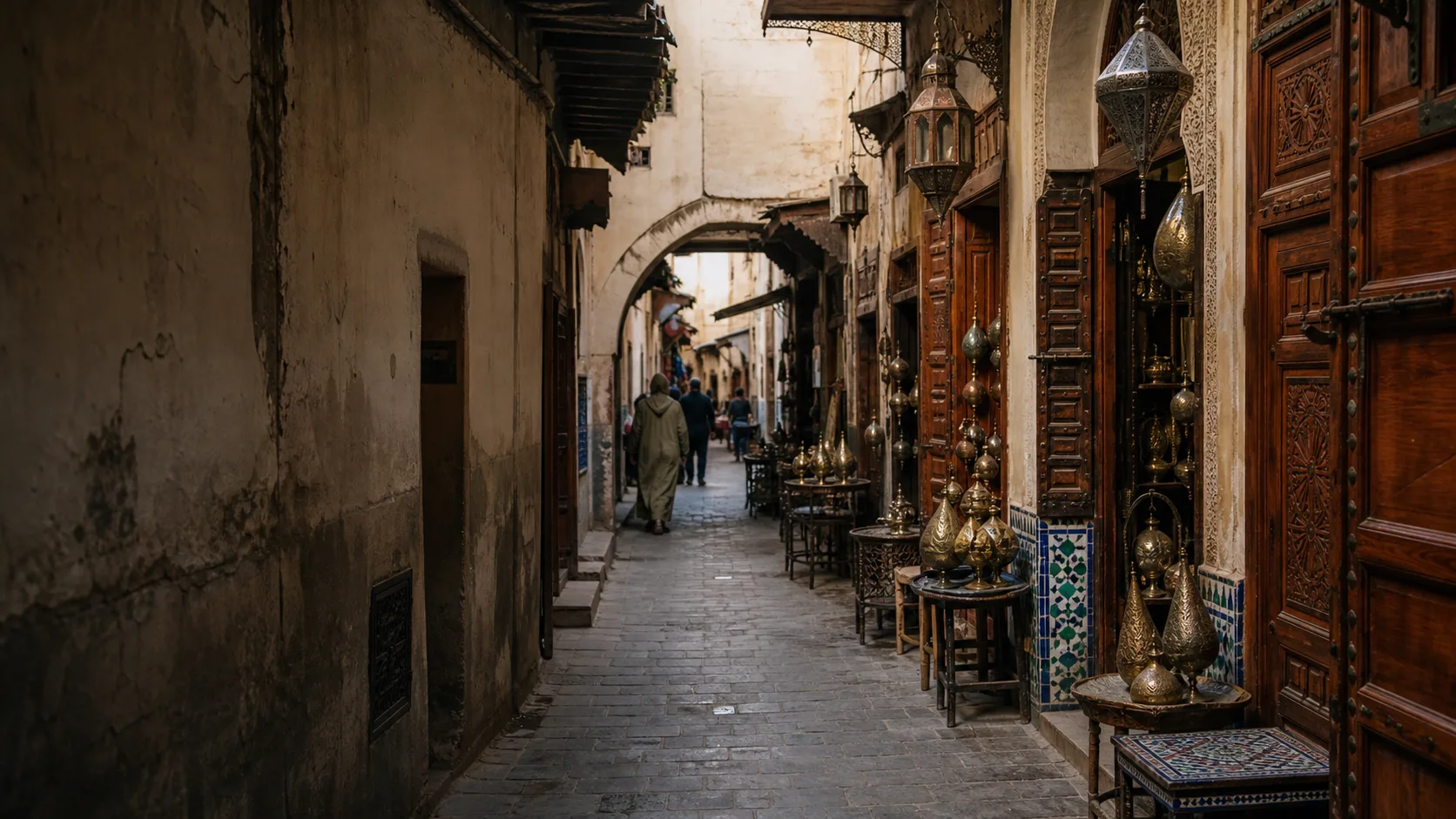
Morocco offers a full range of craft experiences: carpet and rug weaving visits where Berber women work at the loom, Fes leather and tannery walks, pottery and zellige tilework tours, natural-dyeing demonstrations, metalwork and lantern souks, and Amazigh silver jewellery workshops. Most are guided 2–3 hour souk visits; hands-on workshops where you try weaving, pottery or tile-cutting yourself run a half-day.
Where is the best place for a craft tour in Morocco?+
Fes and Marrakech are the two best cities. Fes is Morocco's craft capital — its medina still works as a living craft economy with leather tanneries, pottery quarters, zellige workshops and weavers. Marrakech is the great craft souk for shopping, especially carpets, lanterns, leather and silver. For carpets specifically, the Atlas Berber villages let you buy where the rugs are actually woven.
How do I know if a Moroccan carpet is genuinely handmade?+
Genuine handmade carpets have slight irregularities in the knots and pattern, an uneven back, and natural wool that smells faintly of lanolin. Machine-made imports are perfectly symmetrical with a uniform back and often a synthetic feel. Ask to see the reverse — hand-knotted rugs show the pattern clearly on both sides. Buying from a cooperative, where weavers are members, is the most reliable way to ensure authenticity and fair pricing.
What types of Moroccan rugs are there?+
The best-known are Beni Ourain (plush ivory wool with dark geometric lines, from the Middle Atlas), Azilal (colourful, expressive, from the High Atlas), kilim (flatwoven, no pile, often used as runners), and Boucherouite (bright rag rugs woven from recycled fabric). Each carries tribal symbols and motifs, and prices vary widely by size, wool quality, knot density and age.
Should I buy from cooperatives or souks?+
Both have a place. Cooperatives offer fixed, fair prices and ensure money reaches the makers directly — ideal if you want certainty and ethical sourcing without bargaining. Open souks offer more variety and the experience of bargaining, which is expected, but require you to judge quality and negotiate. A craft guide helps in either setting by separating genuine artisans from resellers.
How does bargaining work in the souks?+
Bargaining is expected in open souks (but not in fixed-price cooperatives). Decide what an item is worth to you before you start, open below your target, and stay friendly — it is a social exchange, not a confrontation. Walking away often produces a better price. Ending around half of the first figure counts as doing very well. It varies by item and by how the first quote was pitched.
Can I ship a carpet or large craft purchase home?+
Yes. Reputable carpet dealers and cooperatives routinely arrange international shipping and will quote it before you buy. For a small rug, rolling it tightly and carrying it as luggage is often cheapest. For larger pieces, professional shipping with tracking is worth the cost. Keep your receipt and any certificate of authenticity for customs.
What should I wear and bring for a craft tour?+
Wear comfortable walking shoes — medina streets are uneven cobblestone — and dress modestly with shoulders and knees covered, especially in Fes. Bring cash in dirhams for purchases, as many small workshops do not take cards. A small bag is useful for spices, ceramics or textiles. At the tanneries you may be offered mint sprigs to hold against the smell; the visit is brief and the viewing terraces keep you above the pits.
Still deciding on your Artisan Morocco tour?

 Featured