"Is Morocco too hot in summer?" is the wrong question, because Morocco in summer is several different climates at once. On an average July afternoon it is nearly 38 °C in Marrakech and under 22 °C in Essaouira, less than three hours away. The right question is where. This guide compares the places, using long-term averages, and shows how to put a summer trip together for 2027.
The numbers
Average daily highs and lows, 1991 to 2020 unless noted, from each place's climate table.
| Place | July high / low | August high / low | Setting |
|---|---|---|---|
| Essaouira | 21.9 / 17.7 °C | 22.4 / 18.1 °C | Atlantic coast |
| Agadir | 26.7 / 19.2 °C | 27.0 / 19.5 °C | Atlantic coast |
| Tangier | 28.3 / 18.7 °C | 28.6 / 19.1 °C | Strait of Gibraltar (1961 to 1990) |
| Ifrane | 30.3 / 15.2 °C | 30.3 / 15.3 °C | Middle Atlas, 1,665 m |
| Fes | 35.1 / 17.9 °C | 35.1 / 18.3 °C | Inland north |
| Marrakech | 37.7 / 20.6 °C | 37.4 / 21.1 °C | Inland plain |
| Ouarzazate | 38.8 / 22.7 °C | 37.5 / 22.1 °C | Edge of the desert |
In Fahrenheit: Essaouira is about 72 °F, Agadir 80 °F, Tangier 83 °F, Ifrane 87 °F, Fes 95 °F, Marrakech 100 °F and Ouarzazate 102 °F.
These are averages. Heatwaves push inland temperatures well beyond them: the highest temperature on record at Marrakech is 49.6 °C, set in July. When a hot, dry wind blows from the Sahara, known locally as the chergui, even the coast can warm up for a day or two.

The coast
The Atlantic keeps this coast cool. A cold current runs offshore and the trade wind blows most afternoons.
Essaouira. The coolest town in the country in summer and a favourite with Moroccan families for that reason. Expect wind, morning mist and a sea that is cold for swimming. It suits walking, eating fish, kitesurfing and doing very little. See our Essaouira guide and the blog's coastal guide.
Agadir and Taghazout. Warmer and more sheltered, with a long sandy bay at Agadir and surf villages to the north. Summer waves are small, which is good for beginners and less interesting for experienced surfers, whose season is autumn to spring. See the Agadir guide and our Taghazout surf guide.
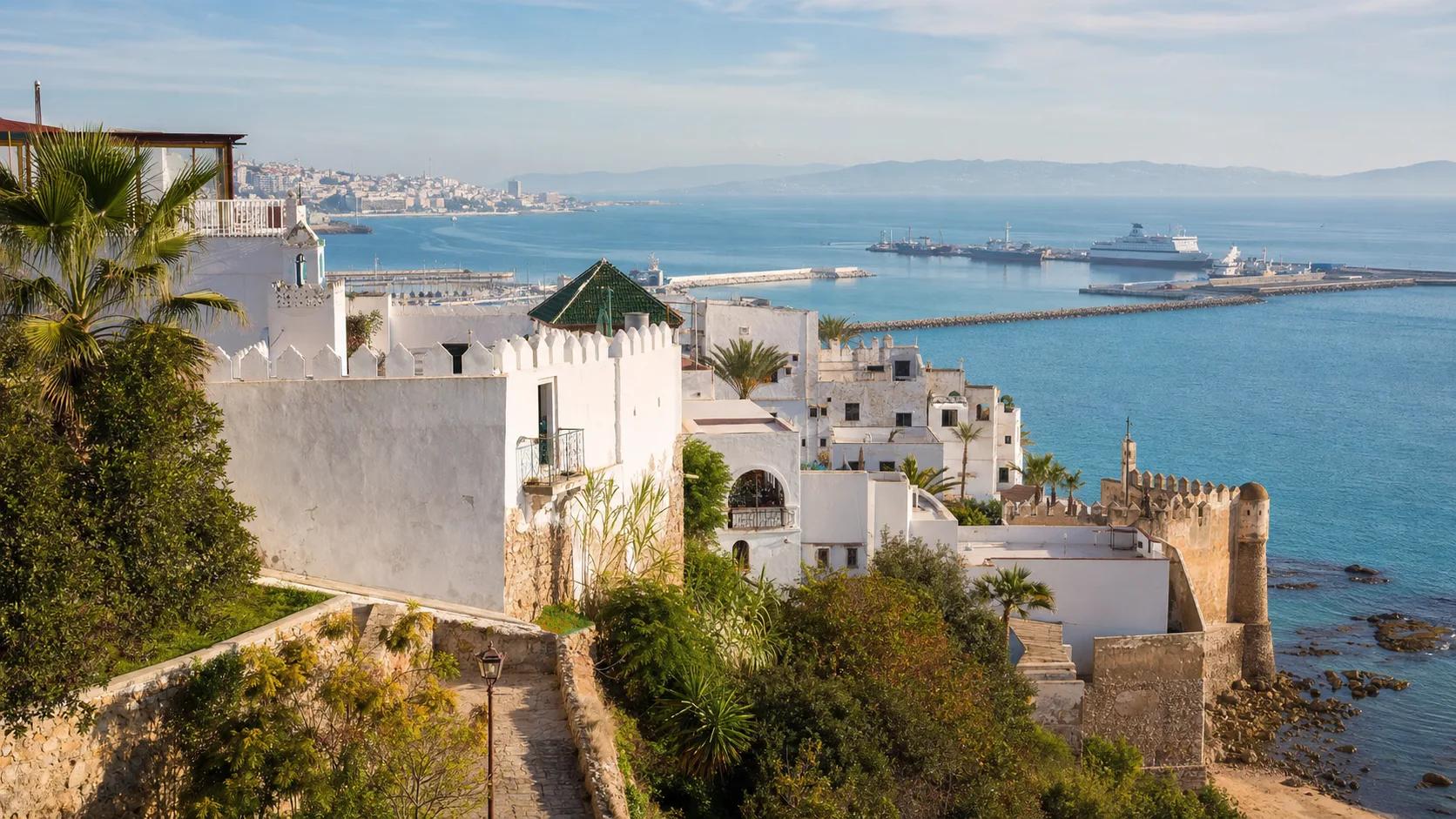
Tangier, Asilah and the Mediterranean. The north is warmer than Essaouira but far more comfortable than the interior, and the Mediterranean side has the warmest sea in Morocco. It is very busy in August, when Moroccans living in Europe come home through the port. See the Tangier guide.
What the coast is not: a tropical beach holiday. The water is cool on the Atlantic side, and there is often wind.
The mountains
Height does two things. It takes a few degrees off the afternoon, and it makes the nights cool enough to sleep well.
The High Atlas near Marrakech. Imlil, at about 1,700 m, the Ourika valley and the Ouirgane area are 60 to 90 minutes from the city. Days are warm and evenings are fresh. This is the main season for walking, including the two-day ascent of Toubkal for fit walkers. Afternoon thunderstorms happen; walks start early. See Imlil tours and our guide to Imlil day hikes.
The Middle Atlas. Ifrane and Azrou, an hour from Fes, sit among cedar forests at more than 1,600 m. Ifrane's July days average 30 °C, which is warm, but nights fall to 15 °C. It makes a good break from Fes. See our Ifrane guide.
The Rif. Chefchaouen, at about 600 m, is hot at midday and pleasant in the evening. It combines well with Tangier.
The mountains are not cold in summer. At midday in the valleys you will still want shade. The gain is in the mornings, the evenings and the nights.
The cities, if you want them
Many people come in summer because that is when they can, and they want to see Marrakech and Fes. You can. It needs a different timetable.
- Out by 8:00, back by 12:00. Do the walking and the monuments in the morning.
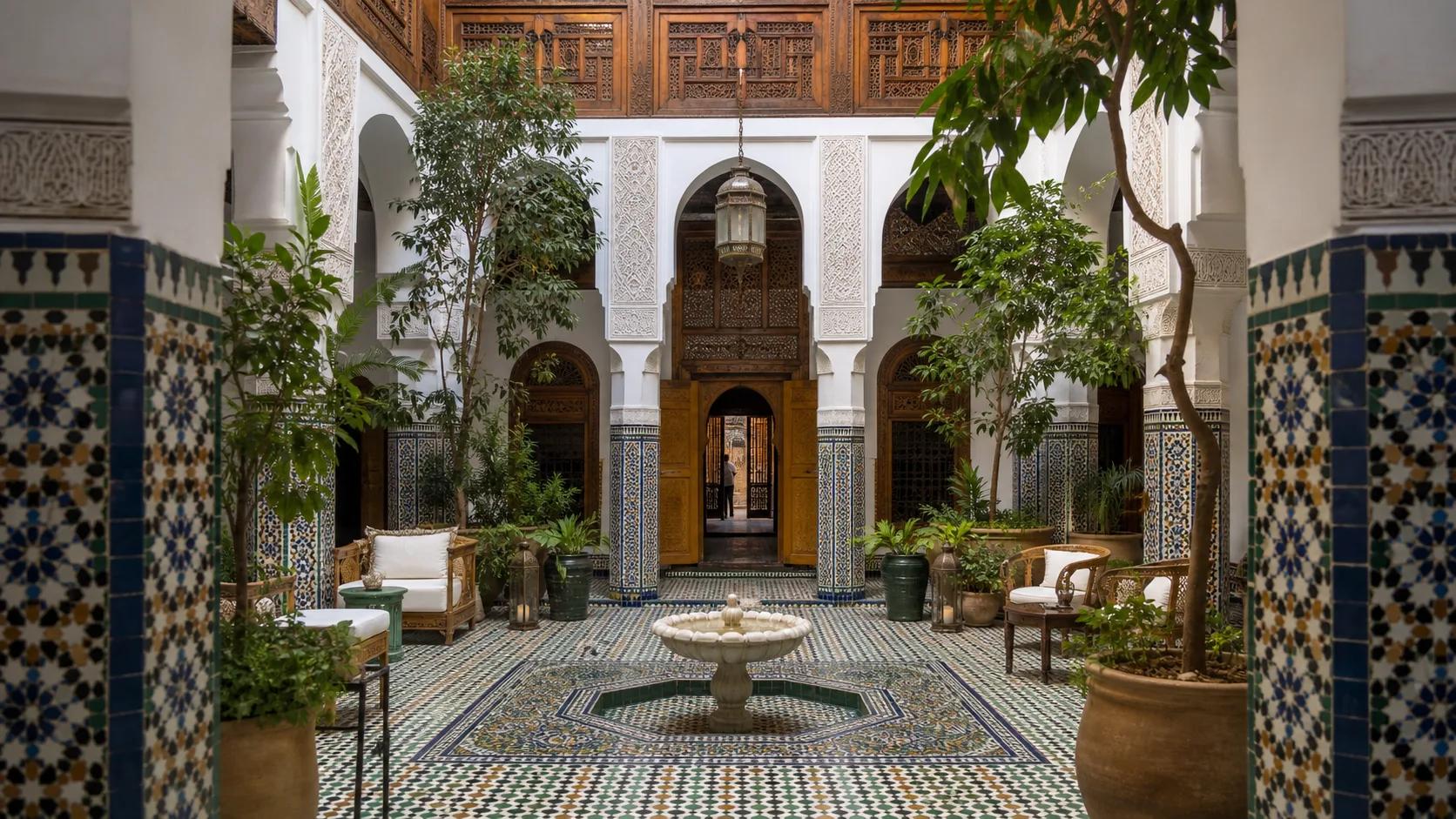
- Indoors from 12:00 to 17:00. Lunch, a pool, a hammam, a nap. Choose a hotel or riad with air conditioning and, in Marrakech, a pool. Check both before you book.
- Out again from 18:00. Sunset in Marrakech is at about 19:30 in early August and 19:40 in late June, by our calculation, so the evening is long. The medinas are at their liveliest after dark.
- Two nights, not four. See the city, then move to the coast or the hills.
- Drink water all day, wear a hat, and take the heat seriously with small children and older travellers.
The desert: honest advice
Ouarzazate averages nearly 39 °C in July, and the dunes at Merzouga and M'hamid are hotter still. Some camps close for the hottest weeks. Those that stay open are quiet. A night in the dunes is possible, arriving at sunset and leaving after sunrise, but the long drive there and back crosses very hot country, and the daytime is spent in the shade.
We will arrange it if you ask, and we will tell you plainly that October to April is a far better time. If the Sahara is the main reason for your trip, choose a different season. If you want a desert landscape in summer, the Agafay stone desert near Marrakech can be visited for an evening, when it cools.
Summer 2027: dates that matter
- Islamic New Year: expected about 6 June. One day's public holiday.
- Gnaoua and World Music Festival, Essaouira: 24 to 26 June, confirmed by the organisers. Rooms in Essaouira are scarce that weekend. See our festival planning guide and the event page.
- Throne Day: Friday 30 July, a public holiday and a long weekend.
- Total solar eclipse: Monday 2 August, with totality across the far north. Expect Tangier and Tetouan to be very busy. See where to watch the eclipse.
- Mawlid: expected about 15 August in Morocco, subject to moon sighting, with fixed public holidays close by on 14, 20 and 21 August.
- Ramadan and both Eids are over before summer in 2027.
Three summer routes
Coast and a taste of Marrakech, 7 days. Two nights in Marrakech on the early-and-late timetable, three nights in Essaouira, two in the Atlas foothills or back in Marrakech. No drive longer than three hours.
Mountains and coast, 9 days. Marrakech, two or three nights in Imlil with a guided walk, then Essaouira, then south along the coast to Taghazout and a flight home from Agadir.
The north, 8 days. Tangier, Asilah, Chefchaouen and a night or two in Fes with a day in the cedar forests around Ifrane. In 2027 this fits around the eclipse.
For more shapes of trip, see Morocco summer tours and the monthly pages for July and August.
What to pack
Loose, light clothes that cover shoulders and knees, which are cooler in strong sun than bare skin and right for the medinas. A hat, sunglasses and high-factor sun cream. A windproof layer for Essaouira and a fleece for mountain evenings. Sandals and one pair of closed shoes. A refillable water bottle. See the packing list by season.
FAQ
Is Morocco too hot in July and August? Inland, it is very hot: 35 to 39 °C on average in Marrakech, Fes and Ouarzazate. The Atlantic coast averages 22 to 27 °C and the mountains have cool nights. Choose the region, and summer works.
Where is the coolest place in Morocco in summer? Essaouira, at about 22 °C on an average July afternoon.
Can I visit the Sahara in summer? You can, for one night, arriving at sunset. It is extremely hot by day, and we recommend October to April.
Is Marrakech worth visiting in August? For two nights, with a pool, air conditioning and an early start, yes. For a week, no.
Is the sea warm enough to swim? The Atlantic is cool all year, cold around Essaouira. The Mediterranean coast in the north is warmer.
When is the best summer month? June and early July are quieter. August is the busiest and, inland, about as hot as July.
Plan a summer trip
Tell us your dates and who is travelling, and we will suggest a route that keeps you on the cool side of the country. Every trip is quoted individually, in US dollars unless you ask for another currency. Send an enquiry.
Share this article
Written by
Serenity Morocco editorial team
Serenity Morocco Tours
Our in-house editors and Morocco travel designers research, write, and fact-check every guide — drawing on first-hand local knowledge across the country's cities, desert, mountains, and coast.
Get Morocco Travel Insights