What is a traditional Berber breakfast in Morocco?
The short answer
Our team's answerA Berber breakfast is the spread served in Amazigh homes, Atlas guesthouses and desert camps: warm bread, often baked in a wood-fired clay oven, with argan or olive oil, honey, butter, amlou and sweet mint tea. It is a label rather than a fixed dish, and it changes from region to region.
Serenity Morocco Expert Team
Travel Designer · Staff · November 2026
Question
The full answer
A common question when planning a trip to Morocco, answered honestly by our travel designers.
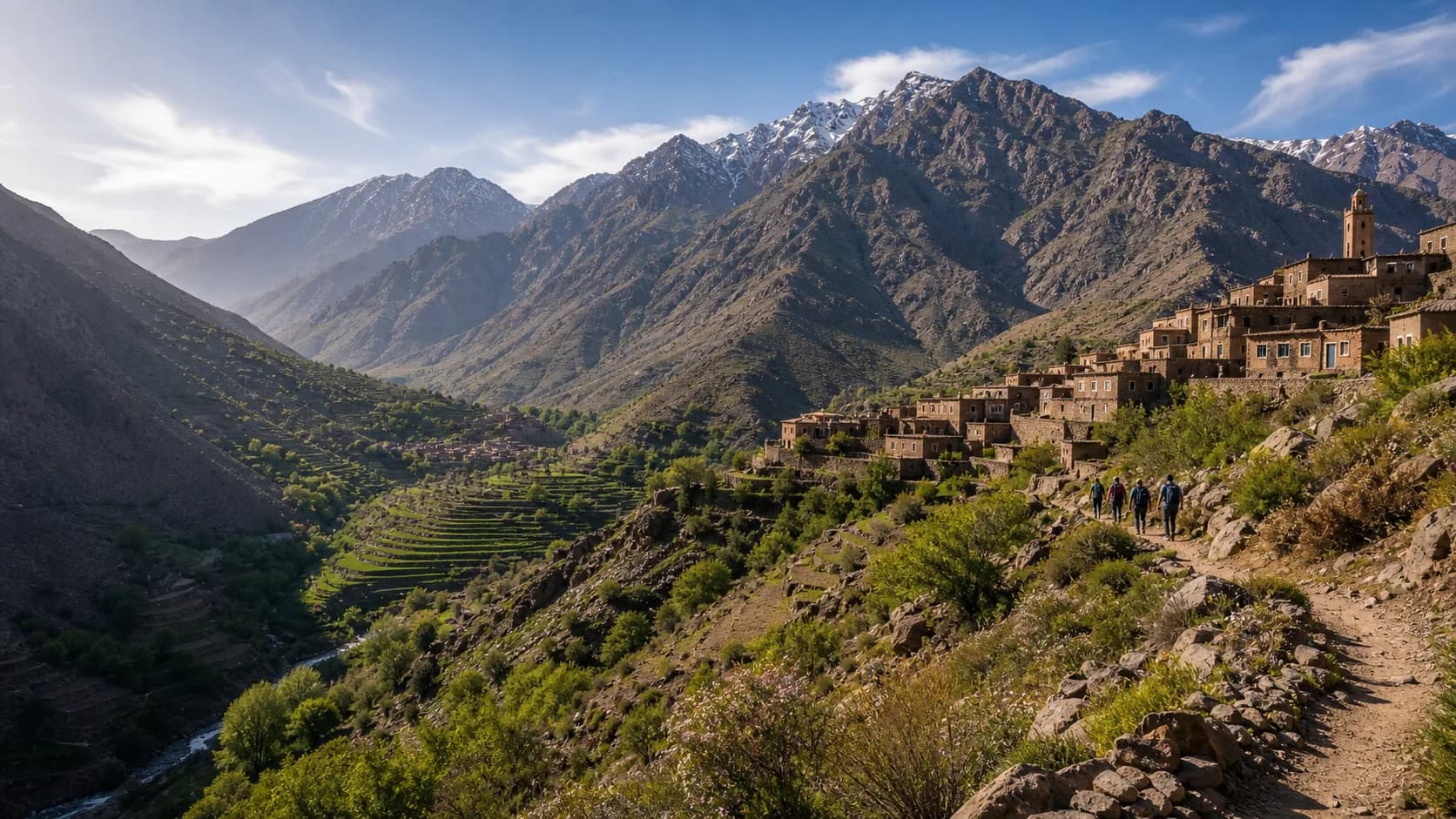
On a menu in Imlil, the Dades valley or a camp near Merzouga, “Berber breakfast” means a spread rather than one dish. The core is bread, something to dip it in and a pot of tea. The bread comes warm, often as a flat round loaf; in Atlas villages it may be tafarnout, a flatbread shaped by hand and baked in a wood-fired clay oven. Around it come small bowls of argan oil or olive oil, honey, butter and, in many places, amlou. Green tea infused with fresh mint is poured alongside, as it is with most meals in the mountains.
Amlou is the item most visitors remember. It is a thick spread of toasted almonds, argan oil and honey, crushed and kneaded together, and it comes from the Souss region in the south-west, where it was created by the Shilha, one of Morocco’s Amazigh peoples. In Shilha cooking argan oil plays the part that olive oil plays elsewhere in North Africa. Culinary argan oil is pressed from roasted kernels, and dipping bread in it at breakfast is one of its main uses. Much of it is made by women’s cooperatives, and UNESCO inscribed the practices and know-how around the argan tree as intangible cultural heritage in 2014.
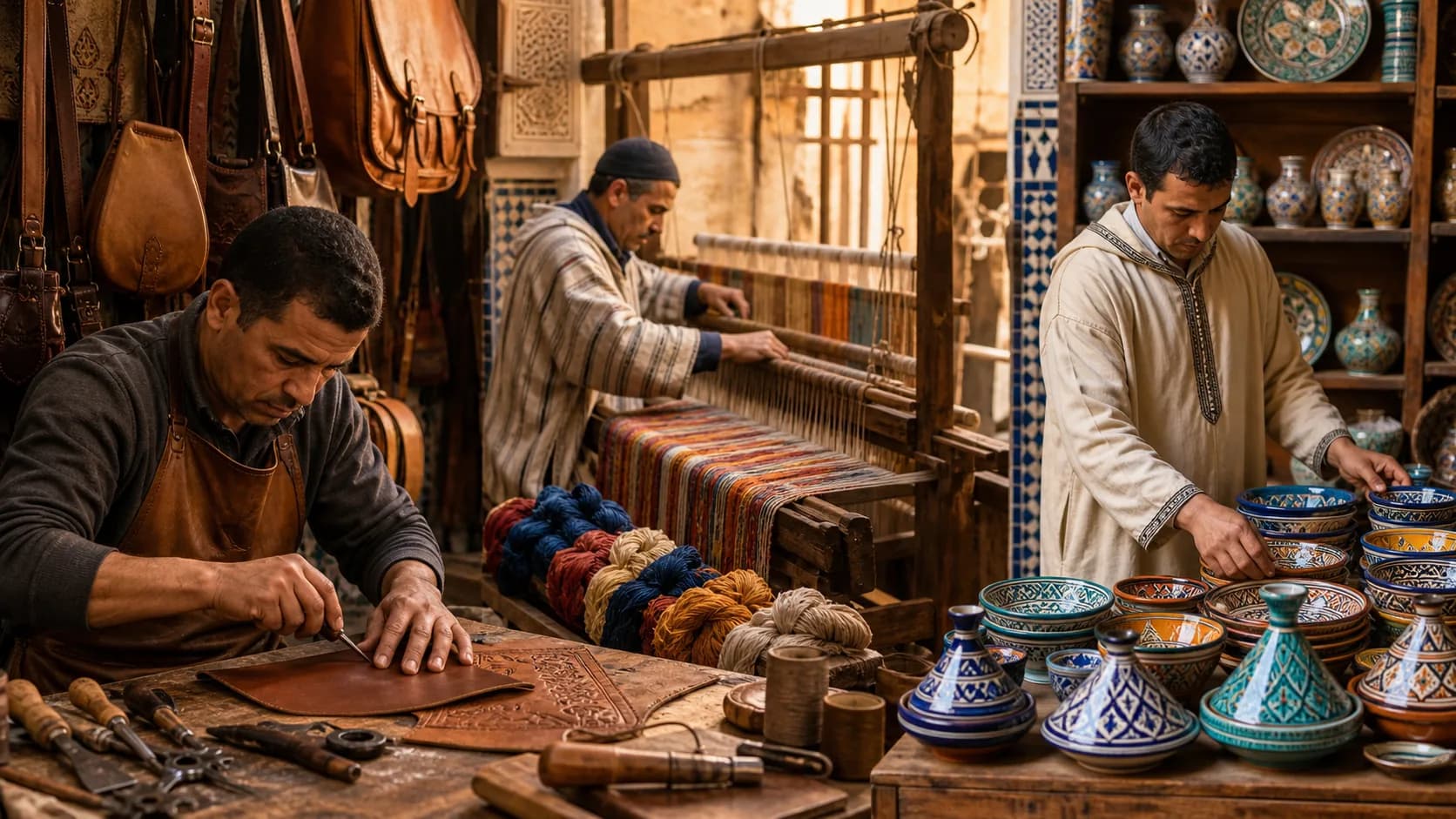
There is no single Berber breakfast, because there is no single Berber cuisine. The food historian Ken Albala has written that describing meals as typically Amazigh is impossible, since the examples come from different regions. Amazigh communities live from the Rif in the north to the Anti-Atlas and the edge of the Sahara, and each region eats what it produces. Argan belongs to the south-west, where the trees grow; olive oil is more usual where olives are farmed. The plate in a Toubkal guesthouse will not match the one in a Souss village, and both are authentic.
Guesthouses and camps that cook for visitors often add dishes from the wider Moroccan breakfast table: msemen, the flaky square griddle bread, baghrir, the spongy semolina pancake full of small holes, eggs, olives, fresh cheese and jam. These are Moroccan rather than specifically Amazigh, and they are covered in the answer on the typical Moroccan breakfast linked below. Some places also list a “Berber omelette”; recipes vary from kitchen to kitchen, so ask what goes into it if you have a dietary need.
You are most likely to meet a Berber breakfast at an Atlas guesthouse, a kasbah hotel in the south or a desert camp. To taste amlou and argan oil in their home region, travel to the Souss and the coast around Essaouira and Agadir, where cooperatives often let visitors try both. Two practical points: amlou is made with almonds, so anyone with a nut allergy should ask before tasting it, and mint tea usually arrives sweet unless you ask for little or no sugar. On a private trip we plan, a breakfast with a host family in an Atlas village can be arranged.
- berber breakfast
- amazigh food
- amlou
- argan oil
- moroccan breakfast
- atlas mountains
Helpful links
Serenity Morocco Expert Team — Travel Designers, Serenity Morocco Tours. Answered November 2026.
More questions on this
What is amlou?
A spread of toasted almonds, argan oil and honey from the Souss region, created by the Shilha. It is eaten at breakfast or with afternoon tea, with bread or pancakes.
Is a Berber breakfast vegetarian?
Usually yes: bread, oils, honey, butter, amlou and tea. Butter and honey are animal products, so vegans should ask for oil and jam instead.
Does amlou contain nuts?
Yes. It is made with toasted almonds, so anyone with a nut allergy should avoid it or ask first.
After you ask for a quote
What you get within 24 hours
Your proposal contains
- A day-by-day route, with the driving time between stops
- Stays matched to your style (riads, kasbahs, desert camps or hotels), named so you can look them up
- Which moments are private to you, and which are shared, such as a camp’s dining tent
- An itemised quote: what is included and what is not
- Who is planning your trip, and how to reach them on WhatsApp
- Free, with no obligation to book
Before you pay a deposit, we confirm
- Opening days for the places on your route, including Friday and holiday closures
- Meal stops along the way, and any dietary needs
- Prayer or Shabbat timing, if it matters to you
- Step-free access, wherever you need it
- The vehicle class for your group and your luggage
Every trip is private and priced to your dates, so there is no fixed price list. Ask, and the proposal shows the full cost before anything is booked.
From the answer to the trip
Eat your way through Morocco, with a local
Market mornings, street-food stalls a local guide trusts, and a tagine cooked with a Moroccan family: food is the easiest way into the country.
- 7 days · Multiple RegionsCulinary Morocco Experience
- 5 days · FesFes Culinary & Craft Immersion
- 5 days · Fes & MeknesMoroccan Wine & Gastronomy Trail

A planner in Casablanca replies with a day-by-day route and a quote within 24 hours.
Ask a follow-up question
Something this answer does not cover? Send us your question and our travel designers will read it.