Most sit inside the walled medina, a UNESCO World Heritage Site since 1985, and are walkable from one to the next. The Jardin Majorelle lies north-west of the walls and the Menara to the south-west, each a short taxi ride away.
01Medina, the main square
Jemaa el-Fna
The main square of the medina. By day it holds orange-juice stalls and water sellers; as darkness falls, dozens of food stalls fill it and storytellers and magicians draw crowds. UNESCO proclaimed it a Masterpiece of the Oral and Intangible Heritage of Humanity in 2001.
Performers expect a tip for photographs: agree before you take one.
02Medina, west of the square
Koutoubia Mosque
The Almohad mosque of the 12th century, whose 77 m minaret is the landmark you will steer by all week. It is an active mosque and non-Muslims are not allowed inside, so most visitors see it from the outside.
03Medina, off the main square
The souks
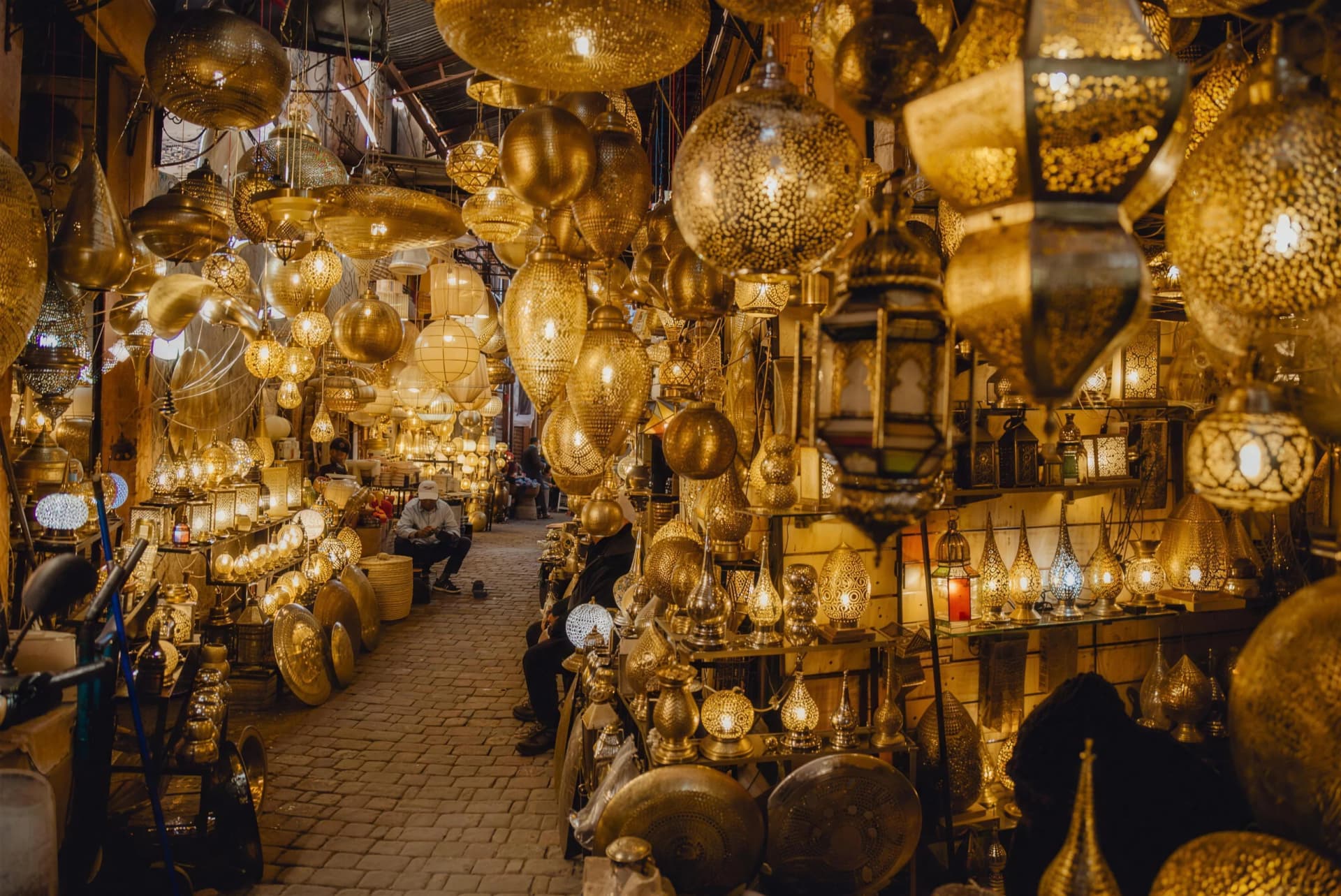
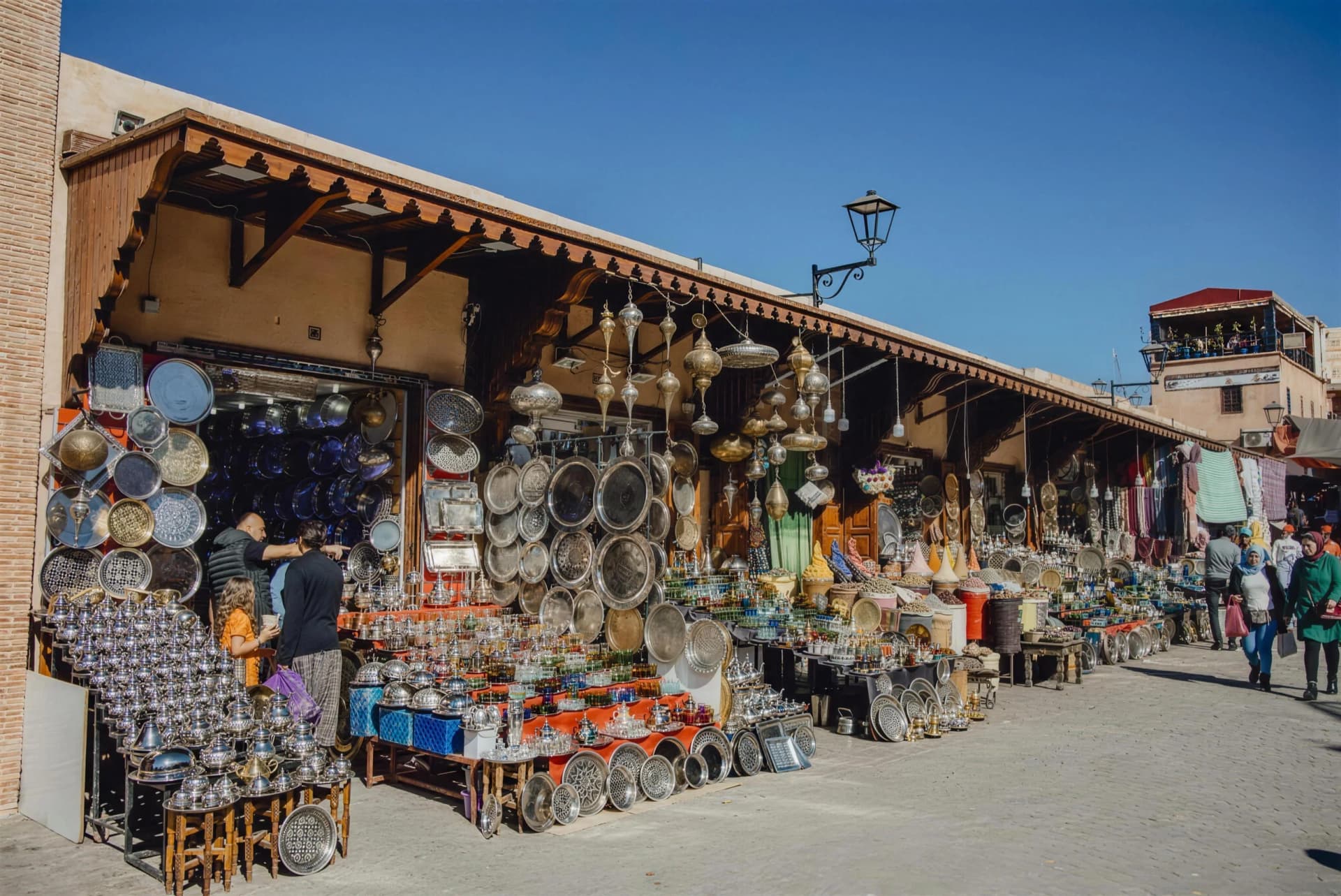
The market lanes grew up between Jemaa el-Fna and the city’s main mosque, and they are still roughly divided by trade: leather, carpets, metalwork, pottery. Browsing costs nothing and bargaining is expected.
Not on the map: the souks are a district, not a single point.
04Northern medina
Ben Youssef Madrasa
An Islamic college commissioned by the Saadian sultan Abdallah al-Ghalib in 1564–65. A shallow pool fills the central courtyard, framed by carved cedar, stucco and zellige, with student rooms on two levels. It reopened in April 2022 after restoration.
05Mouassine, in the medina
Le Jardin Secret
A palace garden on Rue Mouassine, on a site first built up under the Saadians and rebuilt in the mid-19th century. Its green spaces are divided into an Islamic garden, laid out in four parts, and an exotic garden of plants from around the world.
06Southern medina
Bahia Palace
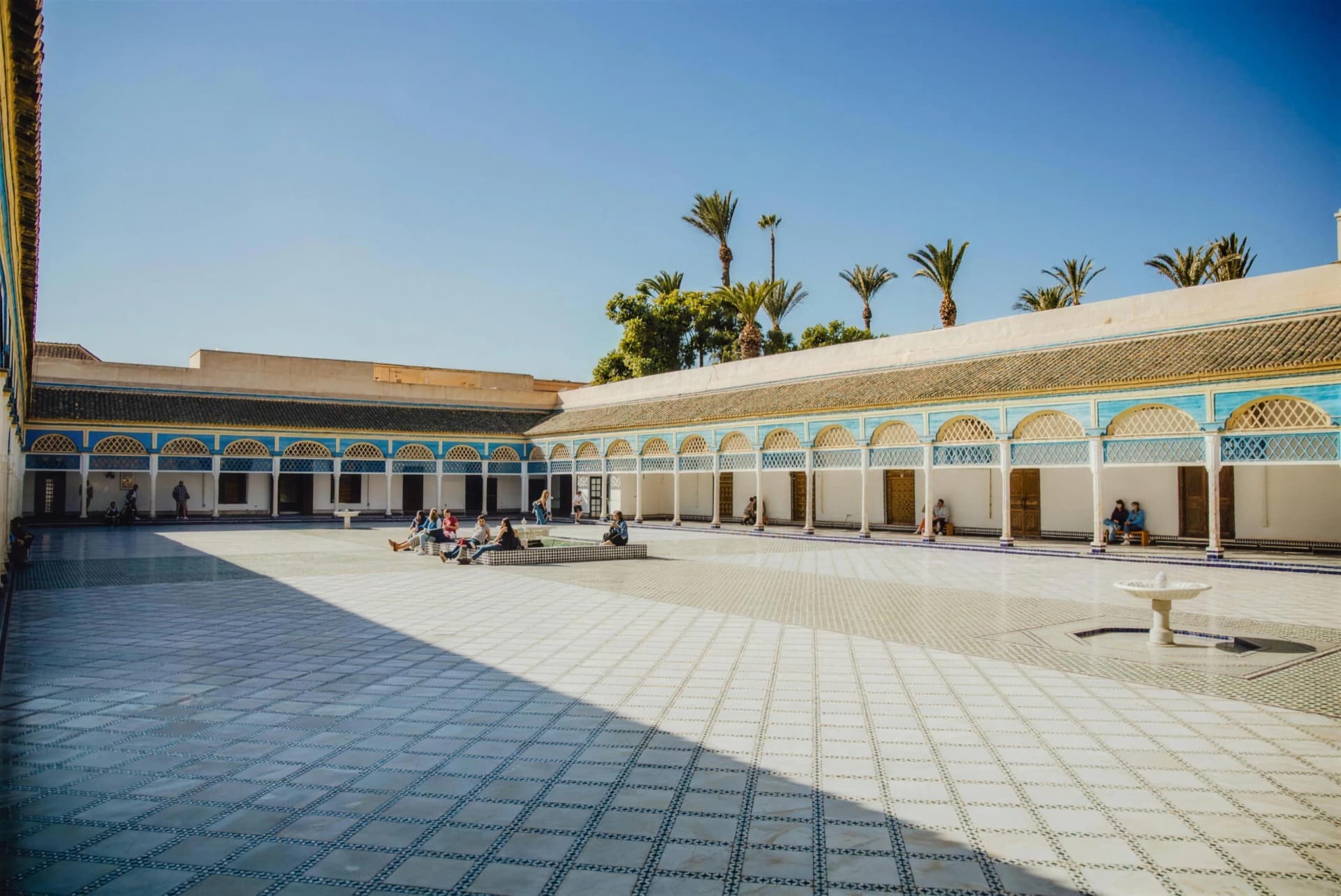
Begun in the 1860s by the grand vizier Si Musa and expanded by his son Ba Ahmed between 1894 and 1900. Around 150 rooms open onto courtyards and riad gardens, known for painted cedar ceilings, carved stucco and zellige; the Grand Courtyard is paved with Carrara marble.
07Southern medina, north of the Bahia
Dar Si Said (museums)
The mansion built in 1894–1900 for Si Said, brother of Ba Ahmed, reopened in 2018 as the National Museum of Weaving and Carpets. The September 2023 earthquake damaged it and it closed for repairs.
Check whether it has reopened before you plan around it.
08Kasbah side of the medina
The Mellah
The old Jewish quarter, created under the Saadians in the mid-16th century. The Slat al-Azama (Lazama) synagogue, built around a central courtyard, still functions as a synagogue, and the quarter’s Jewish cemetery is described as the largest of its kind in Morocco.
09Kasbah
El Badi Palace
The palace Sultan Ahmad al-Mansur began in 1578. It was neglected after his death in 1603 and stripped of its marble, much of it under Moulay Isma’il in 1707–08 for his palace at Meknes. The roofless ruins now display the 12th-century minbar of the Koutoubia.
10Kasbah
Saadian Tombs
The royal necropolis of the Saadians, built in the late 16th century and rediscovered in 1917. The Chamber of the Twelve Columns, with Carrara marble columns and a painted cedar ceiling, holds the tomb of Ahmad al-Mansur, who was buried there in 1603.
The chambers are small, so arrive early in the day.
11North-west of the medina walls
Jardin Majorelle and the YSL Museum
The garden the painter Jacques Majorelle began in 1923 and worked on for almost forty years; Yves Saint Laurent and Pierre Bergé bought and restored it in the 1980s. The villa has housed the Berber Museum since 2011, and the Musée Yves Saint Laurent opened nearby in October 2017.
Tickets are sold online only; one ticket covers the garden, the Pierre Bergé Museum of Berber Arts and the Musée Yves Saint Laurent (official site, checked November 2026).
12West of the medina
Menara Gardens
Founded by the Almohad ruler Abd al-Mu’min in 1157: an olive orchard watered from a rectangular basin about 195 m by 160 m, with a pavilion completed in 1870. Part of the UNESCO World Heritage listing of Marrakech since 1985.
Opening hours and ticket prices change, and several monuments closed for repairs after the September 2023 earthquake: check each site before you go. For the city’s quarters, read Marrakech neighbourhoods; for what costs nothing, see free things to do in Marrakech.