Morocco practical travel guidethe facts on one page.
Many passports enter Morocco visa-free for up to 90 days. The currency is the dirham, a closed currency you get after you land; cards work in hotels, cash runs the souks. Morocco keeps GMT all year, uses European two-pin plugs, and the police are on 190. The details, with sources, are below.
The numbers to know
Morocco, stamped on one page.
- 90days visa-free for many passports
- GMTall year, UTC+0
- 220VType C and E plugs
- MADa closed currency
- 190Police
- 150Ambulance and fire
- 177Gendarmerie, outside towns
- 5Gin the cities, since November 2025
Many lists still give 19 for the police and 15 for fire and ambulance, notably from landlines: if one number does not connect, try the other. Plugs: Type C/E, 220V, 50Hz.
Entry and documents
Your passport, your stamp, your 90 days.
- Visa
- Many passports, including those of the US, the UK, the EU, Canada and Australia, can visit Morocco without a visa for up to 90 days. Rules depend on your nationality, so check your own government’s advice before you book.
- Passport
- Advice on passport validity differs between sources (three or six months beyond your arrival), so travel with at least six months left and a blank page, and make sure the border officer stamps your passport when you arrive.
- The entry stamp
- Border officials should stamp your passport when you enter Morocco. Some travellers have had difficulties leaving because their passport had no entry stamp, so check yours before you leave the desk.
- Staying longer
- The visa-free stay is up to 90 days for tourism. To stay longer than 90 days, you must request an extension at a Moroccan police station, before the 90 days are up.
Sources: gov.uk, travel.state.gov, smartraveller.gov.au, en.wikipedia.org. Checked 2026-10-28.
Money and tipping
Dirhams, cards and small notes.
- The dirham
- The currency is the Moroccan dirham (MAD), divided into 100 centimes. Coins come in 0.5, 1, 2, 5 and 10 dirhams; notes in 20, 50, 100 and 200.
- A closed currency
- The dirham is a closed currency: you cannot buy it before you travel, and only a small amount may be taken out of the country, so get it after you land and change or spend what is left before you fly home.
- ATMs
- Bank ATMs are the easiest source of cash and are widely found in cities (BMCE, Attijariwafa Bank, Banque Populaire). Most take Visa, Mastercard and Maestro. Choose to be charged in dirhams to avoid a poor conversion.
- Cash and cards
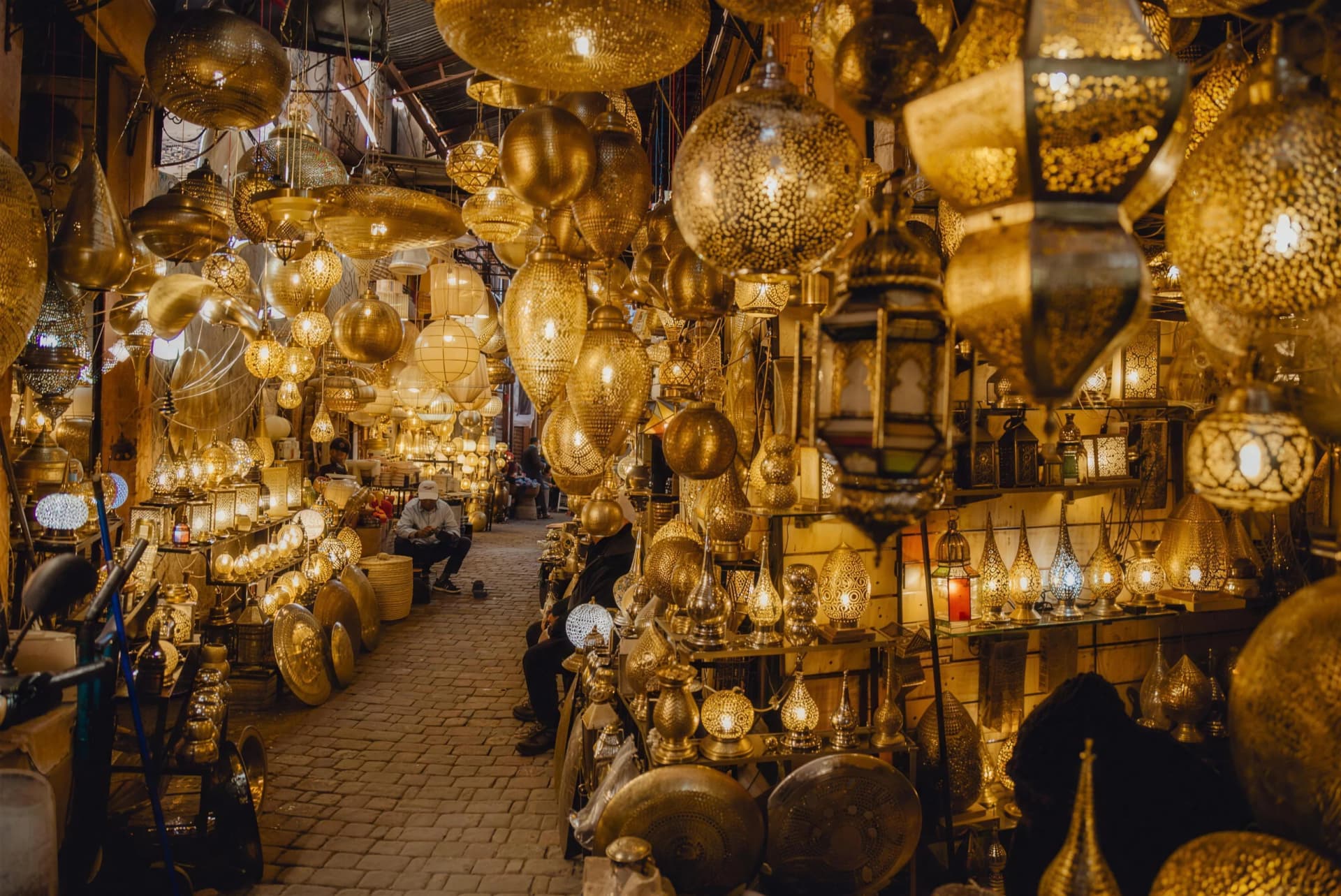
- Cards work in hotels, upscale restaurants and larger shops, Amex less often. Medinas, souks, street food, local cafés and the countryside run on cash, and some places add a fee for cards.
- Small notes
- Sellers and taxi drivers often cannot break a 200 note. Carry 10, 20 and 50 dirham notes and coins for tips, taxis and markets.
- Tipping
- Restaurants: about 10% of the bill, unless service is included. A private guide or driver: about 100–150 dirhams for a full day, for your party. Typical ranges from travel guides, not rules: customs vary by place and service, so check locally or ask your planner.

Health and safety
Stay well, travel calmly.
- Vaccinations
- UK travel-health advice (NaTHNaC) recommends hepatitis A, tetanus and typhoid for most travellers to Morocco, and hepatitis B, measles, rabies and TB (BCG) for some, depending on the trip and your health. See your doctor or a travel clinic, ideally several weeks before you travel, to decide what you need.
- Yellow fever
- There are no yellow fever certificate requirements for Morocco under the International Health Regulations.
- Water
- Most visitors drink bottled or filtered water, which is sold everywhere; a refillable bottle cuts the plastic. Ask your hosts what they recommend locally.
- Petty crime
- Petty crime, including pickpocketing, is common in tourist areas, especially in the medinas and on beaches, and card fraud and scams are common too.
- Women travellers
- Women may receive unwanted attention, especially when travelling alone. Loose clothing that covers the arms, legs and chest draws less of it.
- The roads
- Road accidents are frequent in Morocco. Drink-driving is a serious offence, and night driving and mountain roads need extra care.
Emergency numbers
Many lists still give 19 for the police and 15 for fire and ambulance, notably from landlines: if one number does not connect, try the other.
Sources: travelhealthpro.org.uk, nhs.uk, gov.uk, travel.state.gov. Checked 2026-10-28.

Getting around
Trains, coaches, taxis and a driver.
- Trains
- Al Boraq, Africa’s first high-speed train, opened in 2018. It links Tangier with Casablanca via Kenitra and Rabat in about 2 hours 10 minutes, on a dedicated high-speed line as far as Kenitra. Direct trains run between Marrakech and Fes, via Casablanca, Rabat and Meknes, in roughly six and a half to seven hours, with no change.
- Beyond the railway
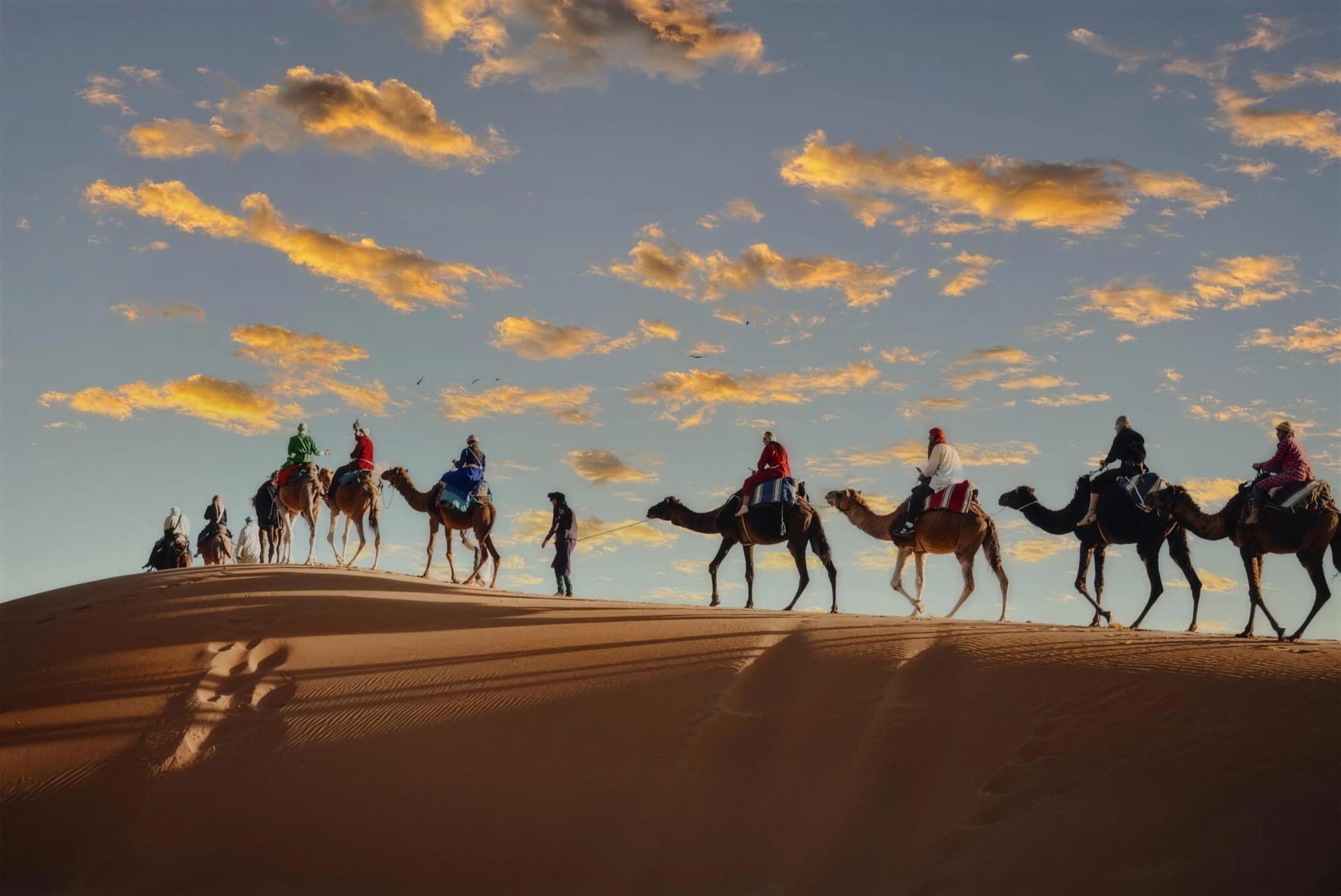
- The railway stops at Marrakech: the Atlas, the Sahara, the gorges and most of the coast are reached by road.
- Coaches
- CTM and Supratours run air-conditioned coaches between cities and to places the trains don’t reach. Book ahead on busy routes.
- Taxis
- Petit taxis work within a city, grand taxis between towns. Agree a fare in advance or check that the taxi is using its meter. Petit taxi drivers often pick up other passengers on the way.
- Driving yourself
- UK advice is to carry the 1968 International Driving Permit with your national licence (the 1949 version is no longer accepted). Get it before you travel; check the rule for your own licence. Poor lighting makes night driving risky, with pedestrians and animals on the road; mountain and secondary roads are hazardous in bad weather.
- Domestic flights
- Royal Air Maroc links the main cities; a flight can save a long day on the road, for example between the north and the south.
Sources: en.wikipedia.org, railwaygazette.com, oncf.ma, gov.uk. Checked 2026-10-28.

Staying connected
SIM, eSIM and WhatsApp.
- A local SIM
- Morocco has three mobile networks: Maroc Telecom, Orange and inwi. Their kiosks are in the arrivals halls of the main airports and in every town, and a local SIM is usually far cheaper than roaming. You need your passport to register it. eSIM support varies by network, so check before you rely on one.
- eSIM
- An eSIM needs an unlocked phone that supports eSIM. Travel eSIMs that cover Morocco can be installed before you fly; check that the plan names Morocco and includes data.
- 5G and coverage
- All three networks launched commercial 5G in November 2025, mainly in the cities, after licences were awarded in July 2025; coverage is expanding. All three cover the cities and main roads well. In the mountains and the desert, coverage varies by network and place, so ask your driver or riad which works best on your route.
- WhatsApp and Wi-Fi
- WhatsApp is the everyday way to message and call in Morocco, including drivers, guides and riads. Most hotels and riads have Wi-Fi, though thick walls can slow it in some rooms. Desert camps vary: some have Wi-Fi or a phone signal, some none; ask before you count on it.
- Time
- Morocco keeps GMT (UTC+0) all year. Since 20 September 2026 it no longer uses GMT+1, so there is no longer a clock change for Ramadan.
- Plugs
- Morocco uses Type C and Type E plugs (round two-pin, as in continental Europe) at 220V, 50Hz. UK, US and Australian plugs need an adapter; most phone, laptop and camera chargers are dual-voltage.
Sources: phonetravelwiz.com, revolut.com, developingtelecoms.com, connectingafrica.com, fr.hespress.com, telquel.ma, medias24.com. Checked 2026-10-28.
Words that help
A little Darija, a little French.
Darija is Morocco’s everyday Arabic, written here as it sounds. French works in shops, hotels and offices.
Greetings
- Hello
- Salam alaykum · Bonjour
- How are you?
- Labas? · Ça va ?
- Goodbye
- Bslama · Au revoir
Essentials
- Thank you
- Shukran · Merci
- Please
- Afak · S’il vous plaît
- No, thank you
- La, shukran · Non, merci
Shopping
- How much?
- Bshhal? · Combien ?
- Too expensive
- Ghali bzaf · C’est trop cher
- Last price?
- Akhir taman? · Dernier prix ?
Help
- Help!
- Awnni! · Aidez-moi !
- Doctor
- Tbib · Médecin
- Where is…?
- Fin kayn…? · Où est… ?
Morocco practical questions
Do I need a visa for Morocco?
Many passports, including those of the US, the UK, the EU, Canada and Australia, can visit Morocco without a visa for up to 90 days. Rules depend on your nationality, so check your own government’s advice before you book.
Can I use cards in Morocco, or do I need cash?
Cards work in hotels, upscale restaurants and larger shops, Amex less often. Medinas, souks, street food, local cafés and the countryside run on cash, and some places add a fee for cards. The dirham is a closed currency: you cannot buy it before you travel, and only a small amount may be taken out of the country, so get it after you land and change or spend what is left before you fly home.
Can I drink the tap water in Morocco?
Most visitors drink bottled or filtered water, which is sold everywhere; a refillable bottle cuts the plastic. Ask your hosts what they recommend locally.
Which vaccinations do I need for Morocco?
UK travel-health advice (NaTHNaC) recommends hepatitis A, tetanus and typhoid for most travellers to Morocco, and hepatitis B, measles, rabies and TB (BCG) for some, depending on the trip and your health. There are no yellow fever certificate requirements for Morocco under the International Health Regulations. See your doctor or a travel clinic, ideally several weeks before you travel, to decide what you need.
What are the emergency numbers in Morocco?
Police 190; Ambulance 150; Fire 150; Gendarmerie (outside towns) 177. Many lists still give 19 for the police and 15 for fire and ambulance, notably from landlines: if one number does not connect, try the other.
How do I get a SIM card in Morocco?
Morocco has three mobile networks: Maroc Telecom, Orange and inwi. Their kiosks are in the arrivals halls of the main airports and in every town, and a local SIM is usually far cheaper than roaming. You need your passport to register it. eSIM support varies by network, so check before you rely on one.
After you ask for a quote
What you get within 24 hours
Your proposal contains
- A day-by-day route, with the driving time between stops
- Stays matched to your style (riads, kasbahs, desert camps or hotels), named so you can look them up
- Which moments are private to you, and which are shared, such as a camp’s dining tent
- An itemised quote: what is included and what is not
- Who is planning your trip, and how to reach them on WhatsApp
- Free, with no obligation to book
Before you pay a deposit, we confirm
- Opening days for the places on your route, including Friday and holiday closures
- Meal stops along the way, and any dietary needs
- Prayer or Shabbat timing, if it matters to you
- Step-free access, wherever you need it
- The vehicle class for your group and your luggage
Every trip is private and priced to your dates, so there is no fixed price list. Ask, and the proposal shows the full cost before anything is booked.
Who plans your trip

The practical side, handled.
المغربⵜⴰⴳⵍⴷⵉⵜ ⵏ ⵍⵎⵖⵔⵉⴱThe Kingdom of Morocco