Morocco scams to avoidthe honest local guide.
Most Moroccans you meet are warm and generous. A few people in the busiest tourist spots live off visitors who do not know the game. Petty crime, including pickpocketing, is common in tourist areas, especially in the medinas and on beaches, and card fraud and scams are common too. Here is the game, so you can enjoy the medina instead of guarding against it.
Decline early, agree prices first, and never feel obliged.
Where it happens
Six places, twelve tricks.
- 1The gateThe “free” guide · “That way is closed”
- 2The squareHenna on your hand · Snakes, monkeys and photos
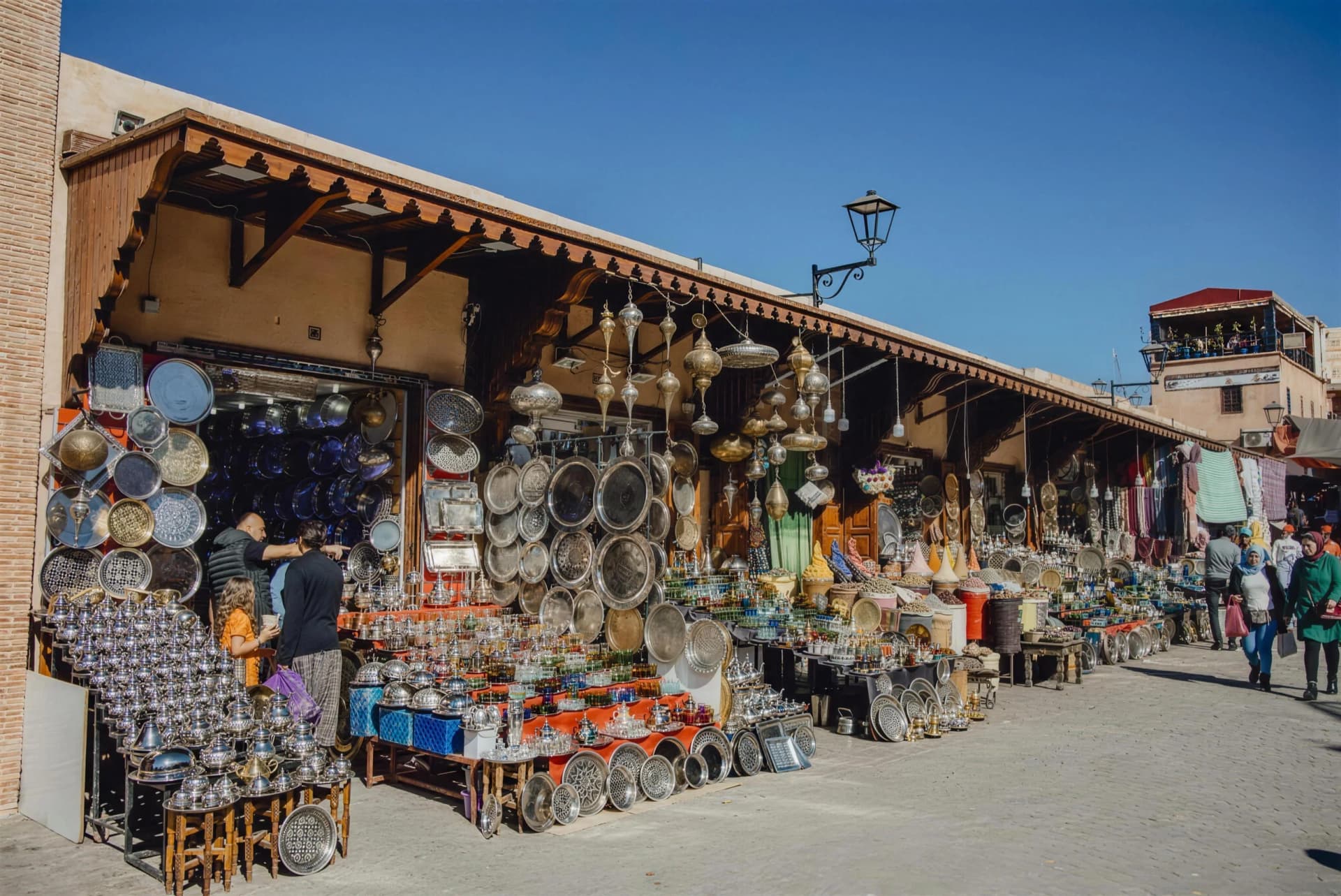
- 3The souk lanes“Closing forever” sale · The carpet-shop tea · Fakes sold as the real thing · Dirhams or rials?
- 4The restaurantThe menu switch
- 5The taxi rankThe “broken” meter · Airport fares
- 6The ATMSkimmers and card fraud
The tricks
How each works, and how to step round it.
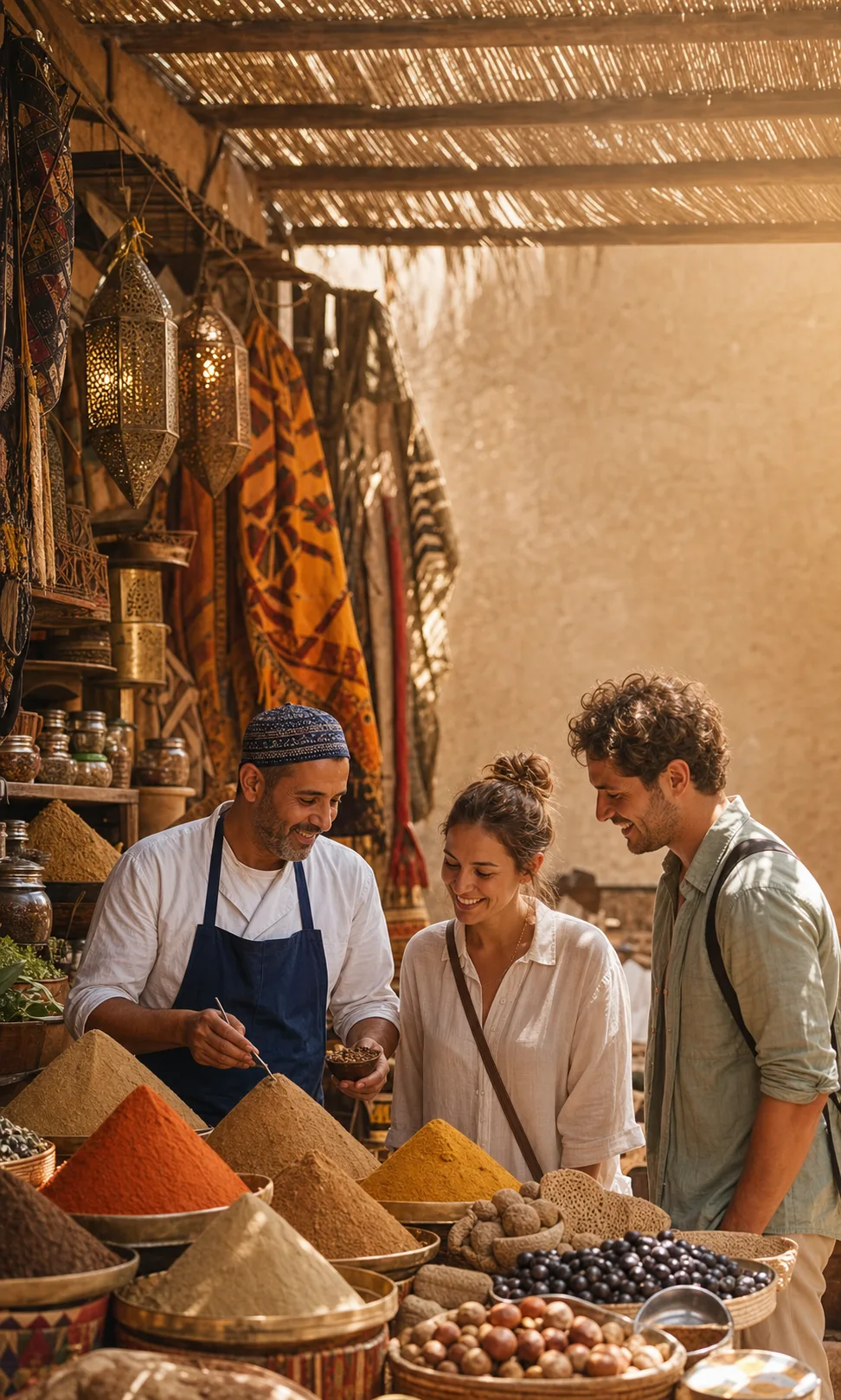
1 · The gateThe “free” guide
- How it works
- Someone offers directions near a gate or landmark, walks you through the lanes, often to a shop that pays them commission, then asks for money.
- How to avoid it
- A polite “la, shukran” at the start and keep walking. Official guides carry an ID badge and do not approach you in the street.
- If it happens
- Pay a small amount if they did help, walk away, and do not feel obliged to enter any shop.
1 · The gate“That way is closed”
- How it works
- You are told a lane, a monument or your riad’s street is closed, and offered another way, which ends in a shop.
- How to avoid it
- Check with your map or riad. Monuments post their hours; lanes are rarely “closed”.
- If it happens
- Thank them and turn back the way you came.
2 · The squareHenna on your hand
- How it works
- In a busy square, someone takes your hand and starts a henna design before you agree, then names a high price.
- How to avoid it
- Keep your hands to yourself in the squares; if you want henna, choose an artist and agree the price first. Avoid “black henna”, which can contain PPD and burn the skin.
- If it happens
- Pay a small amount for what was done and leave; you do not owe the asking price.
2 · The squareSnakes, monkeys and photos
- How it works
- An animal is put on your shoulder, or you take a photo of performers, and a large payment is demanded.
- How to avoid it
- Keep your camera down near animal handlers, and agree a price before any photograph.
- If it happens
- Ask them to remove the animal, pay a small amount for the photo you took, and walk on.
3 · The souk lanes“Closing forever” sale
- How it works
- A shop says it is closing or relocating and offers a “special” price, to rush you.
- How to avoid it
- Never buy on your first pass: walk the lane and compare, then come back.
- If it happens
- If you overpaid, treat it as a lesson in bargaining; ask about returns before you buy anything expensive.
3 · The souk lanesThe carpet-shop tea
- How it works
- Mint tea, rug after rug unrolled, and the feeling that leaving without buying would be rude.
- How to avoid it
- Enjoy the show, and say early that you are only looking. Leaving without buying is normal.
- If it happens
- You can still say no after the tea. Get any agreed price, size and shipping terms in writing.
3 · The souk lanesFakes sold as the real thing
- How it works
- Dyed safflower sold as saffron, argan oil cut with cheaper oils, faux leather sold as leather.
- How to avoid it
- Buy saffron from established spice shops and argan oil from a women’s cooperative where you can see it made.
- If it happens
- Keep the receipt; for small purchases, let it go.
3 · The souk lanesDirhams or rials?
- How it works
- A spoken price sounds far too high, or switches currency at the till.
- How to avoid it
- Prices are written in dirhams, but in markets some sellers still count out loud in rials (a dirham is 20 rials) or in centimes. If a spoken price sounds far too high, ask: dirhams or rials?
- If it happens
- Ask for the price to be written down, in dirhams, before you pay.
4 · The restaurantThe menu switch
- How it works
- A menu without prices, or a bill from a dearer “tourist menu” than the one you saw.
- How to avoid it
- Eat where the menu has printed prices; snap a photo of it, and ask whether service is included.
- If it happens
- Compare the bill with the menu calmly and pay what the menu said.
5 · The taxi rankThe “broken” meter
- How it works
- The petit taxi meter is “broken”, a flat fare is several times the usual, or the route is long.
- How to avoid it
- Ask for the meter (“compteur, s’il vous plaît”) before you get in; if not, take the next taxi.
- If it happens
- Pay what is fair for the distance; in a real dispute, mention the tourist police.
5 · The taxi rankAirport fares
- How it works
- At arrivals, drivers quote a high fixed fare to tired travellers.
- How to avoid it
- Pre-book a transfer with your riad or planner, or agree the fare before your bags go in.
- If it happens
- Agree the price out loud before the car moves.
6 · The ATMSkimmers and card fraud
- How it works
- Card readers fitted to standalone machines in busy tourist spots.
- How to avoid it
- Use ATMs inside or beside a bank branch, cover the keypad, and check for loose parts.
- If it happens
- Call your bank to block the card at once; carry a second card from another bank.
Useful words
What to say.
- La, shukran
- “No, thank you”, said with a smile while you keep walking. It works almost everywhere.
- Compteur, s’il vous plaît
- The meter, please: before the taxi moves.
- Bshhal?
- “How much?”, before any service, photograph or henna.
- Small notes
- Sellers and taxi drivers often cannot break a 200 note. Carry 10, 20 and 50 dirham notes and coins for tips, taxis and markets.
If it goes wrong
Help is close by.
- Step inside
- If someone will not leave you alone, walk into a shop, café or hotel lobby and ask for help.
- Tourist police
- The big tourist cities have tourist police (Brigade Touristique); mentioning them often ends a dispute.
- Emergency numbers
- Police 190, Ambulance 150, Fire 150, Gendarmerie (outside towns) 177. Many lists still give 19 for the police and 15 for fire and ambulance, notably from landlines: if one number does not connect, try the other.
- Your card
- Block a lost or cloned card straight away, from your bank’s app or number.
Morocco scams: your questions
Is Morocco dangerous for tourists?
For most visitors, no. Petty crime, including pickpocketing, is common in tourist areas, especially in the medinas and on beaches, and card fraud and scams are common too. The tricks on this page are hassles, not dangers.
Are Moroccans trying to scam tourists?
No. Most Moroccans are warm and hospitable; the hassles come from a small number of people in the busiest tourist spots.
What is the most common scam in Marrakech?
Someone offers directions near a gate or landmark, walks you through the lanes, often to a shop that pays them commission, then asks for money. A polite “la, shukran” at the start and keep walking. Official guides carry an ID badge and do not approach you in the street.
Should I avoid the medina because of scams?
Not at all. The medinas are the heart of Morocco. Know the few tricks, decline early, and enjoy them.
How do I tell a real guide from a fake one?
Official guides carry an ID badge and are booked, not met in the street. A local guide arranged through your riad or planner is the simplest way.
Are taxis safe in Morocco?
Yes. Ask for the meter (“compteur, s’il vous plaît”) before you get in; if not, take the next taxi. For grand taxis between towns, agree the fare before you leave.
How much should I tip in Morocco?
Restaurants: about 10% of the bill, unless service is included. Guides and drivers: about 100–150 dirhams for a full day, for your party; in a group tour, about 20–50 dirhams per person per day. Typical ranges from travel guides, not rules: customs vary by place and service, so check locally or ask your planner.
After you ask for a quote
What you get within 24 hours
Your proposal contains
- A day-by-day route, with the driving time between stops
- Stays matched to your style (riads, kasbahs, desert camps or hotels), named so you can look them up
- Which moments are private to you, and which are shared, such as a camp’s dining tent
- An itemised quote: what is included and what is not
- Who is planning your trip, and how to reach them on WhatsApp
- Free, with no obligation to book
Before you pay a deposit, we confirm
- Opening days for the places on your route, including Friday and holiday closures
- Meal stops along the way, and any dietary needs
- Prayer or Shabbat timing, if it matters to you
- Step-free access, wherever you need it
- The vehicle class for your group and your luggage
Every trip is private and priced to your dates, so there is no fixed price list. Ask, and the proposal shows the full cost before anything is booked.
Who plans your trip

A local guide who heads them off.
المغربⵜⴰⴳⵍⴷⵉⵜ ⵏ ⵍⵎⵖⵔⵉⴱThe Kingdom of Morocco