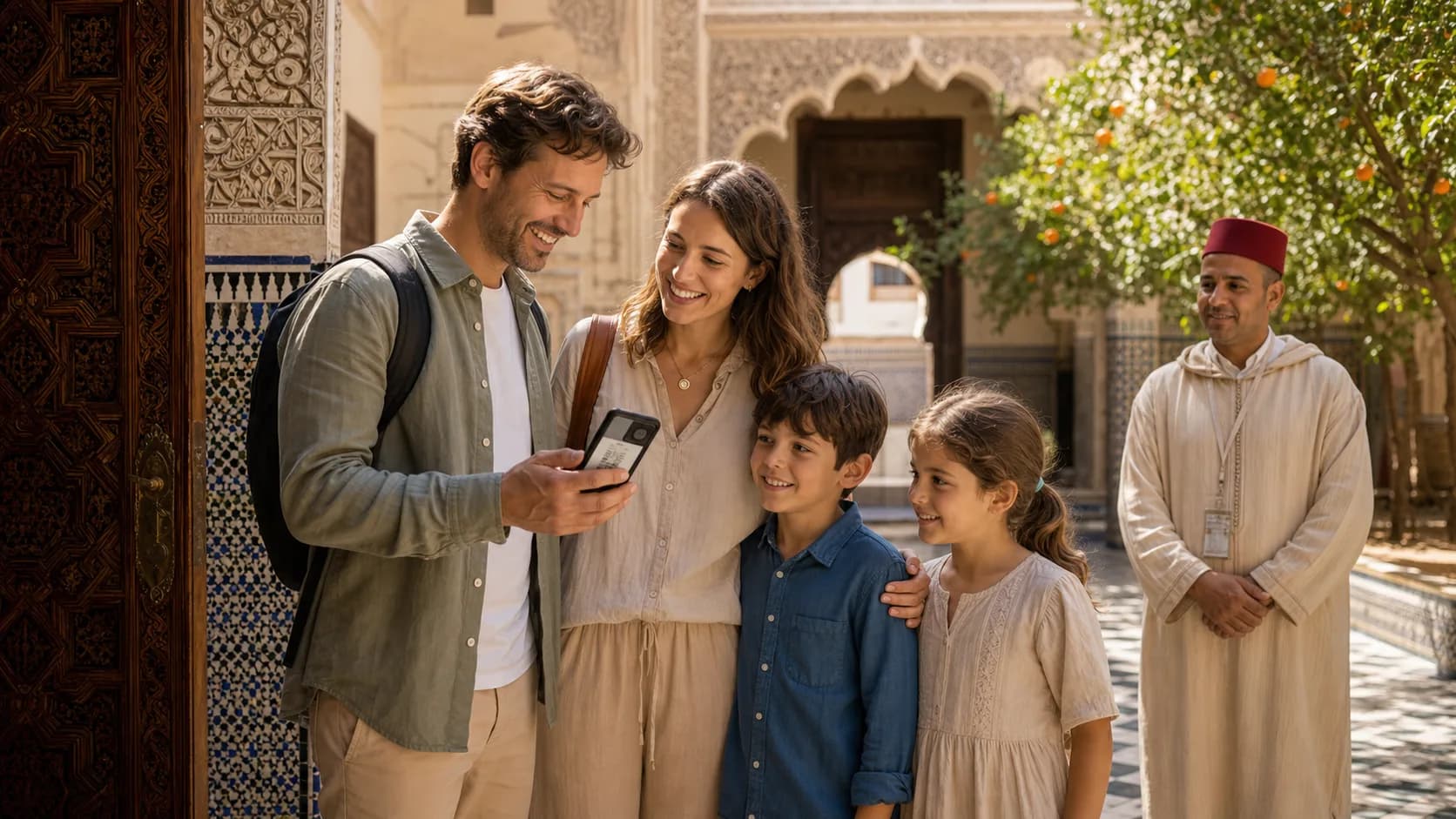
Illustrative family planning a Morocco journey with a guide in a riad courtyard

Morocco for Families Their adventure. Your holiday.

Yes, Morocco is good for families. It is a short flight from Europe and malaria-free, and family trips work best private and child-paced: shorter drive days, camel rides in the desert, a cooking class, gentle Atlas walks and beach days in Essaouira. Choose family-friendly riads and camps, and avoid the summer heat inland.

Free quote · Step 1 of 3

Plan your family trip

Who's travelling
How many
When
Free · no obligation · reply within 24 h or WhatsApp +212 701 664 704

The family pace planner

Plan a Morocco trip at your children’s pace

Pick the ages, the length and how much you like to do. The rhythm on the right follows our family guide: shorter drives, afternoons by the pool, one big outing a day.

Children’s ages
How long
Pace

An example family sketch

8–12 days

Day by day: 2 days Marrakech, 1 day Ourika valley day (about 1½ h each way), 1 day Over the Atlas to Skoura (about 5 h with stops), 1 day Sahara camp (Skoura to Merzouga, about 4¾ h), 1 day Back to Skoura (about 4¾ h), 1 day Over the Atlas to Marrakech (about 4¾ h), 2 days Essaouira (about 3 h from Marrakech).

  • Marrakech· 2
  • Ourika valley day (about 1½ h each way)
  • Over the Atlas to Skoura (about 5 h with stops)
  • Sahara camp (Skoura to Merzouga, about 4¾ h)
  • Back to Skoura (about 4¾ h)
  • Over the Atlas to Marrakech (about 4¾ h)
  • Essaouira (about 3 h from Marrakech)· 2

A typical day

  1. 01Morning outing
  2. 02Lunch nearby
  3. 03Pool afternoon
  4. 04Early dinner

Under about three hours on most days; the desert legs are longer (about 4¾ to 5 hours each) and split with an overnight in Skoura.

Good fits for these ages

  • A camel ride with a handler leading
  • A night in a desert camp, from age five
  • A medina scavenger hunt
  • A family cooking class

A sketch, not a booking: a planner adjusts it to your family.

A journey with room for everyone

Big discoveries.
Little moments together.

A nine-day sample journey balances discovery and longer road days. Tell us the children’s ages, room needs and the pace that works for your family.

Open a frame. Find your pace.
Days 1–2

Marrakech

Curiosity sets the pace.

Begin with arrival time, gardens and a first taste of the city. A manageable walk and an unhurried pause can matter more than a packed list of sights.

Chapters from the reviewed Family Morocco Discovery. The dunes involve substantial driving; we discuss the ages, pauses and route length before recommending the final plan.

Family journeys, made your own

Choose a starting route. We adapt the driving days, rooms and activities to your children’s ages.

  1. 9 days · Multi-Region

    Family Morocco Discovery

    Marrakech, valleys and dunes with planned overnight breaks

    • Marrakech: gardens and family discovery
    • Marrakech to Ait Benhaddou
    • Ait Benhaddou to Dades via Skoura
    Day by day
  2. 3 days · Marrakech

    Marrakech Weekend Escape

    A focused introduction to Marrakech

    • Marrakech: medina and gardens
    Day by day
  3. 6 days · Southeast Morocco

    Sahara Desert Expedition

    Two desert nights with a broken return journey

    • Marrakech to Dades via Ait Benhaddou
    • Dades to Merzouga via Todra
    • Merzouga: Erg Chebbi desert day
    Day by day
  4. 7 days · Multiple Regions

    Culinary Morocco Experience

    Markets and hands-on cooking in Marrakech and Fes

    • Marrakech: market and tagine cooking
    • Marrakech: bread and pastries
    • Fes: market and Fassi cooking
    Day by day
  5. 5 days · Fes

    Fes Culinary & Craft Immersion

    Fassi cooking traditions and working artisan quarters

    • Fes: ingredients and cooking class
    • Fes: ceramics, copper and woodwork
    • Fes: spice traditions and a farewell meal
    Day by day
  6. 6 days · Atlantic Coast

    Coastal Morocco Escape

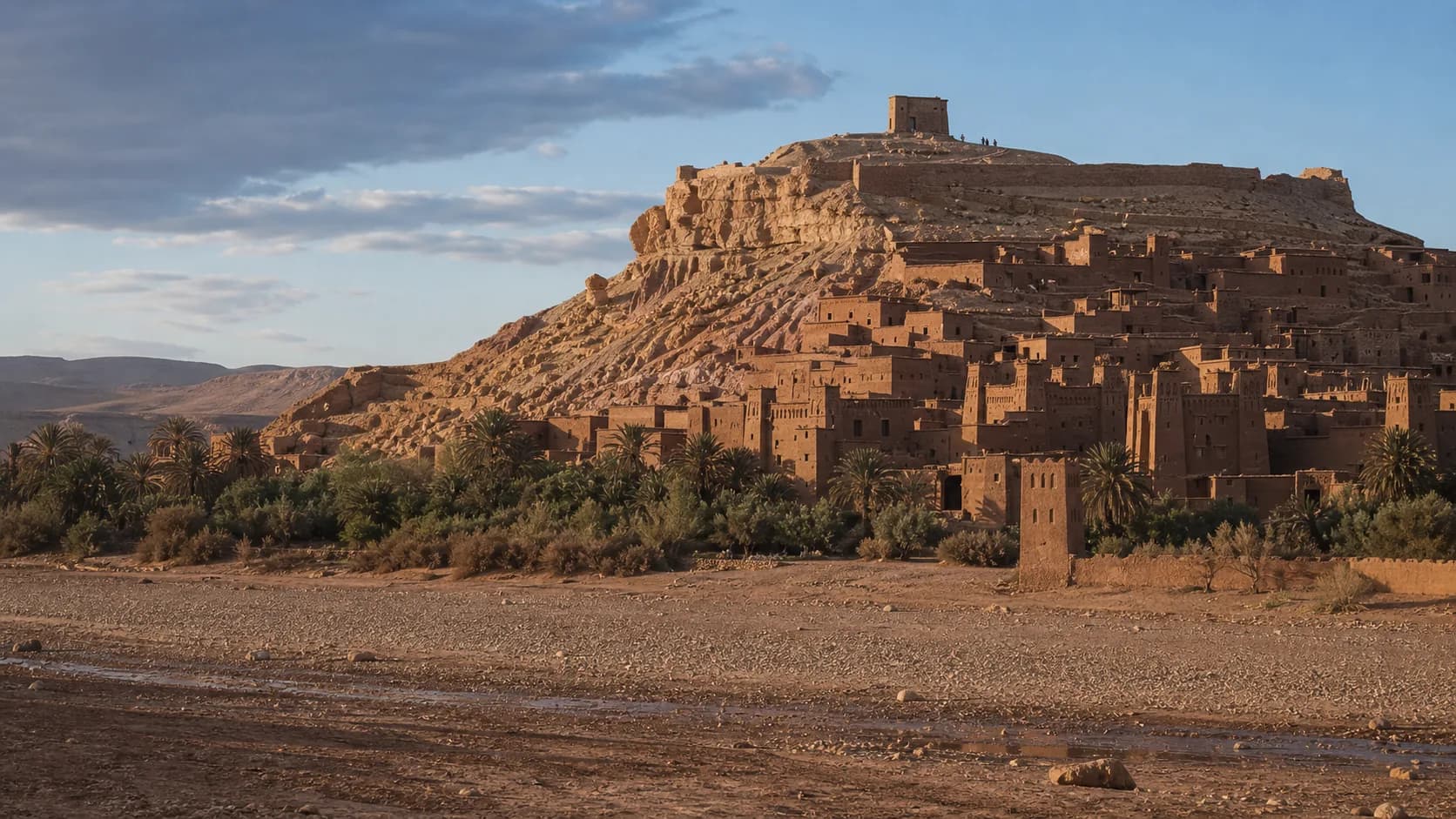
    Casablanca, Oualidia and Essaouira, finishing in Marrakech

    • Casablanca to Oualidia via El Jadida
    • Oualidia to Essaouira
    • Essaouira: ramparts, workshops and beach
    Day by day
Browse every published tour

Kid-friendly moments in Morocco they will talk about

The experiences families rate as the highlights of their trip, each one possible on a private family itinerary.
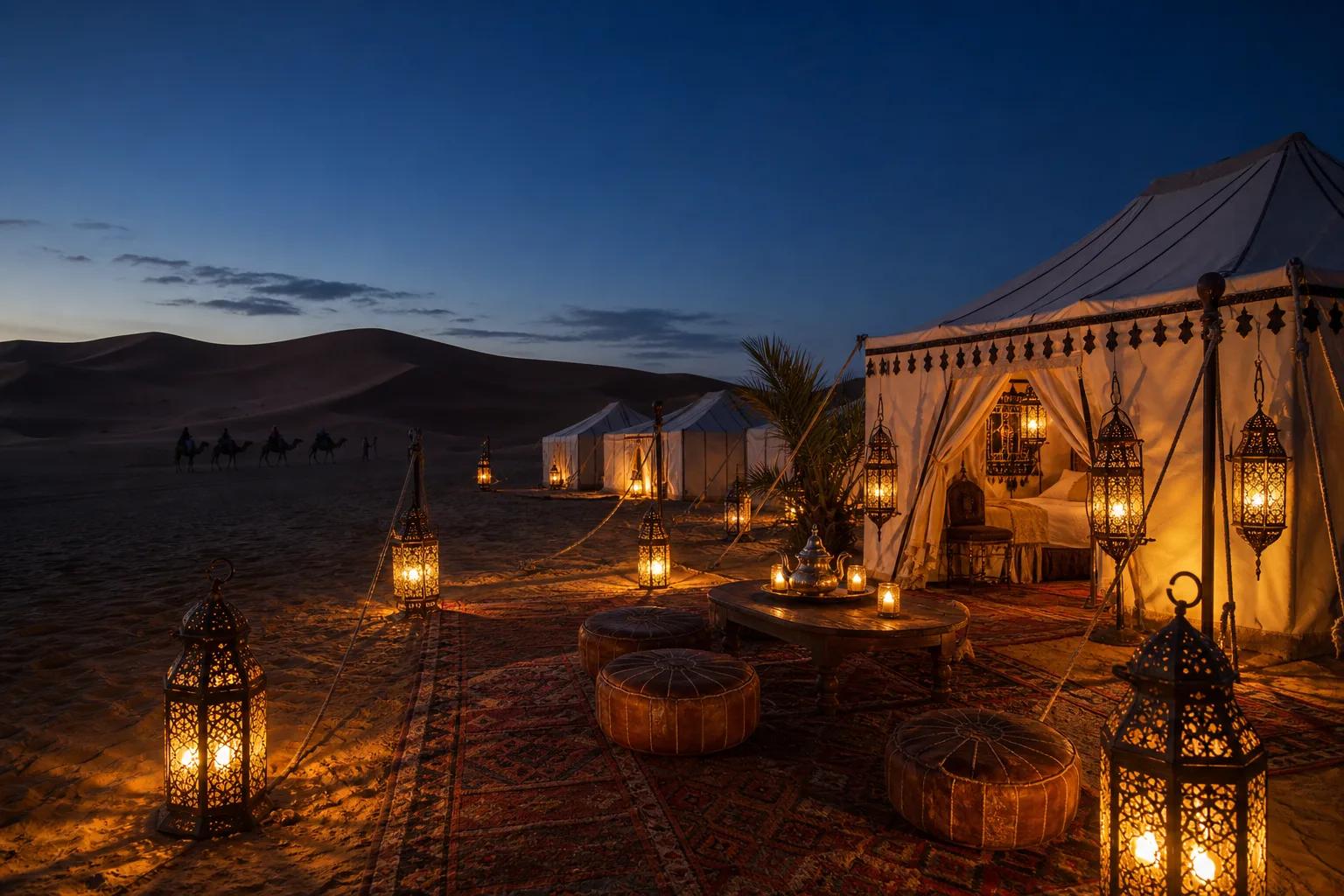
  • Illustrative lantern-lit Moroccan desert camp at twilight

    Ages 5 and up

    Stars over the Sahara

    Discuss stargazing at the desert camp; visibility depends on the weather, moon and local lighting.
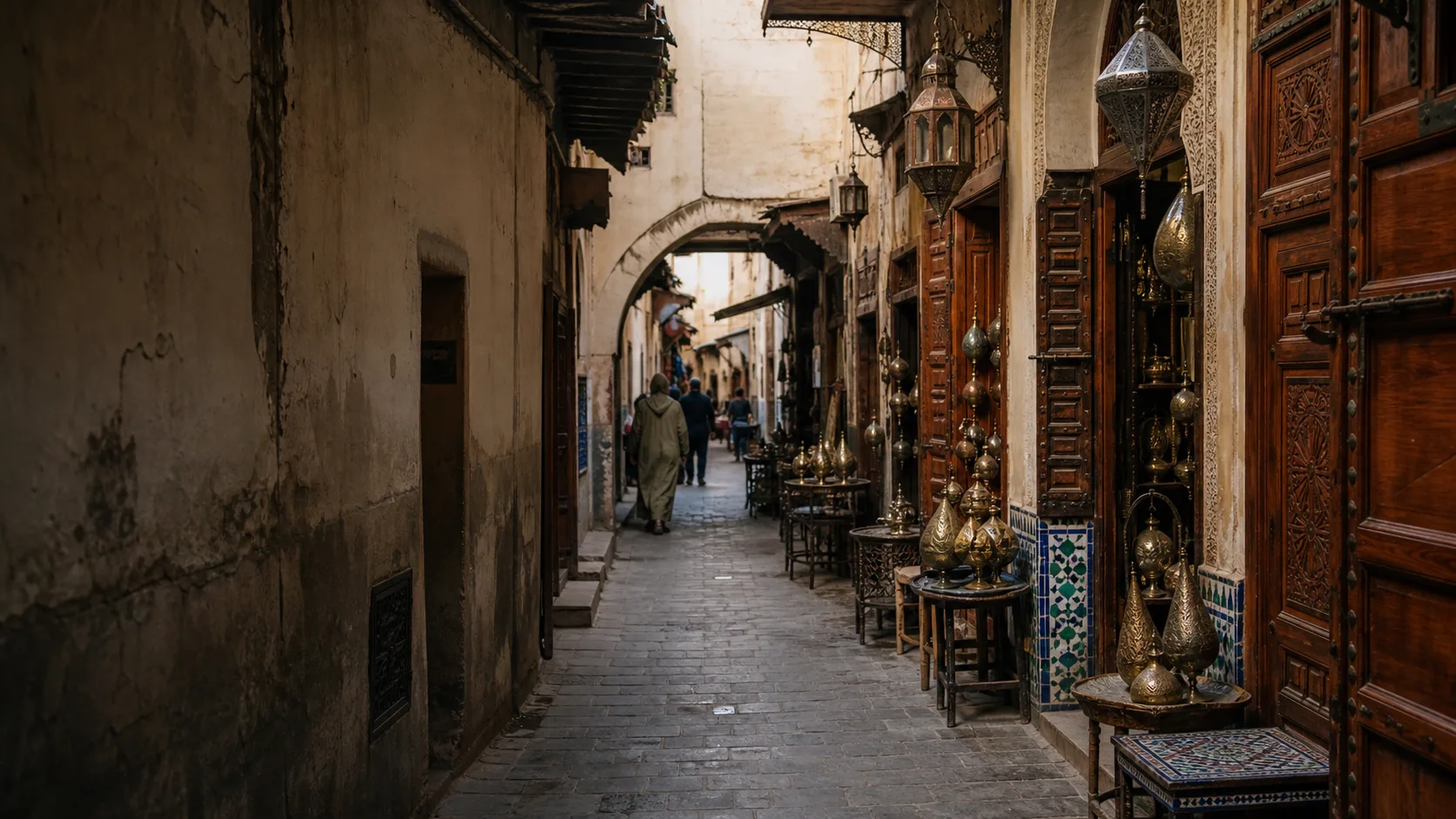
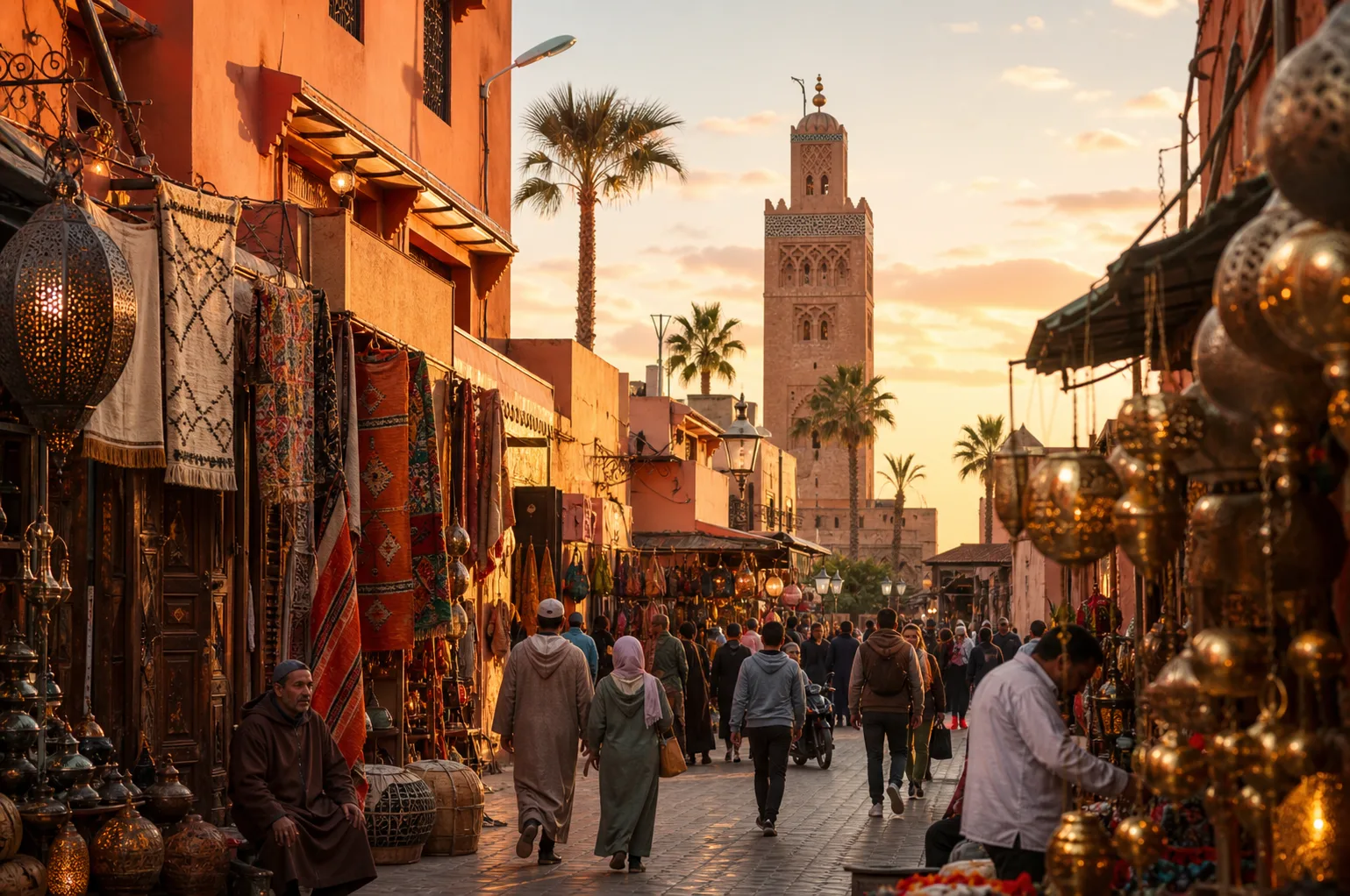
  • Illustrative brass stalls and lanterns in a Moroccan medina

    All ages

    A medina treasure hunt

    A list of things to find: a blue door, a lamp, a cat in a window, a zellige fountain.
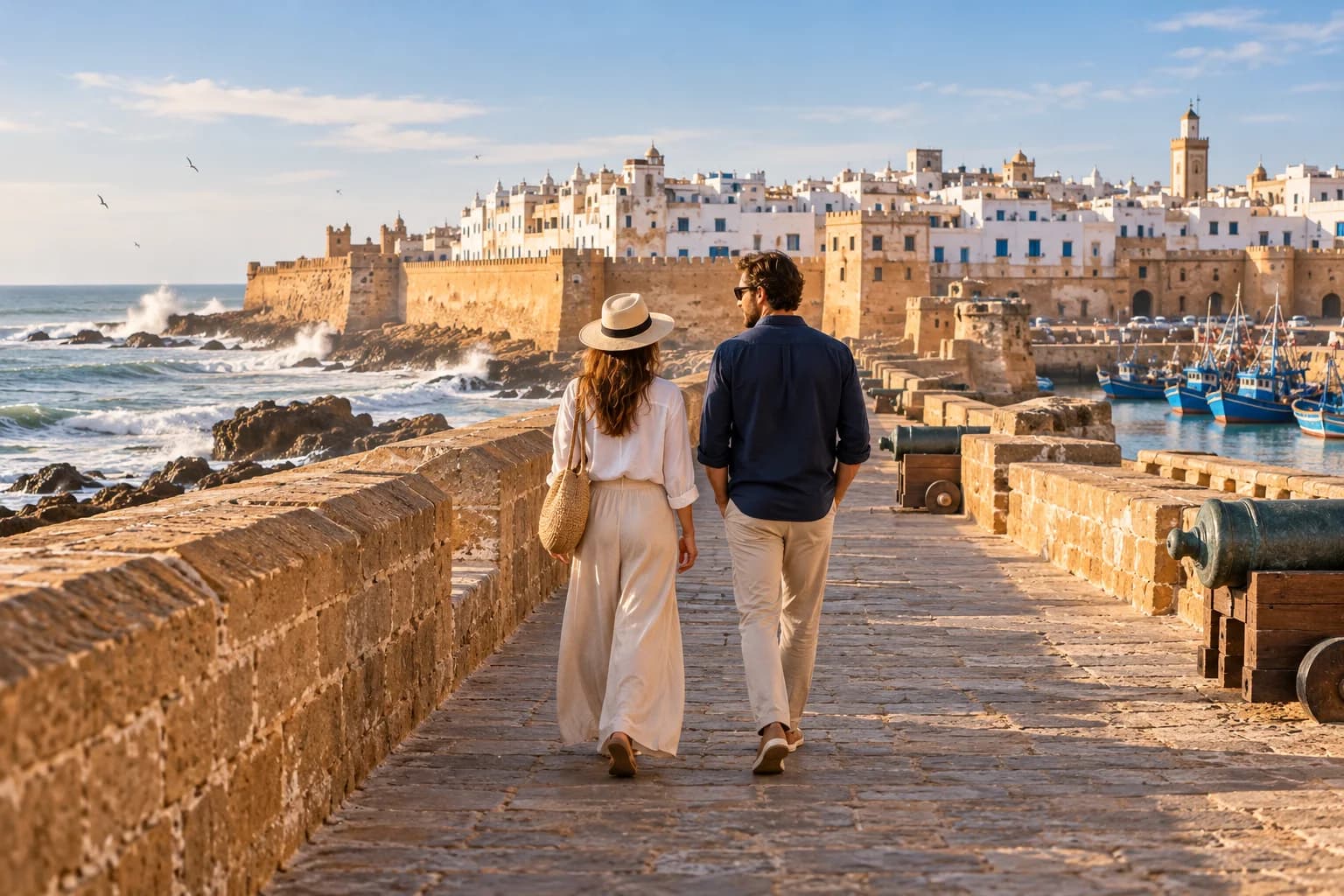
  • Illustrative travellers walking beside Essaouira ramparts

    All ages

    Kites and ramparts in Essaouira

    A wide Atlantic beach, a reliable wind and a car-free medina.
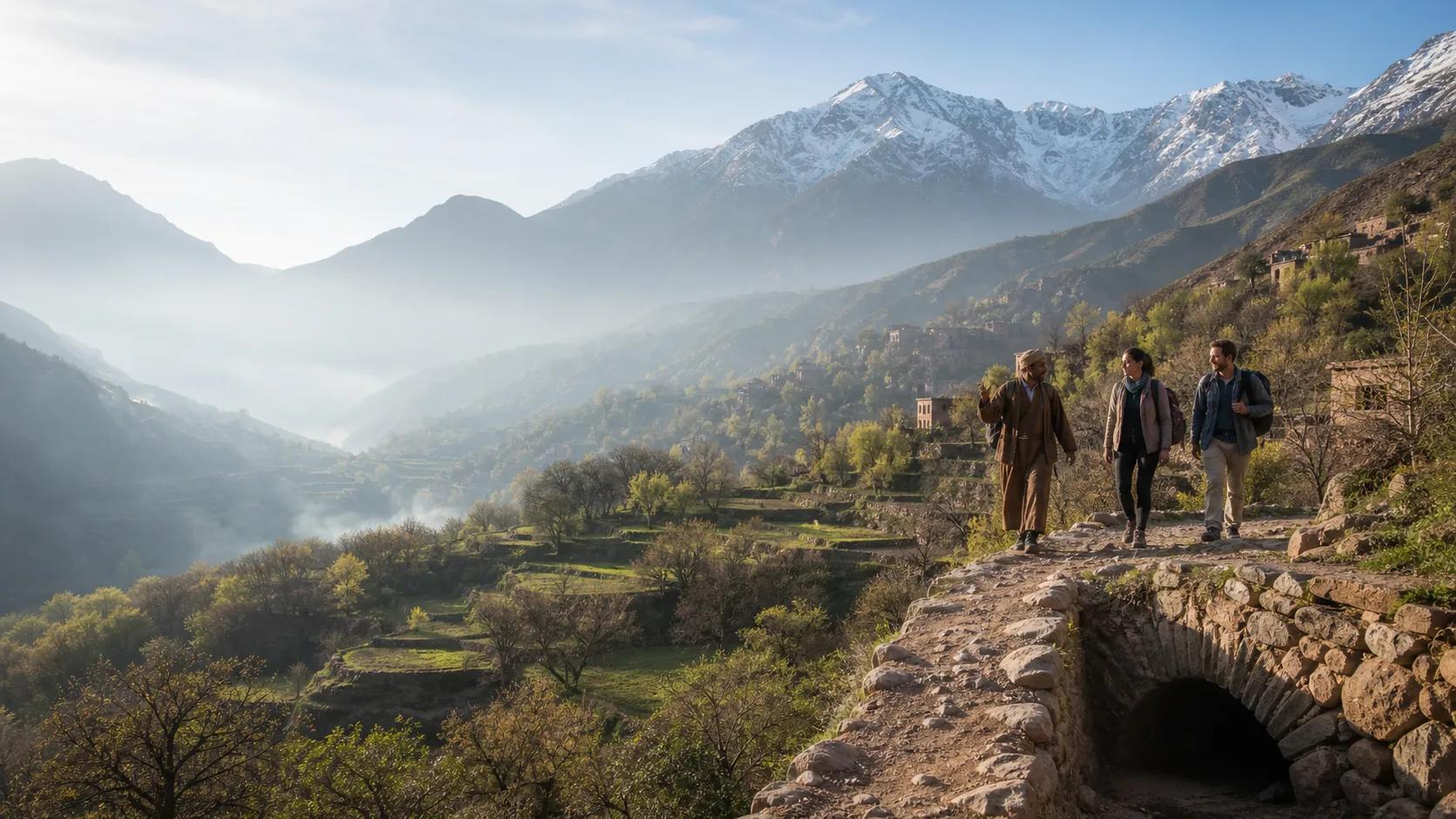
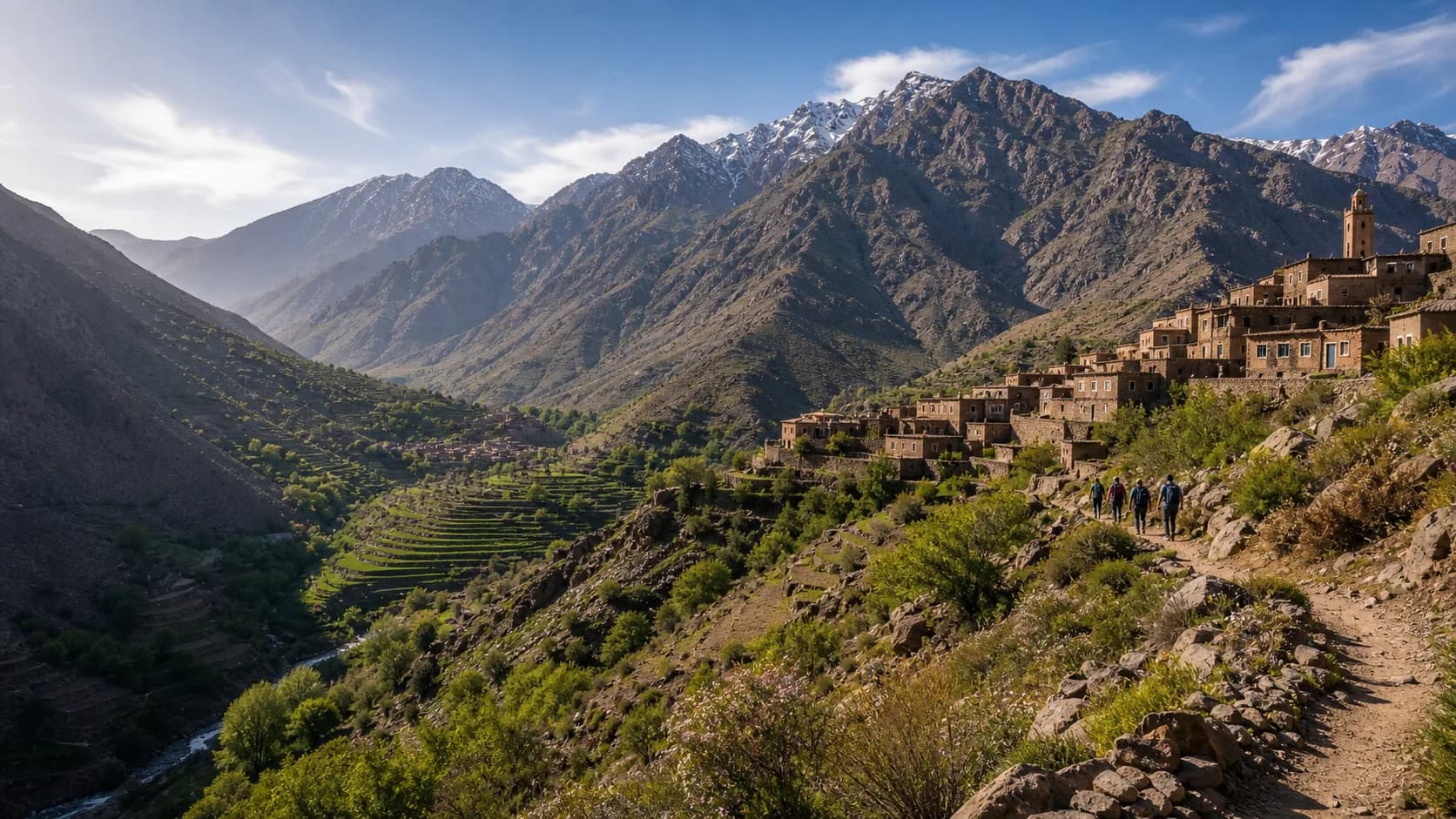
  • Walkers on a High Atlas trail between terraced villages

    Ages 6 and up

    Berber village walks

    Trails past walnut groves and terraces to villages in the Imlil valley.
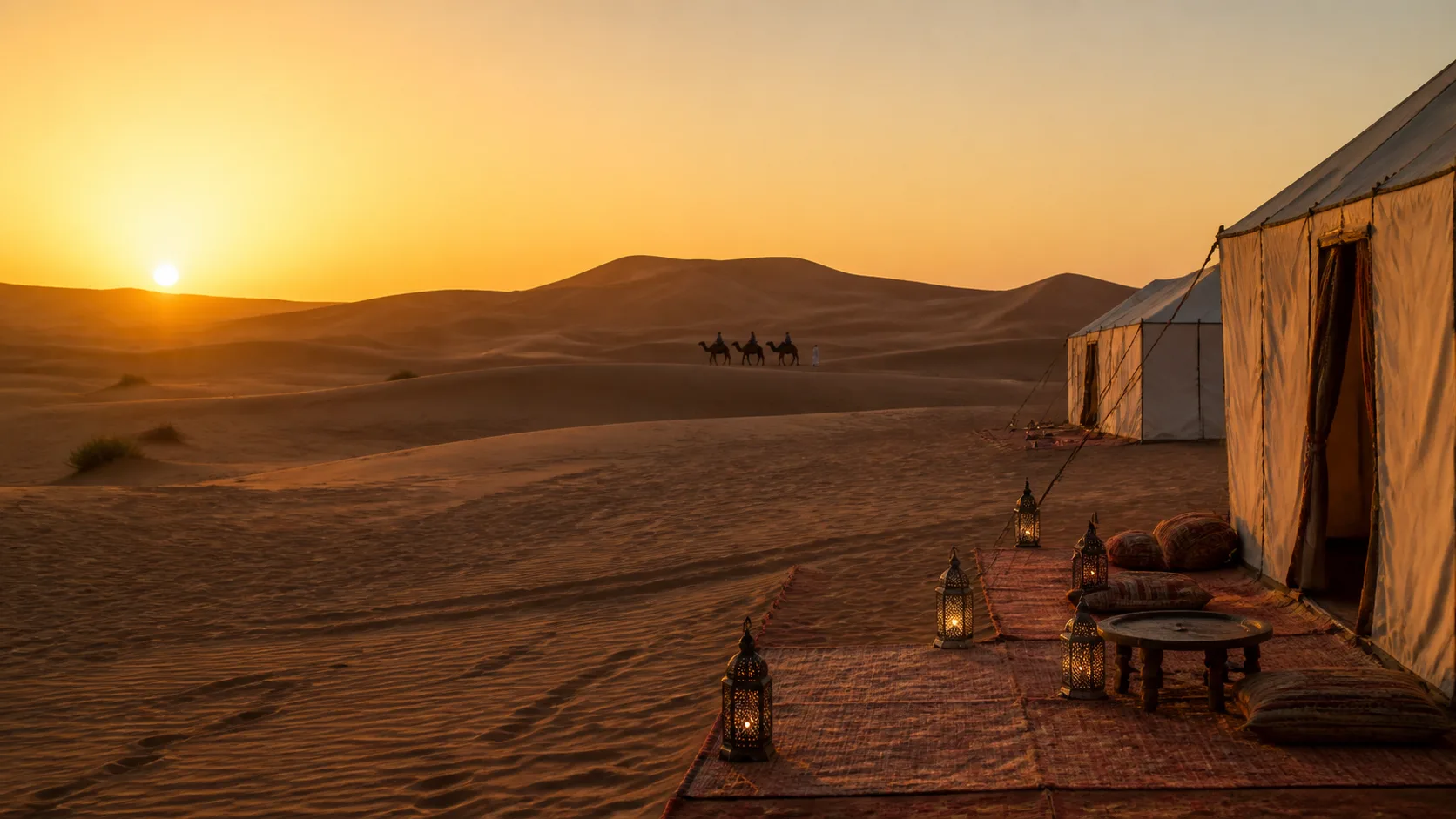
  • Illustrative desert camp terrace and tents beside Moroccan dunes

    Ages 5 and up

    A night in a desert camp

    Discuss the tent layout, bedding and bathroom arrangements; the available camp is confirmed in your proposal.
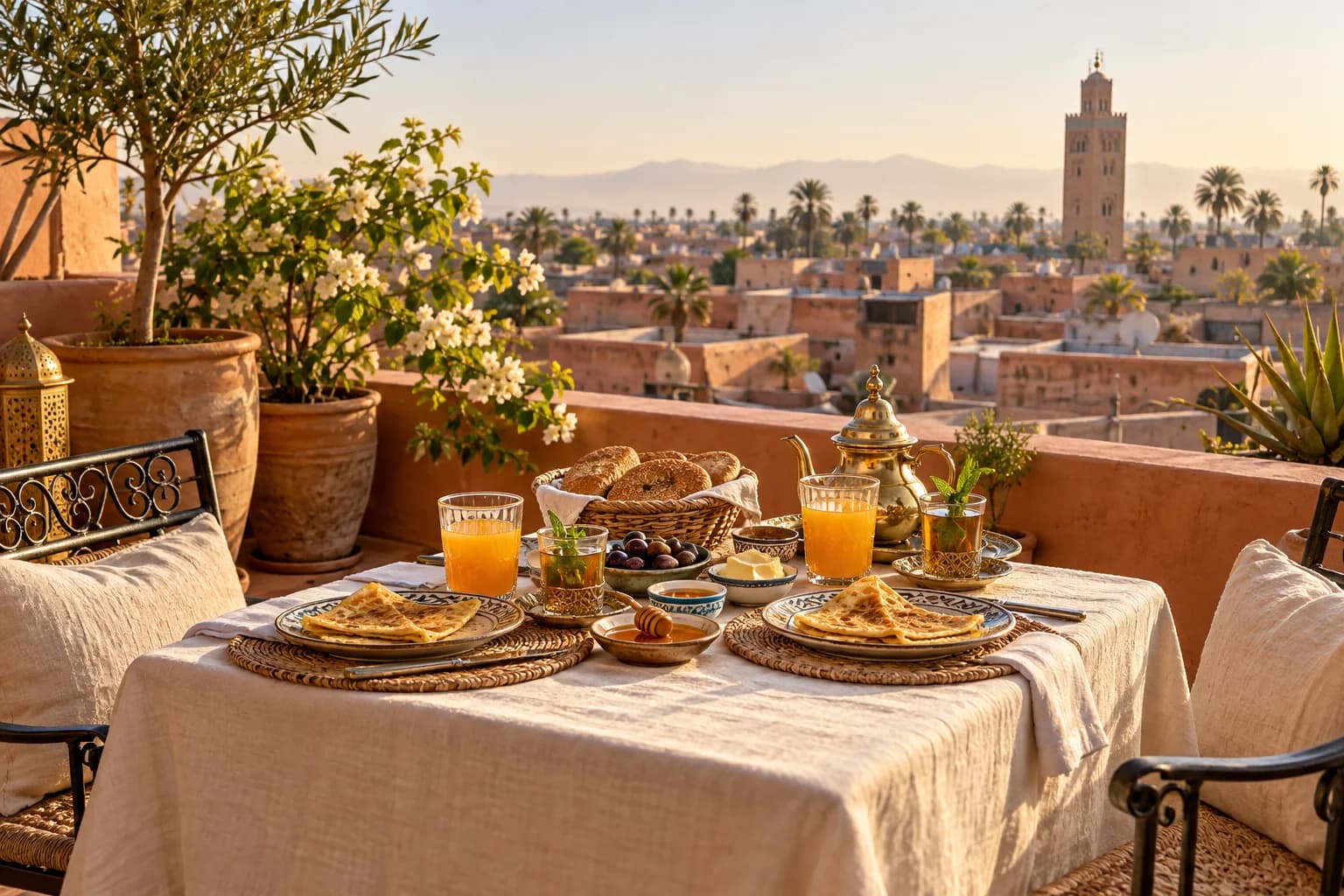
  • Breakfast of bread, honey and fruit laid out on a Marrakech rooftop

    All ages

    Rooftop breakfasts

    Fresh bread, honey, jam, pancakes, juice and fruit on a riad terrace.

Morocco is a rewarding, generally safe destination for families. The culture is warm towards children, distances between key sights are short, and a single week can combine camel rides in the Sahara, cooking classes in the medina, Atlas Mountain villages, and Atlantic beaches in Essaouira. Most families find ages 5 and up the easiest, with toddlers needing slower days and pool time. Spring and autumn are the best seasons. Every family trip is quoted privately to your dates, stays, children’s ages and pace; the quote is free and arrives within 24 hours. Below: an age-by-age guide, a sample 8-day itinerary, family-friendly riads, how pricing works, and practical tips.

The family guide

Most parents considering Morocco have the same first question: is it safe? The answer is an emphatic yes, but the reality is even better than that. Morocco is not merely safe for families; it is one of the most rewarding destinations you can take your children. Moroccan culture places enormous value on family and children, and your kids will experience a level of warmth and welcome that is genuinely rare in international travel. Waiters will bring your toddler extra bread before you ask. Shopkeepers will teach your eight-year-old to count in Arabic. Your teenager will have a Berber guide showing them how to wrap a turban by the end of the first desert evening.

What makes Morocco extraordinary for families is the sheer variety of experiences packed into a compact, accessible country. In the space of a single week, your children can ride camels in the Sahara Desert, learn to make tagine with a Berber grandmother, swim in Atlantic waves in Essaouira, hunt for treasures in the maze of souks in Marrakech, and hike through the High Atlas Mountains past waterfalls and terraced villages. Each day brings something entirely new, which is exactly what young minds crave. Morocco is closer to Europe than the Canary Islands, with direct flights from London, Paris, and Madrid landing in under four hours.

At Serenity Morocco Tours, we design family itineraries that balance adventure with rest, excitement with downtime, and cultural immersion with the practical realities of traveling with children. Our private guides are experienced with families of all configurations, from toddlers to teenagers, and you travel in a private, modern air-conditioned vehicle (for example a Mercedes V-Class or similar, confirmed in your proposal) for comfortable travel between destinations. We know which riads have good family pools, which restaurants serve food quickly when your children are hungry, and which activities consistently produce the widest smiles.

Why Morocco Is Perfect for Families
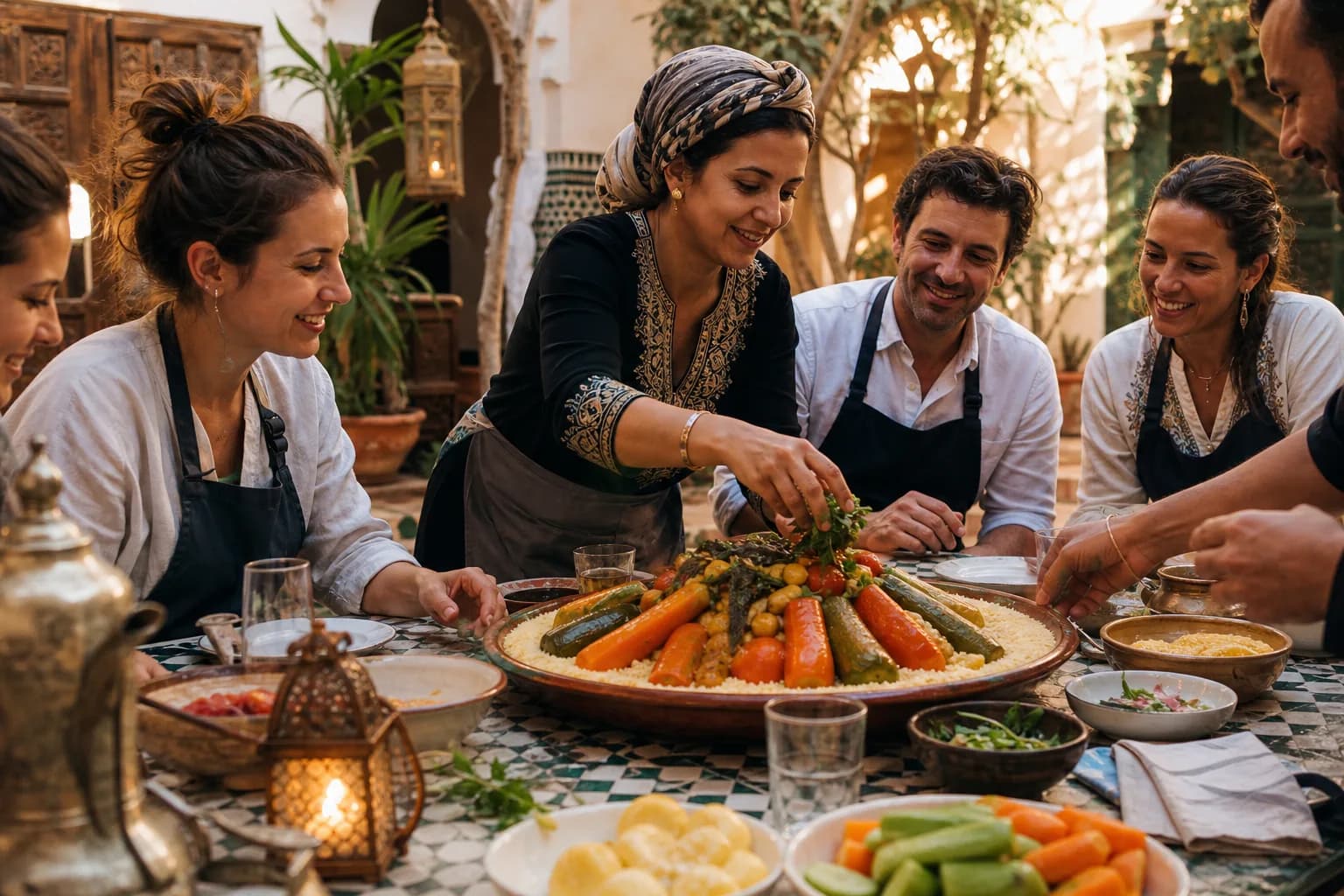
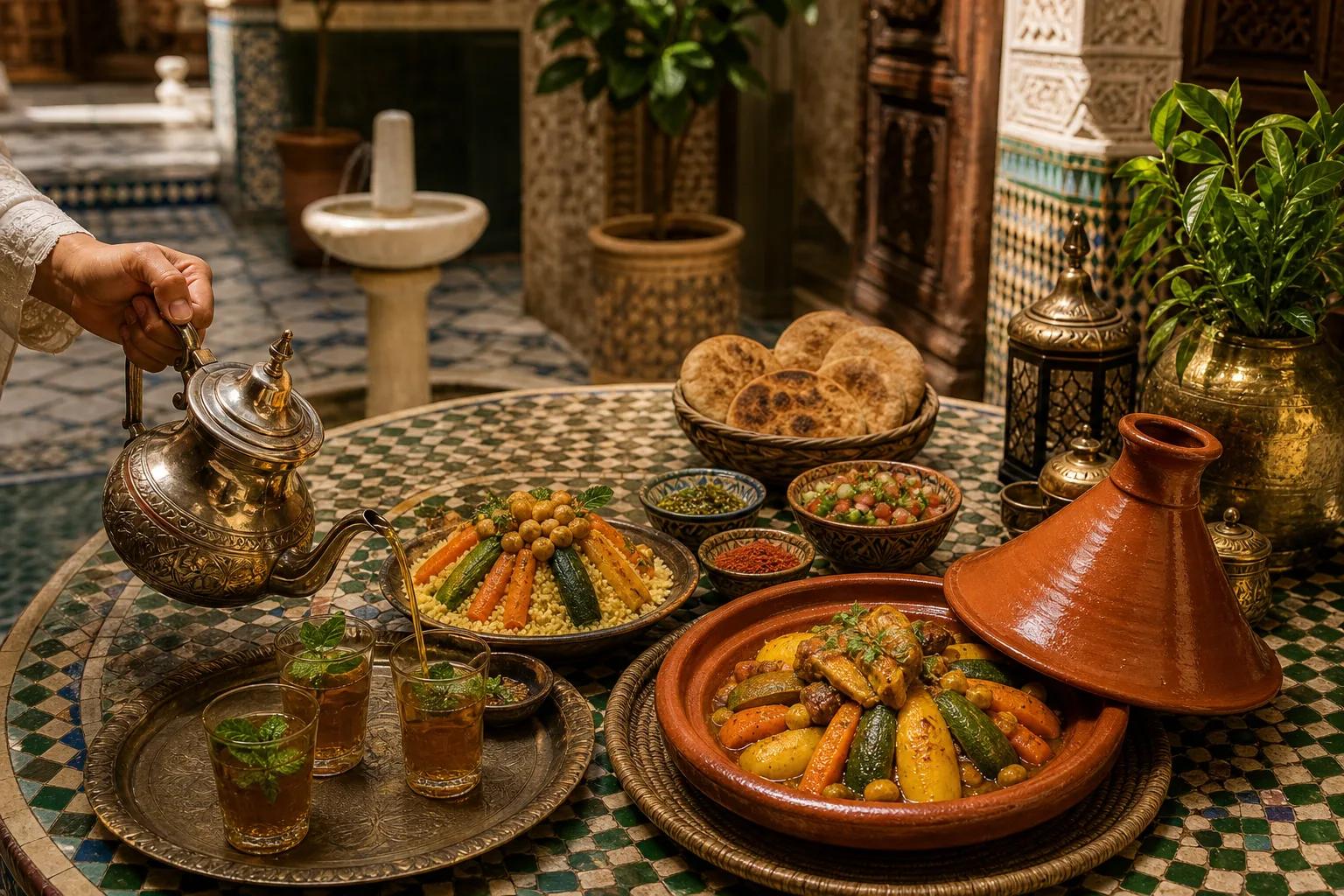
Couscous and tagine served at a riad table, the mild dishes most children enjoy
An earthen Berber village on a High Atlas slope above terraced fields

A Culture That Celebrates Children

In Morocco, children are not merely tolerated; they are celebrated. Restaurant staff will play with your toddler while you eat. Shopkeepers will offer your kids treats. Hotel managers will go out of their way to arrange special surprises. This cultural attitude toward children makes the entire travel experience smoother and more joyful than many parents expect. The Arabic word for children, "atfal," is spoken with a warmth that transcends language barriers.

Safety and Stability

Morocco is one of the most politically stable countries in North Africa and has invested heavily in tourism infrastructure and security. Tourist police patrol major cities, and violent crime against visitors is exceptionally rare. The country welcomes millions of international visitors each year and has decades of experience hosting families from around the world. With a private guide and driver, your family moves through the country in a secure, controlled environment.

Unmatched Adventure Variety

No other destination offers the range of family activities that Morocco does. Desert camping, camel riding, mountain hiking, ocean swimming, cooking classes, pottery workshops, and medina treasure hunts are all possible within a single week. Children never get bored because every day is genuinely different from the last. The landscape shifts dramatically from red-walled cities to snow-capped mountains to golden dunes to Atlantic coastline.

Short Flights from Europe

Morocco is closer to London than Greece, with direct flights from most European capitals landing in three to four hours. From New York, Marrakech is reachable in under seven hours on direct flights. This accessibility means less travel fatigue for children and more time actually experiencing the country. The minimal time zone difference from Europe also means no jet lag for families flying from the UK, France, or Spain.

Morocco with kids, age by age

Toddlers (Ages 2 to 4)

Morocco works well with toddlers, but your itinerary needs to account for nap times, shorter activity windows, and the need for familiar foods. The key is choosing accommodations with pools and gardens where little ones can play during downtime. Many riads have enclosed courtyards that are perfect for toddlers, as they are contained, shaded, and filled with interesting things to look at: splashing fountains, colorful zellige tiles, and potted orange trees.

At this age, skip long drives and ambitious sightseeing schedules. Instead, focus on two or three bases (Marrakech and Essaouira is an excellent pairing) and take short excursions from each. Toddlers will enjoy the colors and sounds of the souks, playing in the shallow waves at Essaouira beach, and watching the horse-drawn carriages around Marrakech. The Majorelle Garden, with its vivid blue walls and koi ponds, holds the attention of even the most active two-year-old.

Key tip: Bring a lightweight stroller for paved areas but expect to carry your toddler in a carrier through the medinas, where cobblestones and narrow alleys make strollers impractical. A structured baby backpack is worth its weight in gold for medina days.

Young Kids (Ages 5 to 8)

This is where Morocco truly starts to shine as a family destination. Children in this age range are old enough to ride camels (with a handler leading the camel), participate in cooking classes, and genuinely take part in the bargaining and bustle of the souks. They have enough stamina for morning excursions but still benefit from afternoon pool time. Their sense of wonder is still fully intact, and Morocco delivers wonder in abundance.

Desert camping becomes possible at age five, and most children love it. Sleeping in a tent in the Sahara, eating dinner around a campfire while Berber musicians play drums, and waking up to watch the sunrise over the dunes creates memories that children carry for the rest of their lives. The look on a six-year-old’s face when they see the Milky Way for the first time, unobstructed by city light, is something no parent forgets.

Key tip: Build a medina scavenger hunt into your itinerary. Give children a list of things to find (a blue door, a cat sleeping on a wall, a shop selling leather slippers, a fountain with zellige tiles) and let them lead the exploration. It transforms a cultural experience into an adventure they own.

Tweens (Ages 9 to 12)

Tweens are the perfect age for Morocco. They have the physical stamina for longer activities, the cognitive ability to appreciate cultural differences, and the enthusiasm for adventure that makes experiences like desert camping, mountain hiking, and souk exploration genuinely exciting rather than overwhelming. They can hike for three hours, bargain for a leather bag, and hold a meaningful conversation with your guide about Berber traditions.

At this age, children can attempt the easier Atlas Mountain hikes (the Imlil Valley trails are suitable for fit 9-year-olds), take a surfing lesson in Essaouira, learn basic Arabic phrases from your guide, try their hand at bargaining in the souks, and participate fully in cooking classes. They are also old enough to appreciate the history behind what they are seeing, whether that is the medieval tanneries of Fes where leather has been dyed the same way for a thousand years, or the ancient Roman ruins of Volubilis where mosaics are still visible on the ground.

Key tip: Give tweens a travel journal or camera and make them the family documentarian. It gives them a sense of responsibility and ensures they engage deeply with each experience rather than passively observing.

Teenagers (Ages 13 to 17)

Teenagers who might be skeptical about a family trip tend to fall in love with Morocco within the first day. The noise and colour of Marrakech, the adventure of the desert, the physical challenges of hiking and surfing, and the novelty of a culture so different from home typically overcome even the most determined teen reluctance. Morocco is the antidote to the eye-roll.

Morocco offers teenagers genuine adventure: quad biking in the desert, sandboarding down dunes, surfing at Essaouira or Taghazout, hiking to the Ouzoud Waterfalls, hot air ballooning over the Atlas foothills, and rock climbing in the Todra Gorge. The physical activity combined with the Instagram-worthy scenery (Chefchaouen’s blue streets, the Sahara at sunset, the blue boats of Essaouira) makes Morocco a surprisingly easy sell for this age group. And the food story they can tell friends back home about eating sheep head in Jemaa el-Fna will earn them social currency for years.

Key tip: Let teenagers choose at least one activity or experience for each day. Giving them ownership over part of the itinerary dramatically increases their engagement and enthusiasm. Also, Morocco’s Wi-Fi is generally good enough in cities for them to share their experiences in real time, which keeps them connected and happy.

Top 6 Family-Friendly Experiences in Morocco

These are the experiences that families consistently rate as the highlights of their Morocco trips. Each one is available as part of a custom family itinerary through Serenity Morocco Tours.

Camel Rides in the Sahara

Suitable for ages 4 and above (younger children ride with a parent)

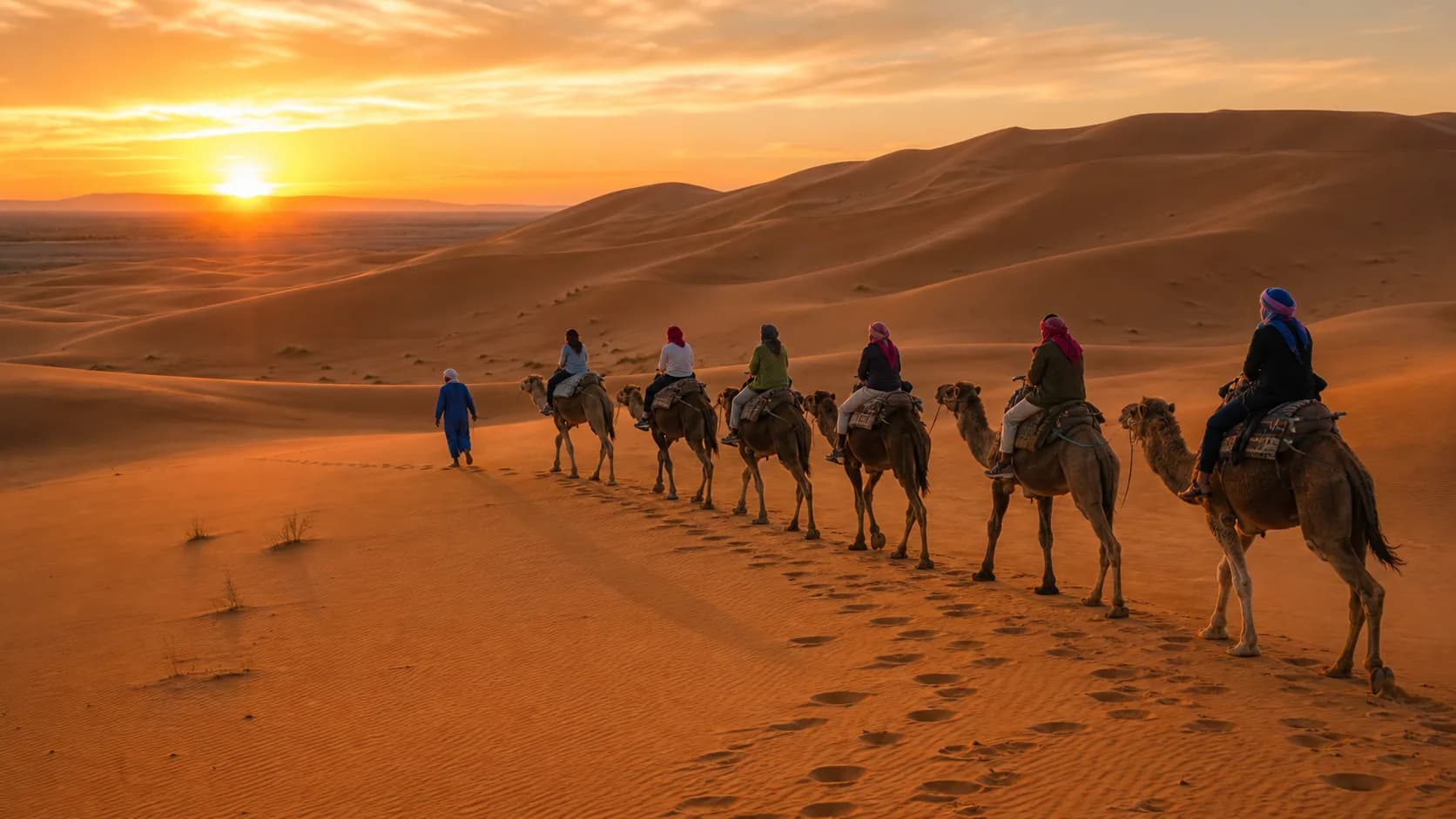
The family trip most children ask for. Children ride their own camel (led by an experienced handler) across the golden dunes of Erg Chebbi near Merzouga. The standard ride lasts about 90 minutes, taking you from the edge of the desert to your camp as the sun sets and paints the sand in shades of gold, orange, and purple. Younger children ride in front of a parent on the saddle or go by 4x4; we confirm the camp's minimum ages in your proposal. Most children rate this as the single best experience of the entire trip, and the photographs of your family silhouetted against the dunes at sunset will be on your wall for decades.
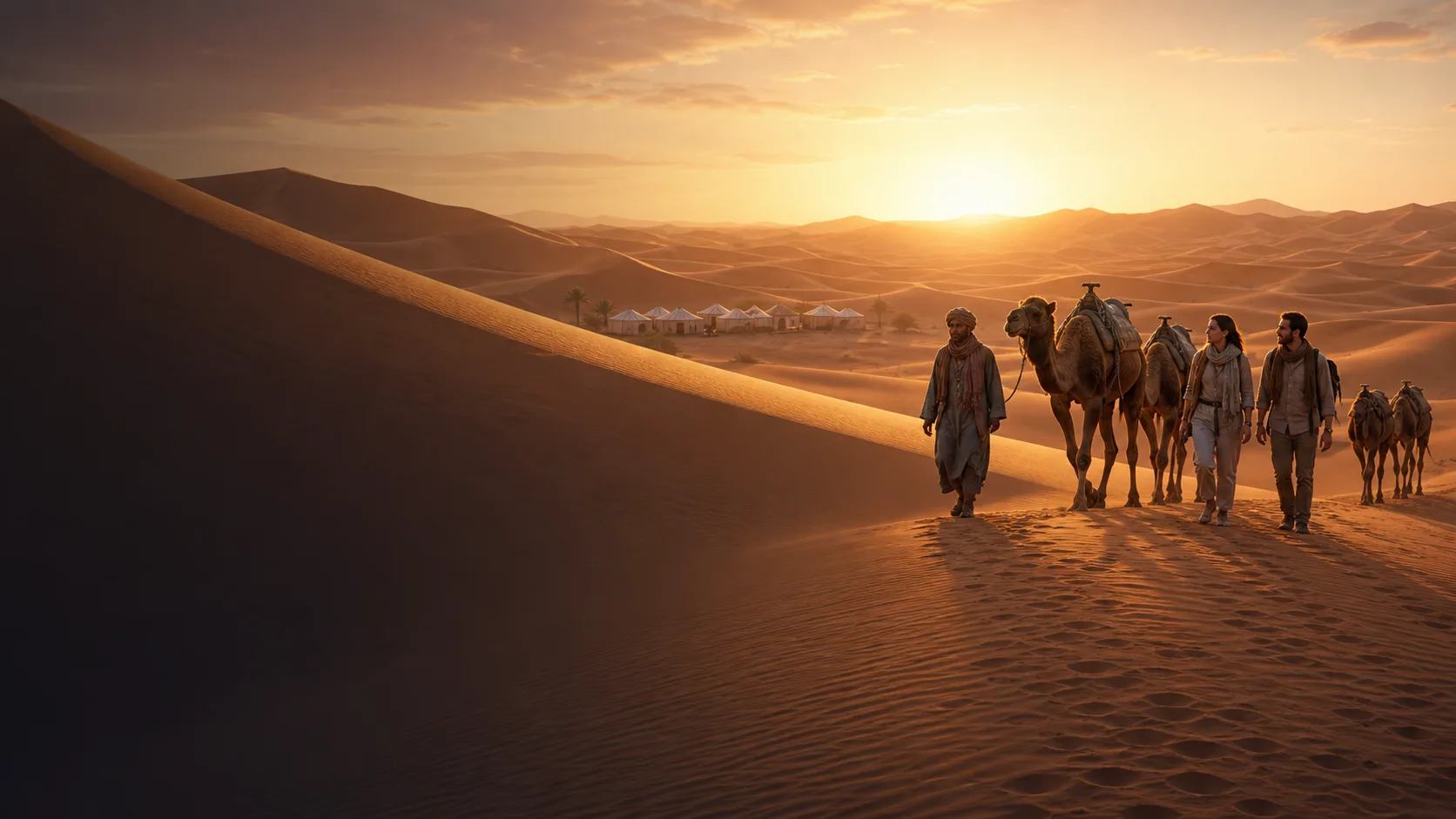
Illustrative guide leading walkers and their camels along a dune ridge at sunset, the camp in the valley below
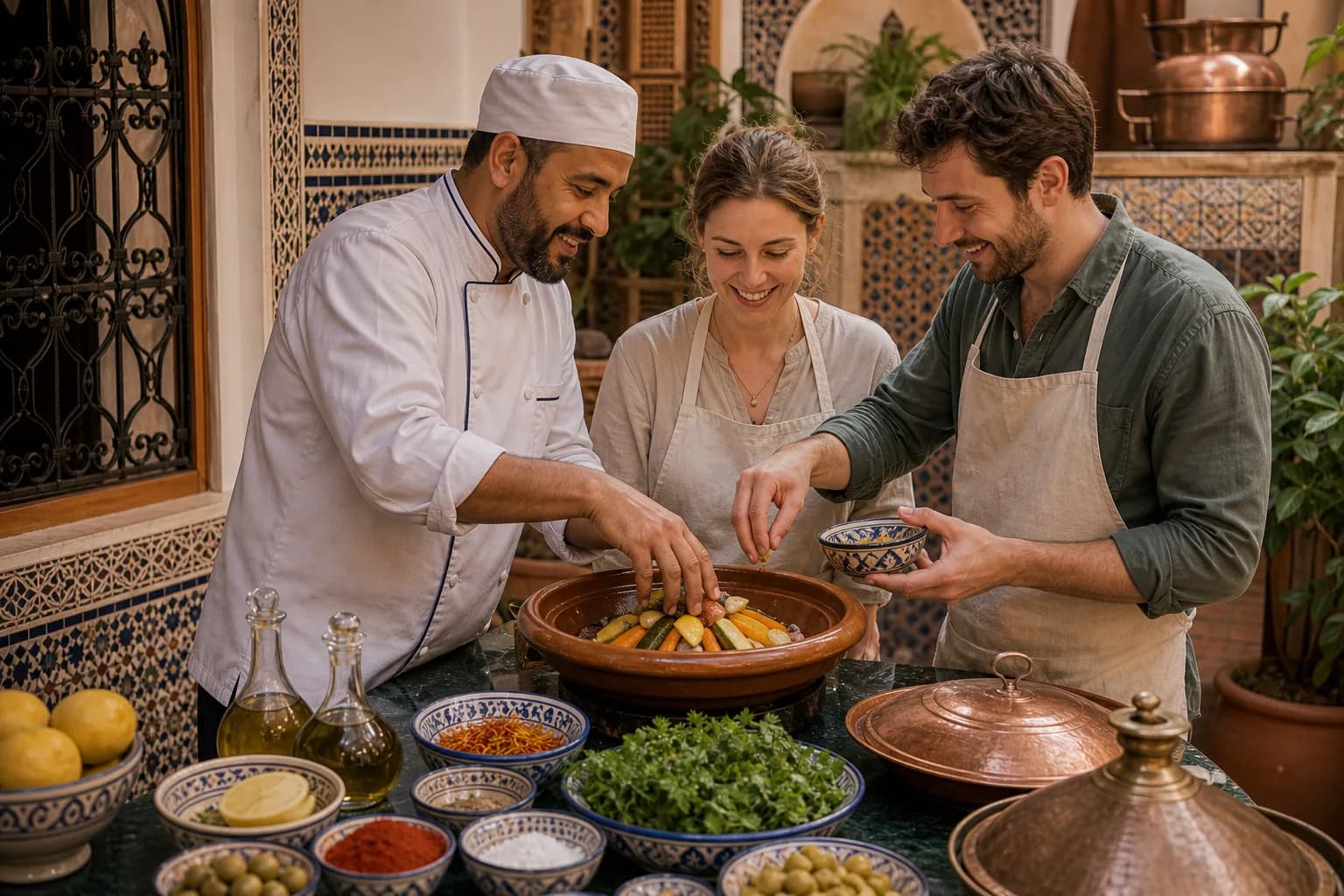
Travellers cooking a tagine with a Moroccan family in a hands-on class

Moroccan Cooking Classes

Suitable for all ages

Moroccan cooking classes are designed to be hands-on and family-friendly. Children help prepare tagine, shape couscous, mix spice blends, and bake traditional bread in a wood-fired oven. The best classes start with a trip to the local market to buy ingredients, teaching children about unfamiliar fruits, vegetables, spices, and the art of selecting fresh produce. Your guide will help children navigate the colorful stalls, smell the difference between cumin and coriander, and choose the right tomatoes by feel. Classes typically last three to four hours and end with everyone eating the meal they prepared together. Even the pickiest eaters tend to try food they helped cook.

3

Desert Camping Under the Stars

Suitable for ages 5 and above

Spending a night in a luxury desert camp is something no family forgets. After arriving by camel, you settle into comfortable furnished tents with real beds, carpets, and en-suite facilities. Evening brings a campfire dinner with Berber music and drumming, which children invariably join. The highlight comes after dinner, when the camp lights are dimmed and the Sahara sky reveals more stars than most children have ever imagined. Guides point out constellations, planets, and shooting stars while children lie on blankets in the still-warm sand. The silence of the desert, broken only by the occasional call of a distant owl, teaches children something about the world that no classroom can.

4

Medina Treasure Hunts

Suitable for all ages

The medinas of Marrakech and Fes are living labyrinths filled with colors, sounds, scents, and surprises around every corner. Rather than simply walking through them, we organize treasure hunts that transform the experience into an interactive adventure. Children receive a list of items to find or photograph: a door with a particular color, a specific type of lamp, a cat in a window, a fountain with zellige tiles, a shop selling pointed yellow slippers. This gives the medina visit structure and purpose, keeping children engaged while parents enjoy the atmosphere. The reward at the end is often a trip to a spice stall where children can choose their own small bag of saffron or cumin to take home.

5

Beach Days in Essaouira

Suitable for all ages

Essaouira offers the perfect counterbalance to the intensity of Morocco’s inland cities. The wide, flat beach stretches for kilometers and is ideal for building sandcastles, flying kites (the Atlantic wind is reliable and strong), and paddling in the shallows. Older children and teenagers can take surfing or windsurfing lessons with qualified instructors from the beachfront schools. The town itself is small, walkable, and relaxed, with a car-free medina where children can wander safely within sight. The seafood restaurants on the harbor serve the freshest grilled fish in Morocco, cooked right in front of you on open charcoal grills while your children watch the fishing boats unload the afternoon catch.

6

Berber Village Visits in the Atlas Mountains

Suitable for ages 6 and above

The Atlas Mountains offer family-friendly hiking trails through terraced valleys, past walnut groves and cherry orchards, and up to viewpoints with panoramic vistas. The Imlil Valley is the most popular starting point, and from there families can hike to traditional Berber villages where life has changed little in centuries. Children meet local kids, see how argan oil is made by hand from nuts cracked on stones, watch bread being baked in communal ovens, and have lunch in a family home where the matriarch serves steaming tagine on a carpet-covered terrace overlooking the valley. These encounters give children a genuine understanding of how differently other people live, without the artificiality of a museum or cultural show.

An 8-day family itinerary

This itinerary is designed for families with children aged 5 and above. Most days have little or no time in the car, and there is pool time each afternoon. The desert is the exception: Marrakech to Merzouga is about 8 to 9 hours of road, so we split it over two days with a night in a Skoura kasbah each way, and stop often. The drive time for each day is shown below (estimates with stops; the Tizi n’Tichka pass has many bends, so tell us if anyone gets carsick). Every detail can be customized to your family’s ages, interests and energy levels.

Day 1

Arrive in Marrakech

On the road: Airport transfer only

Airport pickup by your private driver in an air-conditioned private vehicle. Transfer to your family-friendly riad in the medina or a hotel with a pool in the Hivernage district. Afternoon free to settle in, swim, and explore the immediate neighborhood at your own pace. If your children are energetic after the flight, a short walk through the nearest souk is a gentle introduction to Morocco. Evening visit to Jemaa el-Fna square to watch the storytellers, musicians, and food stalls come alive as the sun sets. Dinner at a rooftop restaurant overlooking the square, where children can watch the spectacle below while eating grilled chicken and fresh bread.

Day 2

Marrakech Discovery

On the road: No driving

Morning medina treasure hunt with your guide, visiting the spice souks, leather workshops, and the Bahia Palace, where children can explore the tiled courtyards and count the geometric patterns on the ceilings. Children receive a scavenger hunt list and small notebook. Lunch at a family-friendly restaurant in the medina. Afternoon cooking class where the whole family learns to prepare chicken tagine and Moroccan mint tea, starting with a market visit to choose ingredients. You eat your creations together in the kitchen courtyard. Late afternoon pool time at your accommodation. Evening at leisure.

Day 3

Atlas Mountains Day Trip

On the road: About 1½ hours each way

Morning drive to the Ourika Valley, where the landscape changes from the red plain to green terraces as the road climbs into the Atlas. Visit a Berber village and an argan oil cooperative where children can watch women crack argan nuts on flat stones. Hike along the valley floor to the first set of waterfalls, a gentle walk suitable for most children. Lunch at a riverside restaurant on platforms over the water, with fresh tagine, salads, and the sound of the river below. Back in Marrakech by mid-afternoon for pool time.

Day 4

Over the Atlas to Skoura (via Ait Benhaddou)

On the road: About 5 hours with stops

Depart after breakfast and cross the Tizi n’Tichka pass through the High Atlas, stopping at viewpoints where children can stretch their legs, take photos of the valleys below, and see fossils polished by roadside sellers. Visit the ancient ksar of Ait Benhaddou, the fortified village used in films including Gladiator and Game of Thrones, which teenagers particularly enjoy; children can climb to the top for views over the valley. Continue a short way to Skoura and a kasbah hotel among the palm groves, with a pool for the afternoon and an early night.

Day 5

Skoura to the Sahara

On the road: About 4¾ hours with stops

Through the Dades valley, with a stop at the Todra Gorge where children can walk between the high rock walls beside the stream, then on to the edge of the Erg Chebbi dunes for the camel ride to your desert camp. Children ride their own camels (handlers lead each one) as the sunset turns the sand golden; younger children can ride with a parent or go to camp by 4x4. Campfire dinner with Berber music and drumming, then stargazing in the Sahara, where the Milky Way is visible to the naked eye. Sleep in furnished tents with real beds and en-suite bathrooms.

Day 6

Desert Sunrise, Back to Skoura

On the road: About 4¾ hours with stops

Wake before dawn to watch the sunrise over the dunes, one of the most spectacular sights in Morocco: the light changes from deep blue to pink to gold in twenty minutes. Camel ride back to the desert edge and a full breakfast. Drive back west with a stop at a fossil quarry where children can hunt for ammonites embedded in the rock, and lunch on the way. Afternoon at the pool in Skoura; this split is what keeps the desert days manageable for children.

Day 7

Over the Atlas to Marrakech

On the road: About 4¾ hours with stops

A relaxed start, then back over the Tizi n’Tichka pass with viewpoint stops, arriving in Marrakech in time for an afternoon at the pool. Evening free for a last walk in the medina or a quiet dinner at your riad.

Day 8

Marrakech Morning and Departure

On the road: Airport transfer only

A last morning in Marrakech: the Majorelle Garden’s koi ponds, a final souk visit to practise the bargaining skills learned on the trip, or one more swim. Private transfer to Marrakech airport, or extend your stay with two nights on the coast in Essaouira, about 3 hours away.

Customization note: This itinerary is a starting point. Families with younger children may prefer to skip the desert drive and spend the time in Marrakech, an Atlas lodge and Essaouira instead, with no drive longer than about 3 hours. Families with teenagers might add quad biking in the desert, surfing lessons in Essaouira, or a full day of Atlas hiking. Every Serenity Morocco Tours family itinerary is built from scratch around your specific needs. We can also add Chefchaouen or Fes for families who want a longer trip.

Like this shape?

We’ll adjust it to your children’s ages, your dates and how much driving you want, with the desert days split and pool time kept in. Free, no obligation, a reply within 24 hours.

or WhatsApp +212 701 664 704

Family-friendly riads and camps

Not every beautiful riad in Morocco is suitable for families. We choose properties that combine the authentic Moroccan experience with the practical requirements of traveling with children.
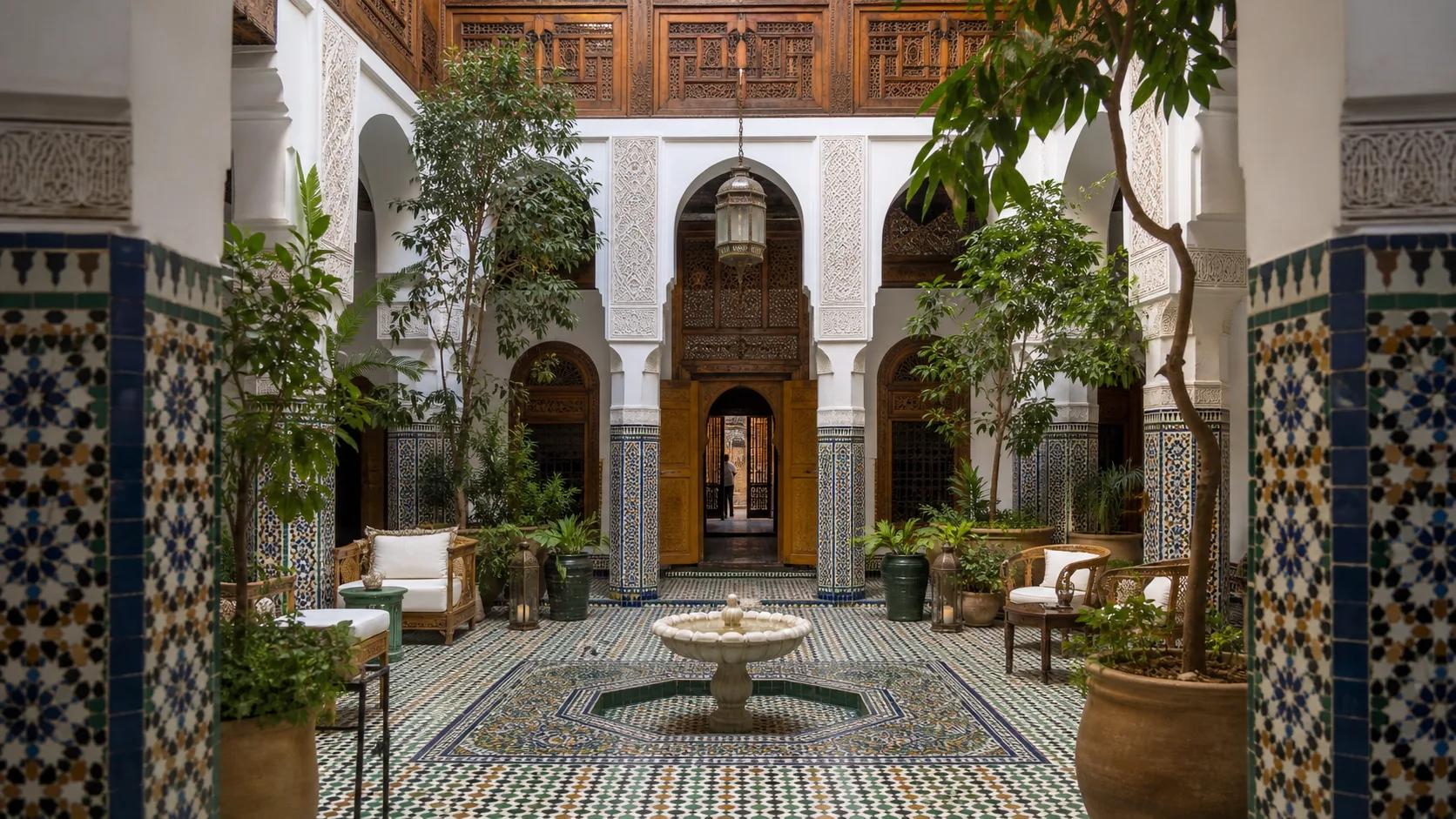
A riad courtyard with a zellige fountain, an enclosed and shaded space for children
Mint tea poured in a quiet riad courtyard, where parents rest while children play

Riads with Pools

We select riads that have plunge pools or small swimming pools in their courtyards. This gives children a place to cool off and burn energy between excursions. Our partner riads in Marrakech include properties with pools deep enough for swimming, heated pools for cooler months, and shallow splash areas suitable for younger children. Pool time becomes the rhythm of each afternoon, and it is often where children process the morning’s adventures.

Connecting and Family Rooms

Many riads offer connecting rooms or family suites that give parents their own space while keeping children close. Some properties have family apartments with a separate living area, which is particularly useful for families with young children who go to bed early while parents enjoy mint tea on the rooftop terrace. We always arrange accommodation that keeps families together without cramping anyone.

Kid-Friendly Dining

Our partner accommodations all offer flexible dining options for children, including early dinner times, simplified menus, and the ability to prepare plain foods on request. Many riads have chefs who enjoy the challenge of cooking for children and will adjust spice levels, prepare favorite dishes, and create special desserts. Breakfast in a riad is a particular joy for families: fresh bread, honey, jam, pancakes, juice, and fruit spread across a rooftop table.

Safe Outdoor Spaces

The best family accommodations have enclosed gardens, roof terraces with railings, and common areas where children can play safely. In Essaouira, we recommend beachfront properties where older children can walk to the beach independently. In the Atlas Mountains, lodge-style accommodations with gardens and terraces work better than compact medina riads. In the desert, our partner camps have enclosed compounds where children can explore freely.

Practical Tips for Traveling Morocco with Kids

Health and Safety

Morocco does not require any special vaccinations beyond routine childhood immunizations. The Centers for Disease Control and Prevention recommends ensuring children are current on hepatitis A and typhoid vaccines (the latter for children over 2). Malaria is not present in tourist areas, and you do not need to take antimalarials. Tap water should not be drunk in Morocco; bottled water is inexpensive and available everywhere. Your guide will always have a supply in the vehicle.

Bring a basic medical kit from home that includes children’s-strength paracetamol (acetaminophen), ibuprofen, antihistamines, rehydration salts, plasters, antiseptic cream, and any prescription medicines your children take regularly. Pharmacies in Moroccan cities are well-stocked and staffed by trained pharmacists who often speak French and some English, but they may not carry pediatric formulations of specific medicines. Sun protection is essential: bring high-SPF children’s sunscreen, wide-brimmed hats, and lightweight long-sleeved clothing for the desert.

What to Pack for Children

Pack layers, as temperatures can vary significantly between the cool Atlas passes and the hot desert, sometimes by twenty degrees in a single day. Quick-dry clothing works well for active days. Sturdy closed-toe shoes are important for medina walks and mountain hikes; sandals are fine for riads, pools, and the beach. A lightweight rain jacket is worth bringing in spring and autumn, as mountain weather can change quickly.

For the desert, bring a scarf or buff that can be wrapped around the face during wind, swimwear for hotel pools, and a headlamp or small flashlight for the desert camp. Bring entertainment for long drives: audiobooks, drawing materials, card games, and a tablet loaded with offline content. Most Moroccan accommodations have Wi-Fi, but it can be slow and unreliable in rural areas and the desert. A portable battery charger is essential if your children use devices.

Food for Picky Eaters

Moroccan food is less spicy than many parents expect. The base flavors are warm and sweet rather than hot: cinnamon, saffron, turmeric, cumin, and honey feature more prominently than chili. Chicken tagine with preserved lemons and olives is mild enough for most children, and couscous is essentially the Moroccan equivalent of pasta or rice in terms of child appeal. The secret weapon is Moroccan bread (khobz), freshly baked and served warm at every meal, which is universally popular with children of all ages.

Fresh orange juice is available at virtually every cafe and restaurant. French fries are on most menus. Omelettes can be ordered at any time of day. If your child absolutely will not try local food, most riads and restaurants can prepare plain pasta, grilled chicken, or a cheese sandwich on request. International restaurants are available in Marrakech and other major cities. Our guides know every family-friendly restaurant in every city, including the ones that serve food quickly when children are hungry and patience is thin.

Best Time to Visit with Kids

Spring (March to May) and autumn (September to November) are the ideal seasons for family travel in Morocco. Temperatures during these months range from 20 to 28 degrees Celsius in most areas, warm enough for outdoor activities and swimming but not so hot that children wilt. The desert is comfortable rather than scorching, and the Atlas Mountains are at their most beautiful, with wildflowers in spring and clear skies in autumn. Summer (June to August) brings extreme heat to the interior, with Marrakech regularly exceeding 40 degrees, which makes outdoor activities difficult for young children. If you must travel in summer, focus your itinerary on the Atlantic coast where temperatures stay around 25 degrees. Winter (December to February) is mild in Marrakech and along the coast, and the lack of crowds makes it appealing, but the desert can be cold at night and some mountain passes may be closed by snow.

Car Seats and Vehicle Safety

Your trip uses a private, modern air-conditioned vehicle with seat belts in all positions (for example a Mercedes V-Class or similar, confirmed in your proposal). We can provide booster seats on request for children aged 4 to 7. For children under 4, we recommend bringing your own car seat, as ISOFIX bases and rear-facing seats are not commonly available locally. Most airlines allow gate-checking car seats at no additional cost. We book a vehicle with space for car seats, and your driver can help you fit them. For the camel ride to the desert camp, children ride in a saddle held by a handler, and there is no need for a car seat.

How a Family Trip to Morocco Is Priced

Every family trip is quoted privately to your dates, your children’s ages, the stays you prefer and the pace you want, so we do not publish fixed prices. A family quote usually covers your private guide and vehicle, accommodation, most meals, activities and entrance fees; international flights are not included. These are the shapes most families start from.

Trip shapeDurationIncludes
Essentials5 daysMarrakech and Essaouira. Medina tours, cooking class, beach day, market visits.
Classic8 daysMarrakech, Atlas Mountains, Sahara Desert, Essaouira. Full desert experience with camel ride and camp.
Grand10 – 12 daysMarrakech, Fes, Atlas Mountains, Sahara, Essaouira. Imperial cities, desert, mountains, and coast.
Luxury8 – 14 daysPremium accommodations, private pool villas, hot air balloon, exclusive experiences, personal chef.

Child rates depend on age and on the stays chosen, and are shown clearly on your quote. Season, the accommodation you pick and the activities you add all shape the final price. The quote is free, with no obligation.
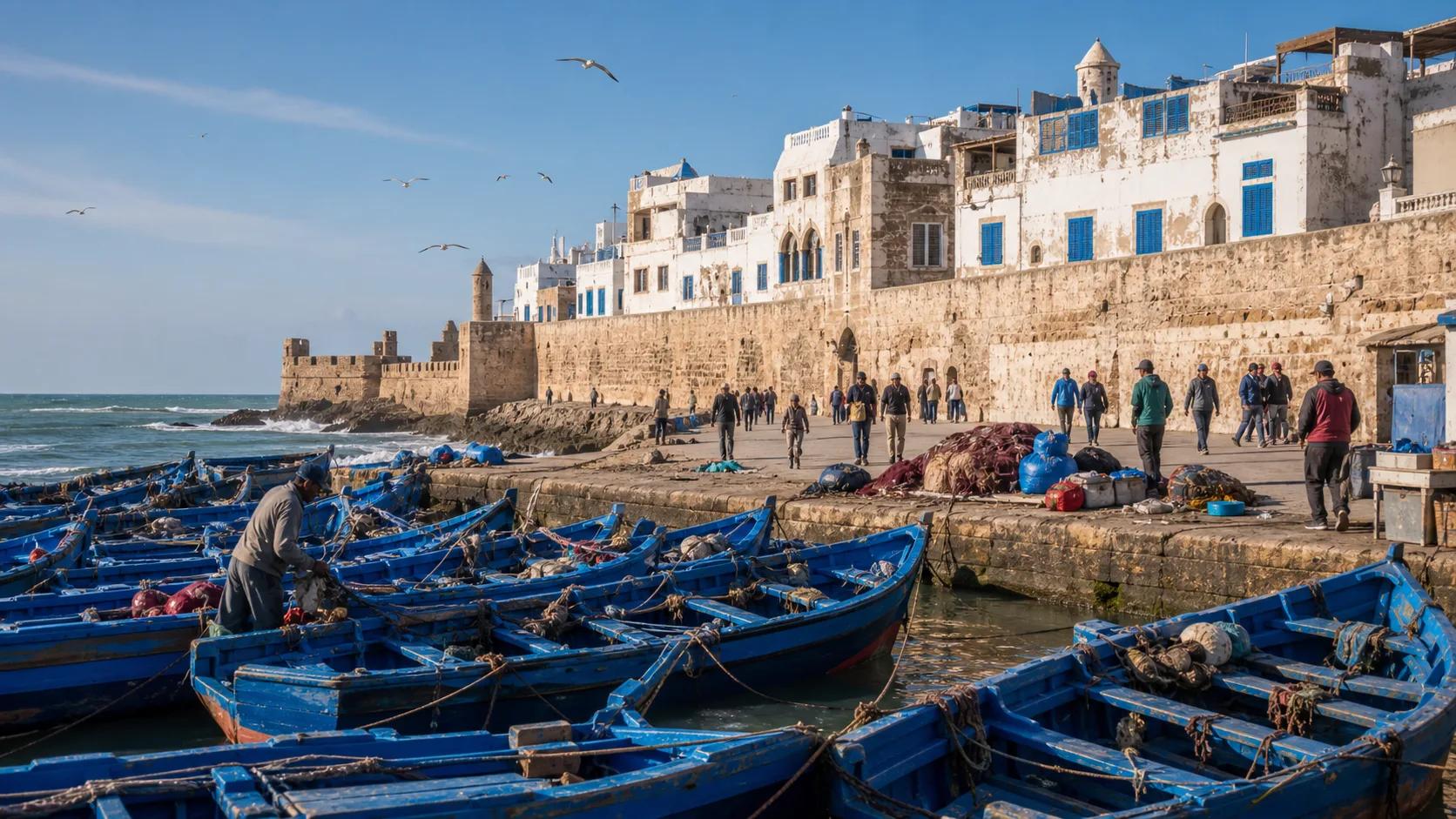
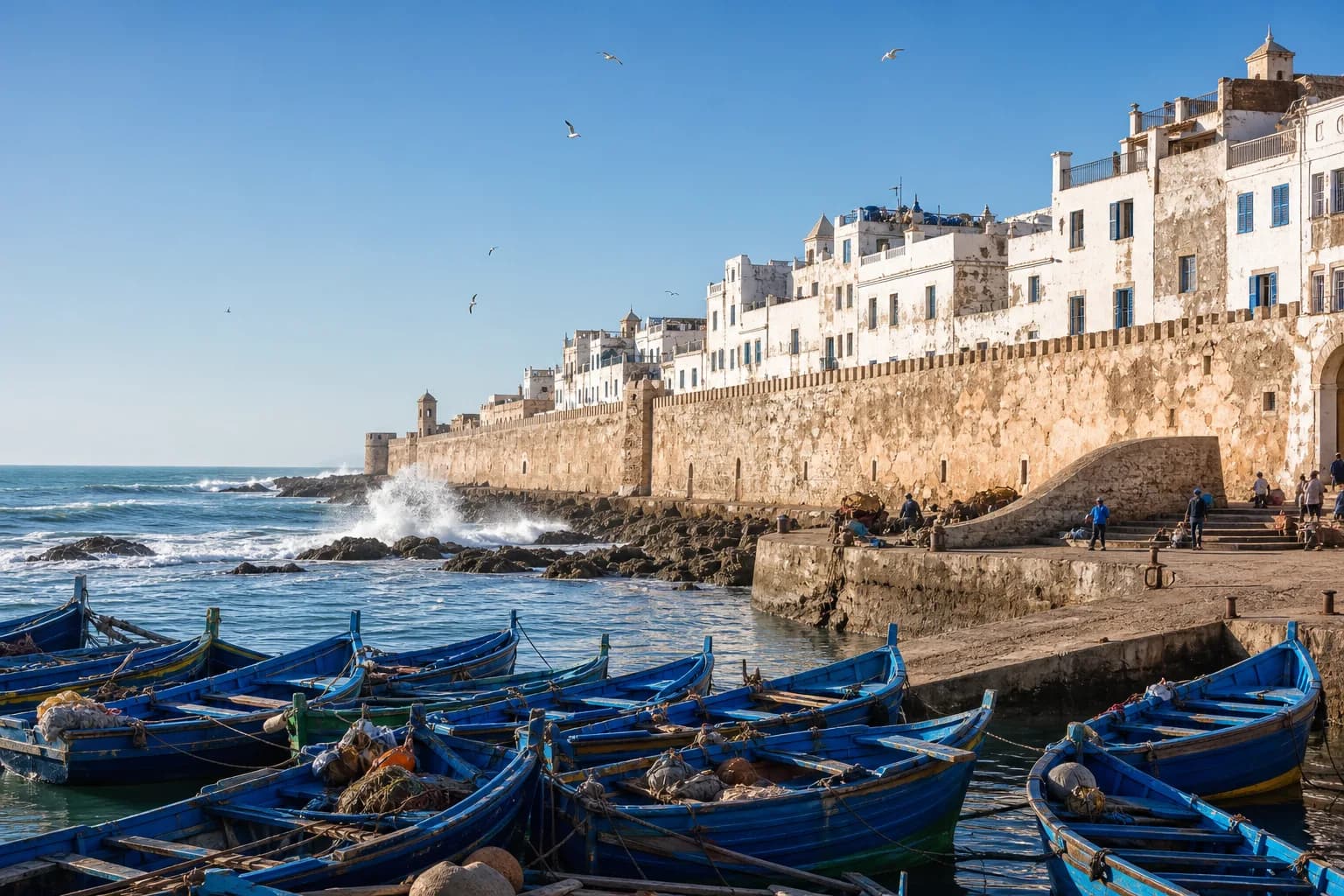
Illustrative Essaouira harbour: fishermen mending nets in the blue boats below the sea wall

Essaouira’s blue harbour and wide Atlantic beach: kites, sandcastles, surfing lessons and grilled fish by the boats.

Keep Planning Your Trip

Morocco with kids: your questions

Is Morocco safe for families?

Morocco is generally very safe for families. Moroccan culture deeply values children, and locals often go out of their way to make families feel welcome. The main tourist cities of Marrakech, Fes, Essaouira, and Chefchaouen all have well-established tourism infrastructure and tourist police patrols. With a private guide and driver through Serenity Morocco Tours, your family travels in a controlled, comfortable environment with someone who knows the routes well. The country welcomes millions of international visitors each year, and violent crime against tourists is rare.

Is Morocco good for kids?

Yes, when the trip is paced for them. The culture is warm towards children, distances between the main sights are short, and a single week can combine a camel ride in the Sahara, a cooking class in the medina, Atlas Mountain villages and the Atlantic beaches of Essaouira. Most families find ages 5 and up the easiest; toddlers need slower days and pool time.

What is the best age to take kids to Morocco?

Children aged 5 and above tend to enjoy Morocco the most, as they can join camel rides, desert camping, cooking classes, and medina explorations. Children aged 8 and up can usually handle light hiking in the Atlas Mountains. Teenagers often love the noise and bargaining of the souks, the adventure of the Sahara, and activities like quad biking and surfing. Toddlers can also have a wonderful time, but itineraries need more rest time, shorter travel days, and accommodation with pools and outdoor space.

How much does a family trip to Morocco cost?

Every family trip is quoted privately to your dates, your children’s ages, the stays you prefer and the pace you want, so we do not publish fixed prices. A family quote usually covers your private guide and air-conditioned vehicle, accommodation, most meals, activities and entrance fees; international flights are additional. Any child rates are shown clearly on your quote. The quote is free, with no obligation, and arrives within 24 hours.

What food will my picky eater enjoy in Morocco?

Moroccan cuisine is more family-friendly than many parents expect. Chicken tagine with preserved lemons is mild and appealing to most children. Couscous is familiar and easy to eat. Moroccan bread (khobz) is served warm at every meal and kids tend to love it. French fries are widely available. Most riads and restaurants can prepare plain pasta, grilled chicken, or omelettes on request. Fresh orange juice is available almost everywhere.

Do I need car seats for children in Morocco?

Car seat laws in Morocco are not enforced as strictly as in Europe or North America, but we strongly recommend bringing or arranging car seats for younger children. Serenity Morocco Tours can provide booster seats on request and arrange vehicles with space to fit your own seat. For children under 4, bringing your own car seat is the most reliable option, as rear-facing and ISOFIX seats are not commonly available locally. Most airlines allow gate-checking car seats at no extra cost.

What vaccinations do children need for Morocco?

No special vaccinations are required for Morocco beyond routine childhood immunizations. The CDC recommends ensuring children are up to date on hepatitis A, typhoid (for children over 2), and routine vaccines like MMR, polio, and tetanus. Malaria is not a risk in tourist areas. Bring basic medications from home including children’s paracetamol, rehydration salts, and any prescription medicines, as pharmacies may not stock pediatric versions of every medicine. Check current advice with your doctor before travelling.

When is the best time to visit Morocco with kids?

Spring (March to May) and autumn (September to November) are ideal for families. Temperatures are warm but manageable for children, typically between 20 and 28 degrees Celsius. These seasons also avoid the summer crowds and extreme heat that can make desert excursions and medina walks uncomfortable for younger travelers. The Easter and October half-term holidays fall within these windows. Winter is mild along the coast and in Marrakech, making December and February viable for families wanting a quieter season, though desert nights can be cold.

Can I bring a stroller to Morocco?

You can bring a stroller, but its usefulness is limited to modern areas, hotel grounds, and the Ville Nouvelle districts. The medinas of Marrakech, Fes, and other historic cities have narrow lanes, uneven cobblestones, steps, and crowds that make strollers impractical. For children under 3, we strongly recommend a baby carrier or structured backpack for medina visits and mountain excursions. A lightweight umbrella stroller can still be useful for airports, hotel grounds, and the flat beachfront promenade in Essaouira.

ⴰⵣⵓⵍ
azul · hello, in Tamazight

A holiday for every generation.

Tell us your children's ages, travel dates and what you enjoy together. Your planner will suggest a route with suitable rooms, manageable drives and time to relax.

Free quote · Step 1 of 3

Plan your family trip

Who's travelling
How many
When
Free · no obligation · reply within 24 h or WhatsApp +212 701 664 704

المغربⵜⴰⴳⵍⴷⵉⵜ ⵏ ⵍⵎⵖⵔⵉⴱThe Kingdom of Morocco